
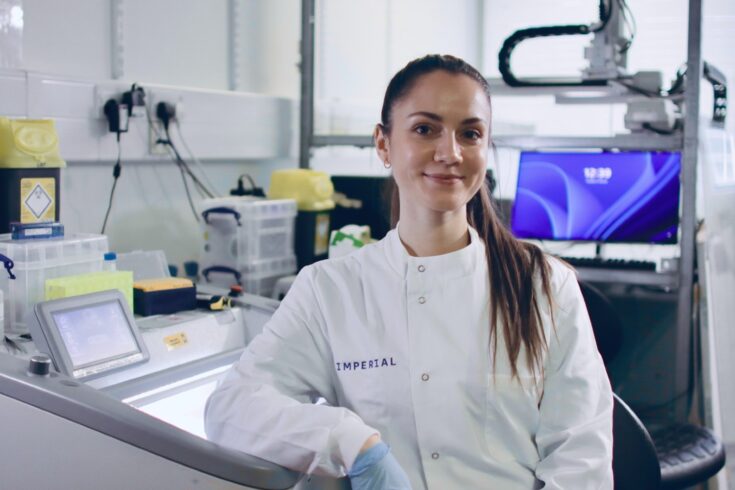

After endless writing, re-drafting, and thinking of how to explain my research to a non-scientific audience, winning the writing category of the Medical Research Council (MRC) Max Perutz Award 2025 felt like a finish line.
However, very quickly, I realised winning the award was not the end. Rather, it was the beginning of something I had not anticipated.
Winning the award led to my article being published in The Observer, followed by TV interviews in both the UK and Slovakia. I received supportive messages and congratulations from my friends, family, and even professors. All of this meant a lot to me.
But what stayed with me the most was something else entirely. I started hearing from patients for the first time. Suddenly, my PhD research was no longer something I only discussed with my supervisor or at conferences. It was out in the world, reaching the very people it is meant to help.

Vanessa’s interview at Sky News. Credit: Sky News
Hearing from patients
I work with focused ultrasound, a non-invasive technology that uses sound waves that can reach deep inside the brain and influence how cells behave. My research explores whether we can use it to gently restore the brain’s own immune system as it declines with age. The aim is to slow down cognitive decline and help protect people from diseases like dementia.
Following the media coverage of my article, I started receiving emails and even a handwritten letter from patients and their families living with dementia, Parkinson’s disease, or cognitive decline. Some messages were hopeful. Some frightened. Many simply asked, ‘Can we take part in your research?’
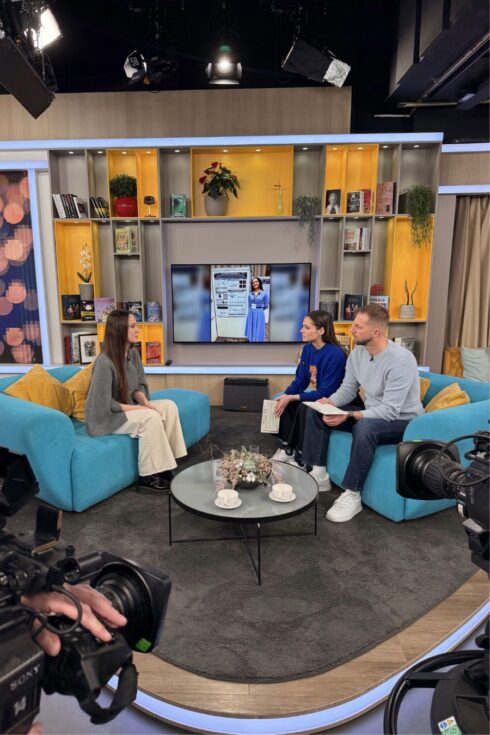
Vanessa’s TV interview in Slovakia. Credit: Lucia Jesenská
Until then, most of my conversations about focused ultrasound had been with other scientists. We talked about mechanisms, pathways, and data. But these emails felt completely different.
They were so personal. They made my research feel closer, heavier, and more real.
Learning how to be realistic while hopeful
Despite the advances in focused ultrasound therapies, our work is still in the pre-clinical stage, and we are not able to involve participants yet. Learning how to explain this honestly, without taking away hope, has been one of the biggest challenges since winning the award.
At first, I struggled with those conversations. However, as I had more interactions with patients, I realised that they are very hopeful, and they appreciate our honesty and ongoing effort. What surprised me the most was how supportive and grateful they were for our work.
This gave me an enormous amount of motivation to continue pushing our research forward.
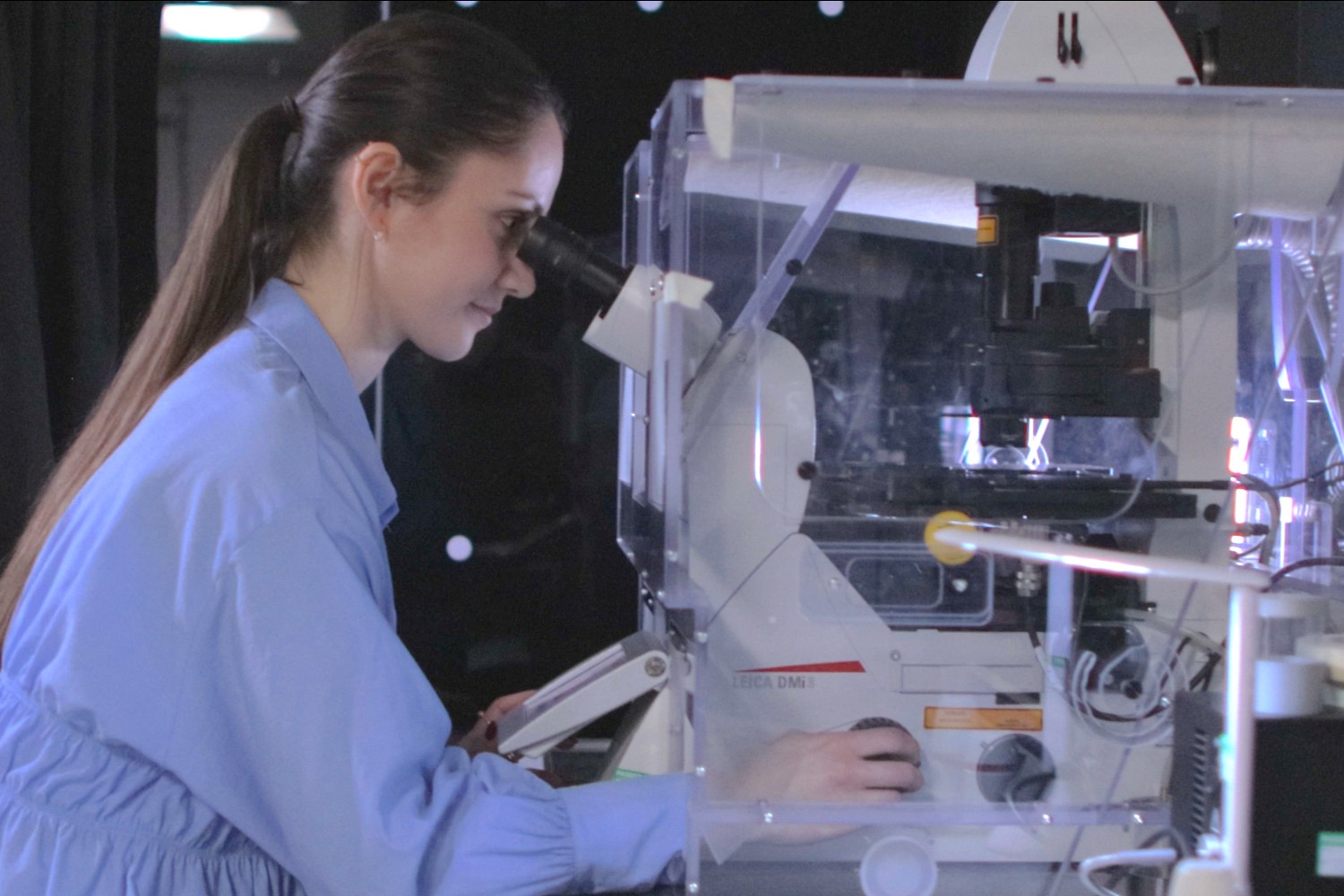
Vanessa in the lab, imaging brain tissue with a confocal microscope. Credit: Matthew Chang
The impact on my research
Hearing directly from patients changed how I think about my work. As scientists, we often get lost in mechanisms and molecular pathways. But patients think differently. They care about outcomes. Will this help? Can I receive this treatment now?
Their questions pushed me to think even more about translation. How do we move faster, safely, and responsibly towards the clinic?
It led to new conversations with my supervisor, Dr Sophie Morse, and collaborators about accelerating our plans. We even began discussing a pilot clinical study much earlier than I had ever imagined during my PhD.
At the same time, we also started exploring ways to involve patients more directly in meetings to understand their perspectives, worries, and priorities from the start.
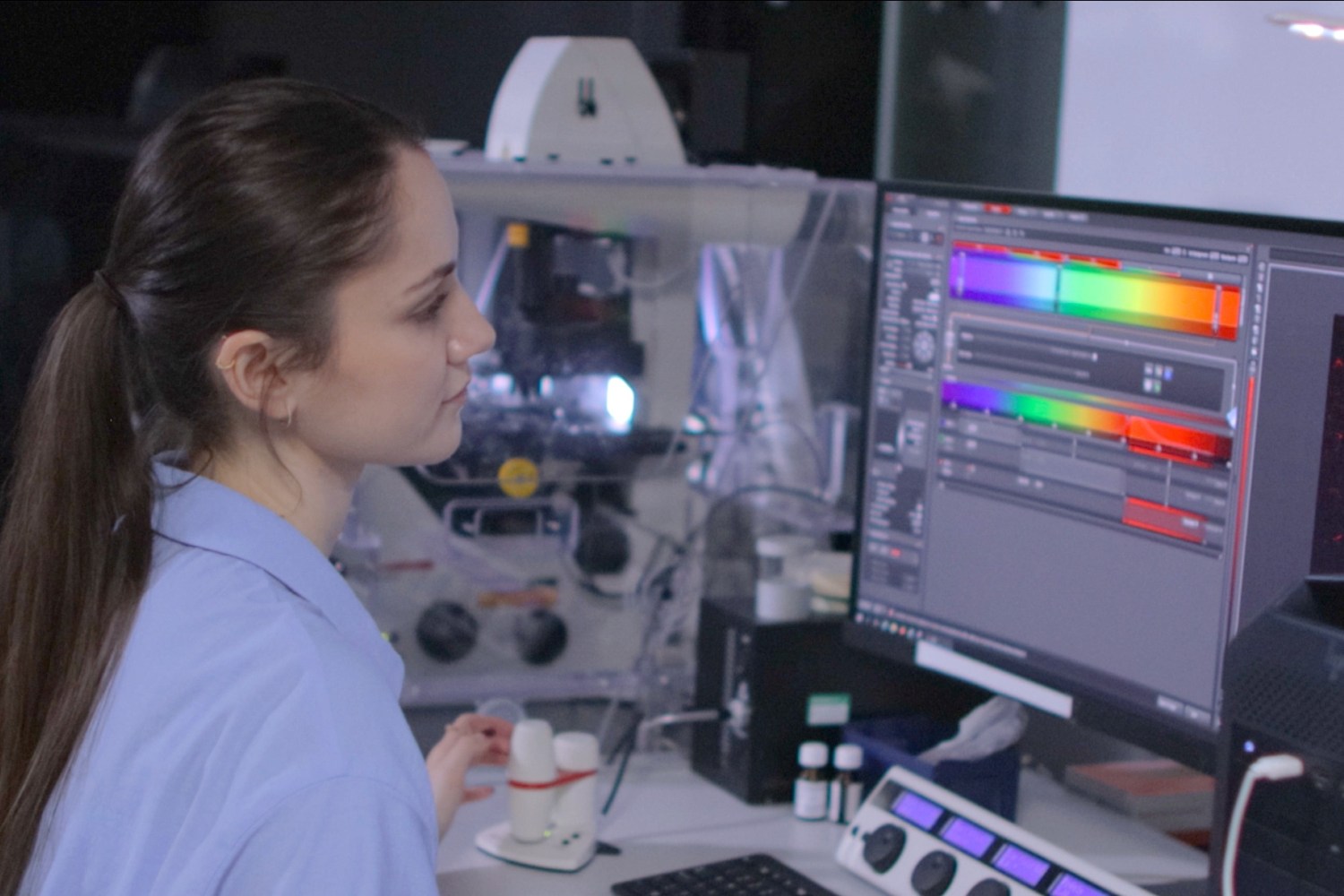
Vanessa in the lab, imaging brain tissue with a confocal microscope. Credit: Matthew Chang
Changing the way I communicate
As an early career researcher and someone who speaks English as a second language, I used to try really hard to sound more ‘impressive’. I thought using technical terms, scientific jargon, and complicated sentences would make me sound like a better scientist.
But thanks to the MRC Max Perutz Award and the opportunities that came after, I realised it’s actually the opposite.
I’ve realised that simple language goes much further, whether I’m speaking to patients or to scientists. The goal is not to sound clever. It is to be understood. I now appreciate that speaking more clearly doesn’t mean dumbing the science down, it is learning how to make science more relatable.
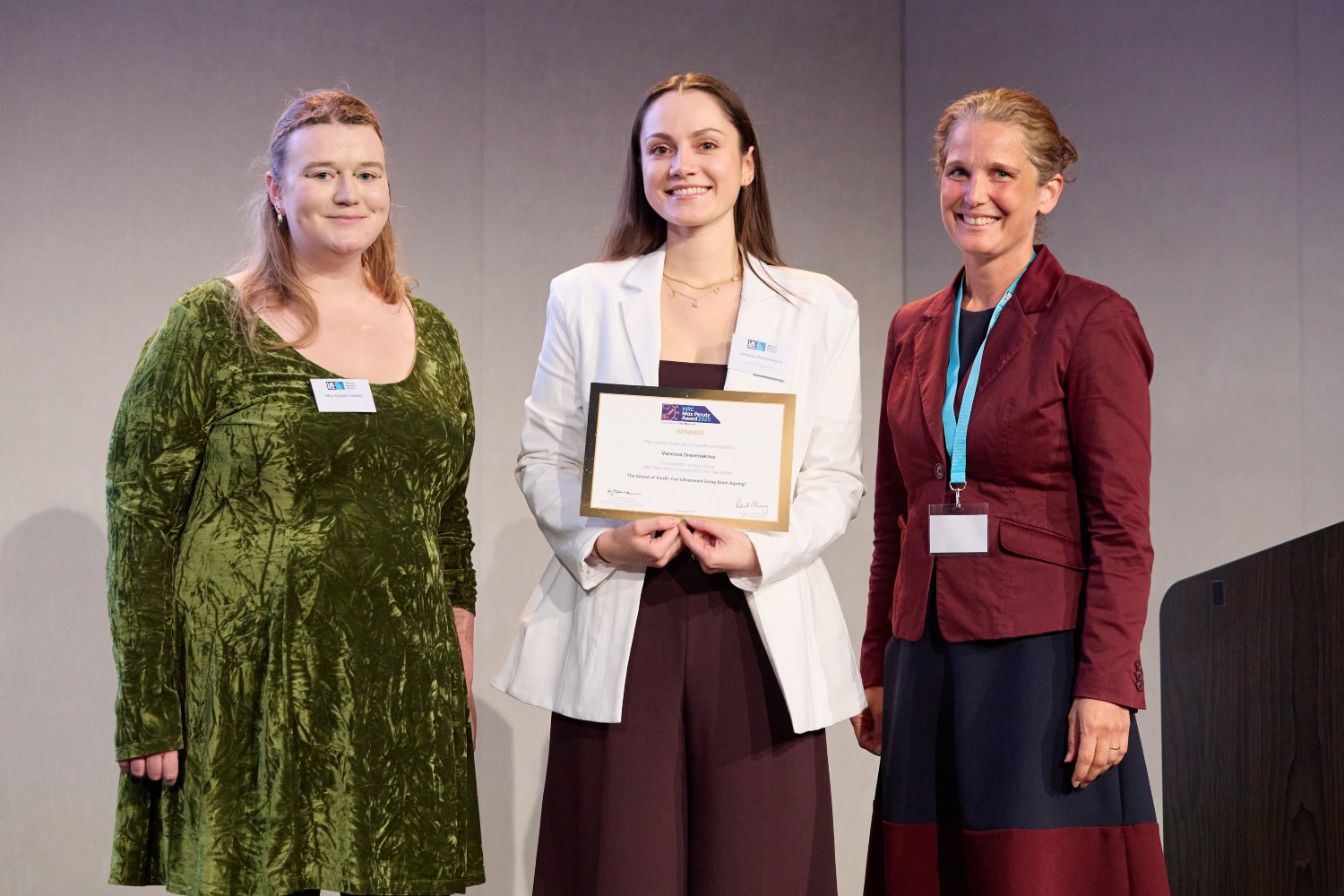
Vanessa winning the writing category of the MRC Max Perutz Award 2025. From left to right: Elspeth Oakley (Judging Panel Public Member), Vanessa, and Dr Joanna Robinson (Chair of the Judging Panel). Credit: Joel Knight Photography
Looking forward
What I carry with me most from this experience is the people behind the emails and letters. On the hard or uncertain days, they remind me why this work matters in the first place.
I hope that in the coming years we can move our research closer to the clinic, involve patients more directly, and turn small steps in the lab into real benefits for people’s lives. And if our work can one day make even a small difference to someone who wrote me one of those letters, then it will all have been worth it.
Find out more
Read more about Vanessa’s research: Could sound waves help slow brain ageing?
See Vanessa’s profile at Imperial College London and UK Dementia Research Institute
Learn more about focused ultrasound research, clinical trials and current treatments at Focused Ultrasound Foundation and UK Focused Ultrasound Foundation
Read about a world-first clinical trial exploring focused ultrasound treatment for Lewy body dementia, recently launched in the UK. This will be led by Dr Ashwini Oswal, MRC Clinician Scientist Fellow in the leadership team at the MRC Centre of Research Excellence in Restorative Neural Dynamics.
Vanessa is a PhD student in the Department of Bioengineering and the UK Dementia Research Institute at Imperial College London. Her research explores whether non-invasive brain stimulation using focused ultrasound can restore the activity of the brain’s immune cells and slow down aspects of brain ageing.
Read more about Vanessa on Imperial College London’s website.