
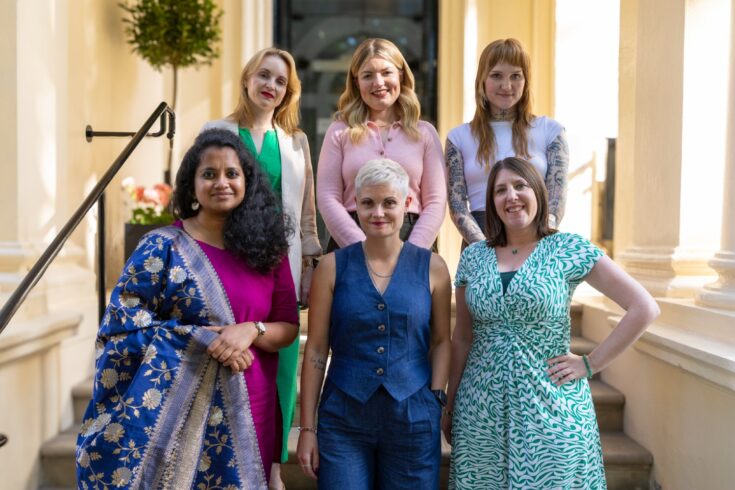
Set up in 2010, the New Generation Thinkers (NGT) scheme was launched through a partnership between the Arts and Humanities Research Council (AHRC) and the BBC to shine a light on emerging academic voices.
Its core focus has been to help make knowledge more accessible by giving early-career researchers a platform to share their ideas and cutting-edge research with the public. This helps give them the confidence and skills to communicate their research to new audiences, taking them on a journey of discovery where familiar stories and subjects are seen in new ways.
Each year, ten researchers were selected from hundreds of applicants across the UK to become New Generation Thinkers at BBC Radio 3, working with the ‘Free Thinking’ team.
The scheme moved home to BBC Radio 4 in 2024 with five researchers taking part in the scheme. High profile radio programmes and production departments such Woman’s Hour and Front Row Unit joined Free Thinking. They worked closely with the NGTs to craft compelling discussions, interviews and short written features based on the research of the chosen applicants.
NGTs also receive AHRC funded training about storytelling and working with policymakers; and there is a dedicated funding pot for them to participate in the annual Being Human Festival.
Over the last 15 years 146 researchers have been part of this very popular scheme, with hundreds applying to take part each year.
Enriching BBC programming
By collaborating with researchers from a wide range of disciplines, from historical criminology to film studies, and archaeology to the ethics of artificial intelligence, the BBC has been able to explore complex topics with nuance and depth.
These contributions have helped the BBC maintain its reputation for thoughtful, high-quality content while also appealing to younger and intellectually curious audiences.
New Generation Thinkers have appeared on programmes and podcasts including the hugely successful You’re Dead to Me, chatting in BBC Proms intervals on Radio 3 and writing episodes of Radio 3’s Essay series.

Professor Shahidha Bari. Credit: Professor Shahidha Bari
As one of the first cohort of NGTs back in 2011, Professor Shahidha Bari was drawn to the scheme by its fresh promise to connect academics with the public. With no media ties, she saw it as a “miraculous” opportunity, describing NGT as an “X-factor for academics.”
Her first time in a BBC studio was transformative, sparking a passion for public engagement. The training helped shape her career as a broadcaster, teaching her to listen closely and communicate clearly.
Fresh and diverse researchers
Matthew Dodd, Commissioning Editor, Arts at BBC Radio 4, said:
The New Generation Thinkers scheme has been not just been an opportunity for early career academics – it’s been an opportunity for the BBC to bring a fresh and diverse range of researchers to the BBC.
We’ve got closer to the latest research findings on topics we often find our programmes trying to tackle, and it’s enhanced those programmes to share such new research with our audiences.
The partnership between the AHRC and the BBC has brought real benefits to the idea of public engagement with the arts and humanities, and it’s helped foster fruitful and strong links between many of our programmes and a new generation of academic researchers.
Empowering early career researchers
For the researchers being an NGT is often a career-defining moment. It offers a unique opportunity to step outside the world of research and engage with the public in new and meaningful ways. Many alumni have credited the scheme with increasing their confidence, broadening professional networks, and opening up new career pathways in public facing academic roles.
Professor Michael Talbot, associate professor of Ottoman and Middle Eastern history at the University of Greenwich, joined the scheme in 2017 wanting to broaden public access to academic research. His Radio 3 essay on The Ottoman Empire, Power and the Sea, led to a role as consultant and on-screen expert for Netflix’s Rise of Empires: Ottoman.
Professor Talbot credits being an NGT with transforming his approach to research, focusing on sharing history beyond academia and into local communities. Aa shift echoed by many alumni who now see public engagement as central to their scholarly mission.
A catalyst for public engagement
For the last 15 years, the New Generation Thinkers scheme has helped to redefine what it means to be an academic in the 21st century. It has encouraged researchers to think beyond journals and conferences and consider the broader societal impact of their work.
At the same time, this partnership with AHRC has enriched the BBC’s storytelling capacity, ensuring that its programming remains intellectually vibrant and socially relevant.