
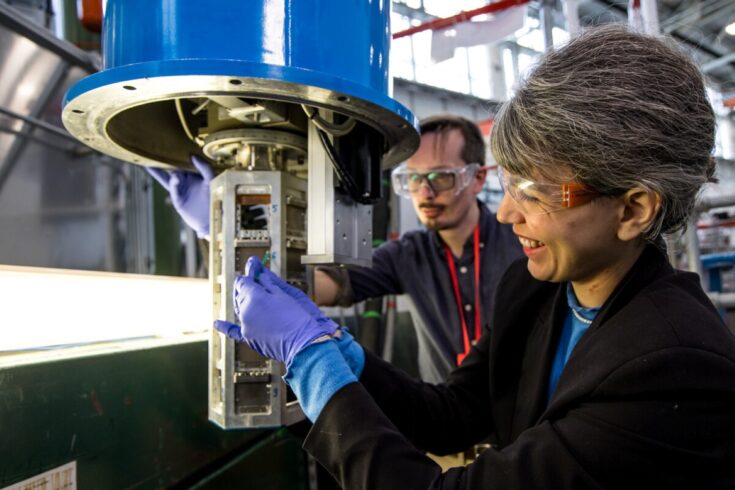
The ISIS Springboard Awards have been won by:
- Andrew McCluskey, University of Bristol
- Camilla Di Mino, University of Oxford
- Daniel Mayoh, The University of Warwick
The ISIS Neutron and Muon Source created the Springboard Awards in 2024 to support and encourage early-career researchers to use neutrons and muons in their research.
The winners were chosen following a competitive process.
Their awards last three years and amongst other benefits, will provide recipients with funding:
- to present ISIS research at conferences
- write a case study highlighting their research
- to spend an extended period at ISIS
Meet the award winners
Improving neutron-scattering data analysis
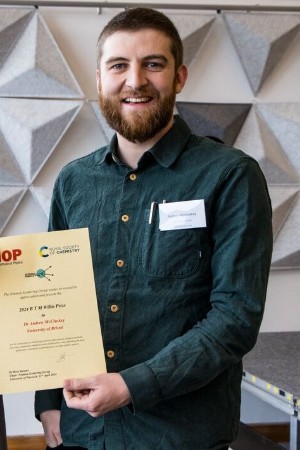
Andrew McCluskey, University of Bristol. Credit: STFC ISIS Neutron and Muon Source
Andrew McCluskey leads the SCAMs@bristol group, which uses mathematical and simulation approaches to improve the analysis of neutron-scattering data.
Initially, this focused on improving observables that are derived from simulation.
He is now expanding this scope to explore how classical and machine learning interatomic potential simulations can be used to improve the information obtained from quasi-elastic neutron scattering measurements.
Andrew said:
Alongside traditional research, I am keen on communicating the science that ISIS does as widely as possible.
The Springboard Award will enable me to establish new analysis approaches for neutron spectroscopy, helping other ISIS users maximise the information that they can obtain.
Understanding molecular interactions in liquids
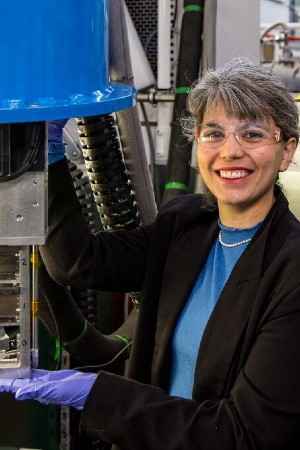
Camilla Di Mino, University of Oxford. Credit: STFC ISIS Neutron and Muon Source
Camilla Di Mino’s research focusses on gaining a fundamental understanding of competitive intermolecular interactions and solvation patterns in liquids.
She primarily uses total and inelastic neutron scattering in combination with classical modelling to disentangle subtle molecular mechanisms arising from the complexities of multi-body systems.
Camilla said:
The Springboard Award will be a key step for establishing myself as a leader, towards my career goal of running a group in a leading UK university where neutrons play a central role.
This award will facilitate my ongoing work as an ambassador for neutron science in the UK and overseas.
Growing quantum material crystals
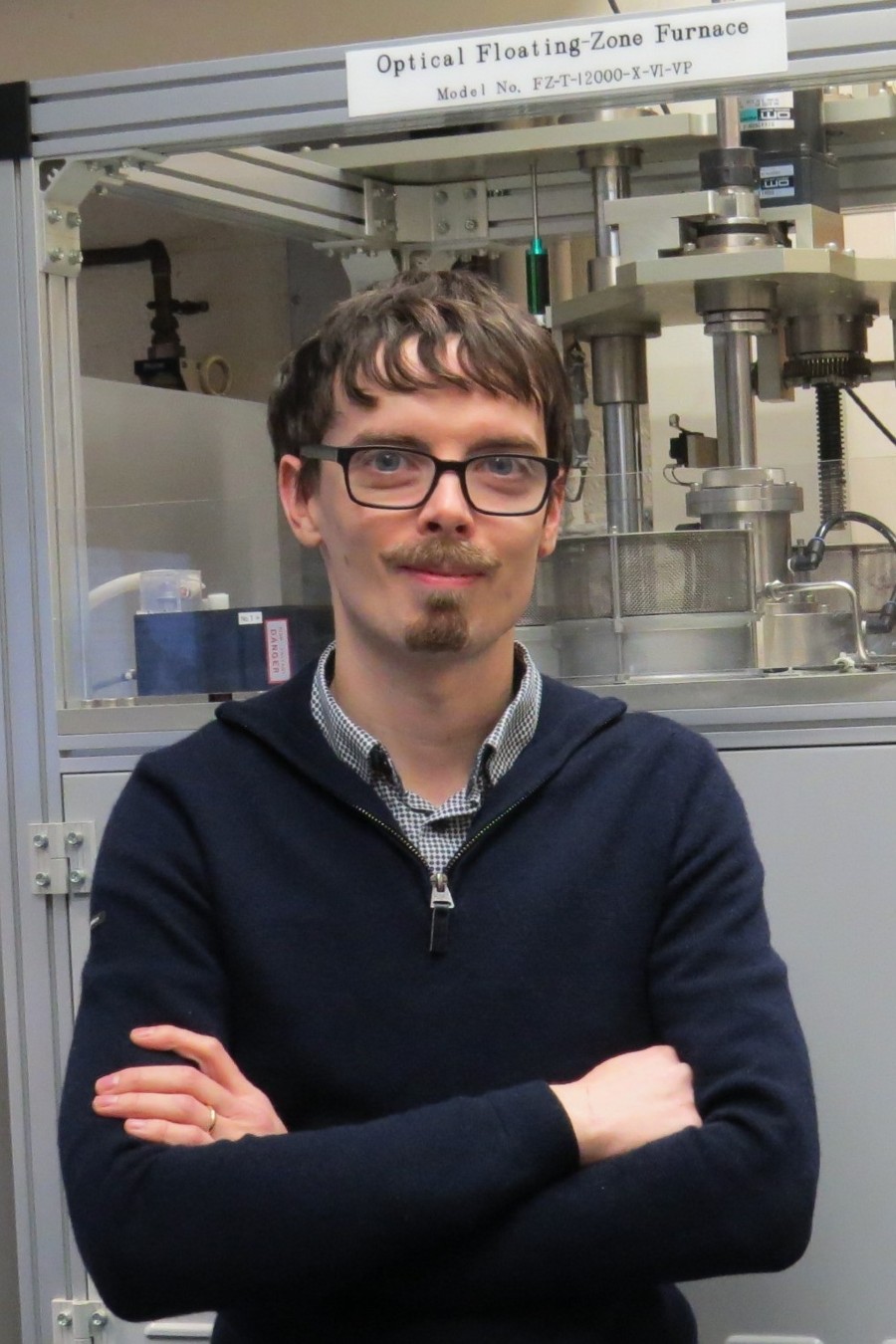
Daniel Mayoh. Credit: The University of Warwick
Daniel Mayoh’s research involves the growth and study of single crystals of quantum materials, including oxides, borides, chalcogenides, and intermetallics of magnetic and superconducting compounds.
The materials he studied exhibit a wide range of exciting phenomena, from unconventional superconductivity and frustrated magnetism to newly discovered exotic states of matter such as skyrmion lattices and topological magnetism.
Daniel said:
The award will enable me to continue cultivating an international network of collaborators, supporting research at international central facilities.
I am eager to advocate for the importance of neutron and muon science.
ISIS is excited to have appointed its second cohort of Springboard Award winners and is looking forward to working with them over the next three years.