
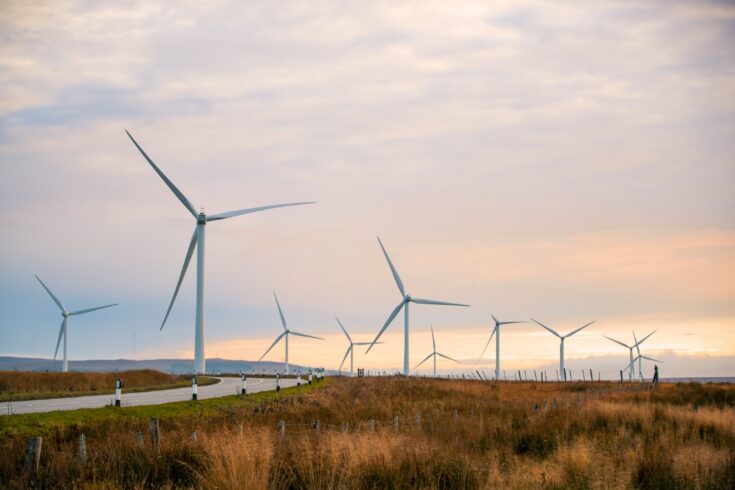
The innovative Ammonia Synthesis Platform using Intermittent Renewable Energy (ASPIRE) plant offers a solution to the significant challenge of energy wastage.
About one-tenth of all wind generation in Great Britain in 2024 was produced but not used.
Innovative approach to renewable energy storage
The ASPIRE plant represents a major advancement in the UK’s green energy landscape.
Engineers at the Science and Technology Facilities Council’s (STFC) Energy Research Unit have successfully switched on the facility, which was built in an STFC-led collaborative project with:
- University of Bath
- Johnson Matthey
- the Frazer-Nash consultancy
The facility transforms renewable electricity into storable ammonia through an innovative process that captures hydrogen molecules within the ammonia structure.
Green ammonia can be manufactured from air, water and renewable electricity with no direct carbon emissions.
Addresses a critical infrastructure challenge
In storage, it acts as a reservoir of hydrogen that can be extracted later and used to generate electricity when demand is high or when renewable energy supply is low.
This addresses a critical infrastructure challenge as the UK develops its grid to support the government’s commitment to create a zero-carbon electricity system by 2030.
The timing of this development aligns with the UK’s substantial investment of £1.1 billion for offshore wind, described as ‘the backbone of the UK’s clean energy mission’.
It supports the broader commitment to reduce emissions by 81% by 2035.
Transforming energy challenges into opportunities
The facility addresses several pressing energy infrastructure challenges.
Grid development continues alongside wind expansion, with practical considerations around transporting electricity from generation locations like Scotland to areas of high demand.
Periods of low electricity demand during high wind output, combined with currently limited energy storage options, all contribute to the energy wastage problem.
A practical solution
Tristan Davenne, Principal Engineer at the STFC Energy Research Unit and ASPIRE project lead, explained the significance of this achievement:
Today marks the culmination of years of intensive research and engineering innovation.
What makes ASPIRE notable is its ability to produce ammonia at variable rates and its readiness for scalability in industry.
ASPIRE is not just a technical achievement – it is a practical solution that can transform unused wind energy from a challenge into a valuable resource.
Multiple applications for climate change mitigation
The ASPIRE technology offers versatile solutions that extend beyond energy storage.
The facility can potentially decarbonise shipping and fertiliser manufacturing, provide grid resilience by converting stored ammonia back to electricity during peak demand, and supply low-carbon hydrogen for fuel via ammonia cracking.
Green ammonia presents significant climate change mitigation opportunities through these applications, potentially delivering 10% to 15% of global carbon dioxide emissions reductions.
The technology brings substantial advantages over traditional ammonia production methods, reducing 90% of carbon emissions relative to conventional ‘grey’ ammonia production and 70% of carbon emissions compared to ‘blue’ ammonia production.
How the technology works
The facility operates through a sophisticated multi-stage process that transforms renewable electricity into storable ammonia.
The system utilises renewable electricity, particularly during periods when wind turbines generate surplus power that exceeds grid demand.
This electricity powers an electrolysis unit that splits water into hydrogen and oxygen, with the hydrogen captured for the next stage.
Simultaneously, an air separation unit extracts nitrogen from the atmosphere through a pressure swing adsorption process.
Significantly higher energy density
The captured hydrogen and nitrogen are then fed into a modified Haber-Bosch reactor containing proprietary catalysts.
These catalysts enable the reaction of nitrogen and hydrogen to form ammonia at lower temperatures and pressures than conventional ammonia production requires.
The resulting green ammonia is liquefied and stored in specially designed tanks, where it can remain indefinitely without degradation.
Liquid ammonia has significantly higher energy density than both compressed hydrogen and liquid hydrogen.
Scaling for commercial viability
The ASPIRE project receives funding as part of the Department for Energy Security and Net Zero’s £1 billion Net Zero Innovation Portfolio.
It provides funding for low-carbon technologies and systems to decrease the costs of decarbonisation.
Data collected from the operational plant will be crucial for future scaling efforts, ultimately enabling green ammonia to compete commercially with traditional fossil-fuel-based production.
The UK’s recent introduction of the Carbon Border Adjustment Mechanism and Hydrogen Allocation Round subsidies are expected to help overcome one of the key barriers to green ammonia adoption.
The current cost advantage of fossil fuel-based production.
Operate directly from renewable sources
The scalable technology can operate directly from renewable sources and is ideal for integration with the UK’s expanding renewable energy infrastructure.
The facility:
- utilises low-cost electricity during periods of excess renewable generation
- avoids carbon emissions penalties
- is not subject to the volatile gas prices that affect conventional ammonia production
This flexible approach allows the generation of ammonia in accordance with the fluctuating availability and cost of renewable energy supply, making it a practical solution for the energy sector’s storage challenges.
Secure power for the British people
Energy Minister, Michael Shanks, said:
This government is working tirelessly to deliver homegrown, clean, secure power for the British people and technology like this showcases how British innovation can play a role in bringing down energy bills for good.
We are delivering the biggest upgrade in Great Britain’s electricity network in decades right now, which will minimise constraint costs and meet the capacity needed to deliver clean power by 2030.