
For the cultural sector and public-interest organisations, this means looking beyond what AI can do and asking what it should do. This will ground innovation in the values of humanity, creativity and ethics.
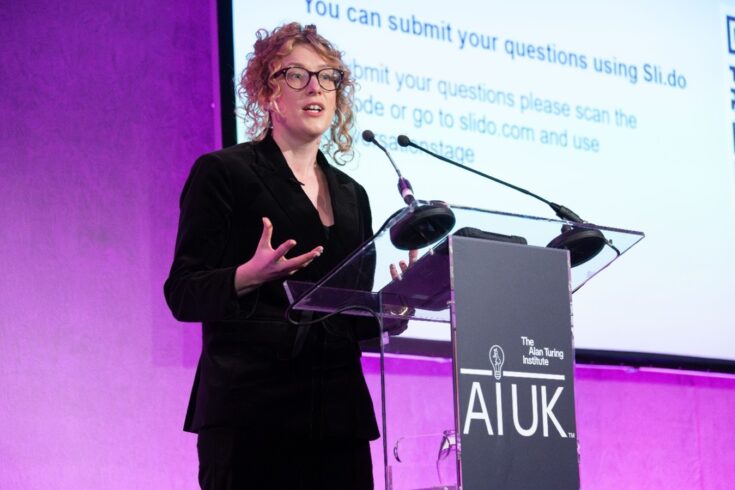
At the forefront of this conversation is Dr Oonagh Murphy, Senior Lecturer in Digital Culture and Society at Goldsmiths, University of London. Through her fellowship under the Bridging Responsible AI Divides (BRAID) programme, a major initiative led by the Arts and Humanities Research Council (AHRC), she has partnered with Arts Council England (ACE) to develop one of the UK’s first comprehensive responsible AI frameworks for the cultural sector.
The BRAID programme is a six-year, £15.9 million investment (2022 to 2028) dedicated to integrating arts and humanities expertise into responsible AI research and practice. Murphy’s project with ACE focused on two goals:
- strengthen ACE’s own AI policy and practice so it could credibly advise the wider cultural sector
- co-develop a toolkit helping other organisations do the same
Establishing policies for AI governance
Under Murphy’s guidance, ACE introduced an organisation-wide AI policy covering 700 staff, and publicly confirmed that AI will not influence decisions on its £600 million in annual grants. This represents a move towards transparent, values-led governance that protects fairness and public trust.
ACE acknowledged that applicants may choose to use generative AI to support the drafting of an application, but that any application must express their own, original idea. This public position statement was developed through a deliberative governance approach. It moved the conversation beyond what is technically and legally possible, to define a position that aligns with the values of the organisation, and The Nolan Principles of Public Life.
Moreover, a key output of Murphy’s work is the Responsible AI in Practice: The Journey of Arts Council England report and accompanying toolkit. Originally developed for ACE, it was designed to be adapted by other organisations as a robust framework for ethical and transparent AI use. The toolkit provides practical, step-by-step guidance for developing responsible AI policies, moving institutions from ad hoc experimentation to structured, values-led practice.
Other organisations are already beginning to engage with and apply this approach, including:
- Royal Academy of Arts
- The National Gallery
- Liverpool Everyman
- MUNCH Museum
- British Council
- Creative Scotland
Looking to an AI-friendly future
Murphy’s arts and humanities perspective centres on the human aspects of AI:
- authorship
- meaning
- fairness
- inclusion
It reminds us that innovation must serve people, not replace them.
The tangible benefits are clear; by building the sector’s confidence in AI, Murphy’s work:
- safeguards creative livelihoods
- ensures fair access to funding
- helps major cultural institutions use technology to strengthen their public mission
This approach not only benefits those working in the arts but also the wider public, who rely on cultural institutions to reflect diverse voices and shared values in an increasingly digital world.
Grounded in ethics and inclusion
Following this work Arts Council England has created a new full-time, permanent job role, Responsible AI Tech Champion. This role will support the creative and cultural sector to engage with the opportunities and challenges of AI technologies in a practical yet responsible, human-centric manner.
Looking ahead, Murphy and her partners are exploring ways to deepen sector-wide capacity in responsible AI, including potential programmes to build leadership skills, strengthen data governance expertise, and support place-based approaches within cultural institutions.
This work demonstrates why continued investment in arts and humanities research is vital to the UK’s digital future. Through AHRC funding, researchers like Dr Murphy are helping ensure that advances in AI and digital technology are grounded in ethics, inclusion, and cultural understanding. They are shaping innovation that not only drives growth but also reflects the kind of society we want to build.