

Long term Natural Environment Research Council (NERC) investment in research, people, partnerships and infrastructure has opened diverse routes to innovation.
UK-wide benefits include growing key sectors, enhancing security and resilience, and improving lives and the environment:
- licensed products and associated sales: For example, data products by the British Geological Survey (BGS) are used by over 1,000 organisations, generating £4 million a year from licensing
- over 45 active spin-out companies, collectively creating over 500 jobs, and with an average turnover of £1.5 million
- leveraged investment: millions of pounds in equity investment for spin-outs including NatureMetrics (£51 million) and DEScycle (£16 million)
- consultancy services to deliver growth to key sectors. For example, the UK Centre for Ecology and Hydrology (UKCEH) generated £4.8 million in private sector contracts
- partnerships, such as the SWEEP programme, which led to £25 million in cost savings to businesses and the public purse, and generated 327 jobs for business and government partners
- open source resources: the NERC Environmental Data Service holds 16,000 environmental datasets with over 100,000 users, which helps drive new commercial products and services
Driving green growth of key sectors
NERC science delivers commercial solutions that support an environmentally responsible and economically viable transition to a greener economy. These solutions enable sectors such as clean energy, digital and advanced manufacturing to develop faster, with lower costs and risks.
Key impact example: offshore wind
Offshore wind is an engine of growth for coastal regions and a key growth sector in the government’s industrial strategy. UK offshore wind provided 17% of total UK electricity in 2024, supporting 32,000 jobs across the UK, predicted to grow to 100,000 by 2030.
NERC funding delivered through our research centres has been an important factor in the development of the industry, delivering £3.3 billion in economic value. Commercial pathways such as consultancy, tools and services reduce costs and risks across offshore wind development and operation. For example:
- BGS’s marine geoscience provide detailed mapping and understanding of the UK’s seabed geology is used by all stakeholders, from government bodies to developers, in the initial stages of wind farm development
- the Sea Mammal Research Unit (SMRU), SMRU Offshore Wind, and UKCEH’s seal and seabird population datasets are crucial to understanding the potential adverse impacts from offshore wind developments, and are therefore to environmental impact assessment and consenting
See an economic analysis of NERC’s impact on offshore wind.
Enhancing security and resilience
Commercialisation of NERC science also increases the security of our economy and our lives. Spin-out companies, commercial services and licensed products reduce costs, minimise damage for trillions of pounds of assets, and avoid disruption for governments, businesses and citizens.
Key impact example: flood prediction
Flooding costs the UK economy £2.2 billion a year, projected to rise by 27% by 2050 due to climate change. Two NERC spin-out companies have developed world-leading high resolution flood modelling services that help businesses and governments to:
- protect critical infrastructure
- reduce risk
- identify market opportunities
The University of Bristol spin-out Fathom’s cutting-edge flood mapping products help clients like Microsoft, Network Rail and AXA insurance and the World Bank to price products and manage flood and climate risk
The University of Loughborough spin-out Previsico’s surface water forecasting tool help insurers and asset managers prepare for extreme weather and mitigate damage to infrastructure. Customers include:
- National Grid
- BT
- Network Rail
- Zurich Insurance
Driving responsible innovation for everyday life
From cleaner air to healthier rivers, to resilient peatlands, NERC science delivers commercial products and tools that deliver growth and jobs. They also champion more sustainable business practices, products and services that benefit people and the planet.
Key impact example: new products
Key impacts include:
- air quality monitoring: licensee Alphasense Ltd launched devices mapping pollution hotspots, now used in 70 plus countries to improve urban air quality and health
- biopesticides: licensed research enabled biotechnology companies to develop and sell environmentally-friendly biopesticides, such as Met52, protecting crops without harming beneficial insects. The research was funded by NERC, Biotechnology and Biological Sciences Research Council (BBSRC) and others.
- peatland restoration: BeadaMoss Ltd sells more than £1 million in Sphagnum moss propagules annually to restore peatlands as a valuable carbon store and wildlife habitat. The products were developed with support from NERC, BBSRC, Innovate UK and others
Skilled people driving commercialisation
NERC investment in training delivers highly skilled experts who can spot real-world applications of environmental science. Each year, NERC investments PhDs worth around £34 million, and funds around 280 new studentships. Of these, 25% are research collaborations with industry, business, or public sector partners. Three NERC spin-outs lead or partner on UKRI Future Leadership Fellowships: DEScycle, Minviro, Simplifai systems.
Professor Tim Wright
Innovating ground-movement services for resilient national infrastructure
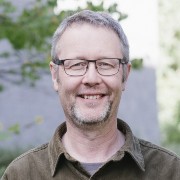
Professor Tim Wright. Credit Tim Wright
Tim is a co-director of COMET, NERC’s Centre for the Observation and Modelling of Earthquakes, Volcanoes, and Tectonics, and is co-founder and director at SatSense Ltd. The University of Leeds spin-out is a seven-figure turnover business with global clients and 15 employees.
SatSense delivers satellite-derived ground stability insight to support insurers, developers, energy, utilities, and transport networks to manage their infrastructure. The company continues to expand, recently announcing a multi-million, multi-year monitoring contract with Network Rail.
Tim’s NERC-supported Masters, PhD, and Fellowship honed his skills in translating research into real-world solutions. He helped SatSense adopt cheaper, faster and better analysis of assets for clients.
Dr Carol Sparling
Pioneering sea mammal research and capability to support marine renewable sector growth

Dr Carol Sparling. Credit Carol Sparling
Carol is Head of the SMRU and was previously Technical Director of its commercial arm, SMRU Consulting which now employs 24 staff globally and has a £2.56 million turnover.
The organisations work closely to deliver research-led consultancy and services to support industry and government stakeholders through offshore renewable project lifecycles in a way that protects biodiversity. They collectively enabled consent in 76% of UK offshore wind energy capacity, representing £31 billion of energy generation.
Carol’s NERC-funded PhD and postdoc developed her negotiation skills within a complex, multi-stakeholder sector. While director at SMRU Consulting she helped the company to grow, expanding their innovative technology and monitoring services.
Dr Roland Leigh
Commercialising technology to tackle air pollution and protect health
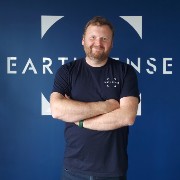
Roland Leigh. Credit: Roland Leigh
Roland is Chief Technical Officer at Earthsense, a University of Leicester spin-out.
Earthsense develops and sells tools used by millions of people globally to reduce their exposure to harmful air pollution.
Roland’s expertise in applying new technologies to societal issues was honed during his NERC-funded PhD, postdocs, and Knowledge Exchange Fellowships. These, plus NERC studentships held by others, contributed significantly to the successful spinning-out of Earthsense in 2016, transforming academic air quality research into a successful commercial enterprise.