Safer scans for children’s lungs

New imaging technology is revolutionising paediatric respiratory care, making scans safer and more accurate for children with lung conditions.

Children’s lung conditions are often difficult to detect early in life with breathing tests, and traditional scans use X-rays, which cannot be repeated frequently.

Now, scientists at The University of Sheffield have created a way to scan lungs using magnetic resonance imaging (MRI), with no radiation, so doctors can diagnose and track conditions more safely.

“When doctors in A&E listened to Zoe’s chest, they couldn’t hear any sign of damage to her lungs. But I knew something was wrong.”

Sarah’s story is familiar to any parent of a child with a lung condition. In 2023, her daughter Zoe, then two, spent a week in Sheffield Children’s Hospital with pneumonia.

In the year that followed, Zoe’s lungs did not recover, and low oxygen levels sent her back and forth to the GP and A&E. Zoe was diagnosed with bronchiectasis, which causes damaged airways and mucus build-up in the lungs.

Breakthrough in scans for children’s lungs

Lung conditions in children can be difficult to spot early and even harder to monitor. Under-fives are too young for standard breathing tests.

Chest X-rays and CT scans help at first, but repeating them means repeated exposure to radiation, which needs to be balanced with the low-level risks.

Scientists at The University of Sheffield have solved this problem. Their new technology uses MRI with xenon gas to create scans of the air in the lungs in unprecedented detail, with no radiation.

This paves the way for faster diagnosis and better treatment for conditions such as asthma and cystic fibrosis.

Helping avoid unnecessary treatment

Children and young people being cared for at Sheffield Children’s NHS Foundation Trust are the first in the UK to access this breakthrough technology as part of cutting-edge research being undertaken at the Royal Hallamshire Hospital.

Using the technology marked a turning point for Zoe, now five. She’d been in hospital every few months for IV antibiotics, and doctors were considering putting a port in her chest for easier treatment.

“IV antibiotics through a port was a big step that would have affected her life a lot. She was about to start school, and frequent treatment would have meant a lot of missed lessons. Zoe loves swimming and wouldn’t have been able to do that either,” Sarah says.

Before the procedure, Zoe had an MRI using the new University of Sheffield technology.

Two scans two weeks apart showed the antibiotics were not significantly improving her lungs, so the port was unnecessary. Her treatment then focused on daily physiotherapy to clear mucus from her lungs.

“It worked really well; she hasn’t had a day off school in months,” Sarah says.

Creating a clear picture of air inside the lungs

Conventional MRI scans are good at diagnosing disease in soft tissue, but struggle picking up the open spaces in lungs. So, the team led by Professor Jim Wild from The University of Sheffield, developed a way for MRI scanners to ‘see’ the invisible gas.

The technology magnetises xenon gas with lasers, creating a strong signal for the scanner to read. The MRI scanner, when tuned to the signal of the magnetised gas, then provides images of the lungs.

Jim explains: “Patients inhale the harmless gas, hold their breath for a few seconds while the scanner collects the images, then breathe it out. The images clearly show the ventilation of the airspaces through their lungs.”

Spotting lung damage that other tests cannot

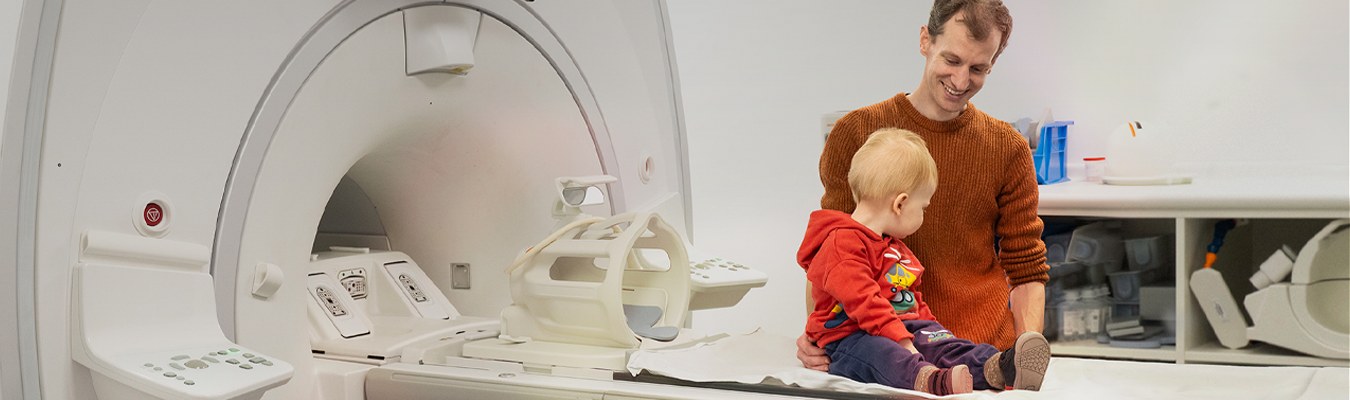
As Zoe found, the process is easy for children and more straightforward than other tests.

“She practised breathing in the gas before the scan. Then they played her favourite music from Encanto during the scan. She even started dancing, so I had to tell her to lie still, but she enjoyed the whole experience,” Sarah smiles.

While the process is simple, the images are incredibly detailed. They can even spot the structural damage missed by standard tests, providing vital information about how lungs are working.
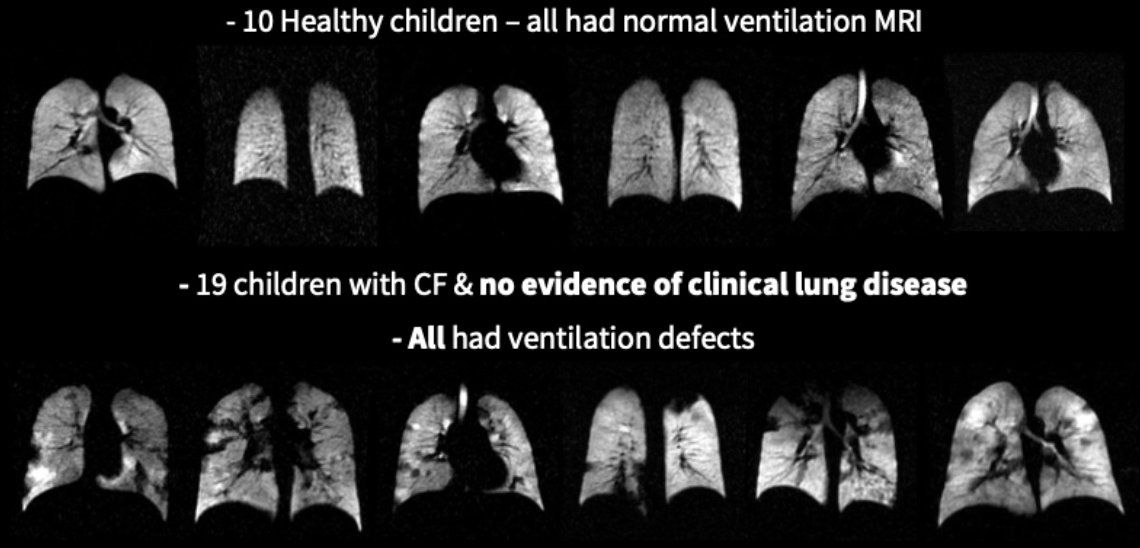
An image showing scans of healthy children’s lungs, next to scans of the lungs of children with CF and no evidence of clinical lung disease.

Scans of children’s lungs taken by the University of Sheffield’s MRI scanner. Credit: University of Sheffield

“Lung conditions often start in the small airways and membranes of the lungs, which can’t be picked up in the early stages by CT scans. This technology lets doctors spot problems and start treatments sooner,” says Jim.

No more ‘wait and see’ if medication is working

“As the scan doesn’t use radiation, it can be repeated to track lung changes. This is key when it comes to checking whether medication is working. The MRI method means doctors no longer have to ‘wait and see’”, says Jim.

There have been big advances in treatments for cystic fibrosis, for example, but the drugs are expensive and work differently for every child. The scanner is guiding treatment and helping to find the right therapies faster.

Professor Jim Wild

The University of Sheffield

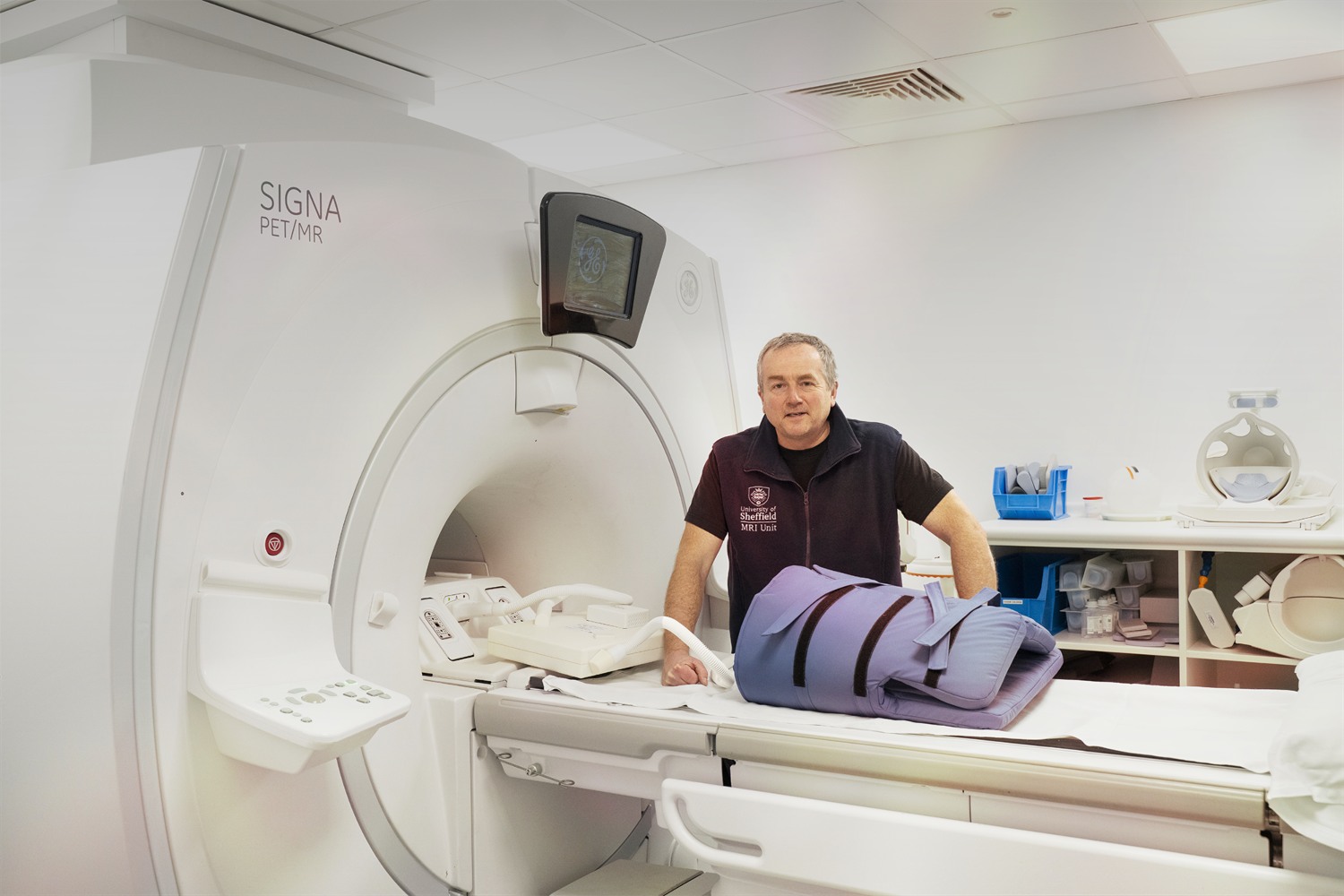
A researcher with an MRI scanner.

Professor Jim Wild, University of Sheffield. Credit: UKRI

From research lab to hospital ward and beyond

This technology and its translation is the result of over 25 years of research by the POLARIS MRI team and The University of Sheffield’s Insigneo Institute.

Decades-long partnership between the university and NHS organisations has led to this groundbreaking advancement, helping children, young people and adults receive world-class care.

A significant part has been funded by UK Research and Innovation (UKRI), which invests taxpayers’ money into projects that improve people’s lives. Jim’s work builds on earlier UKRI-funded research that led to the very first MRI scanners in the 1970s.

Now, UKRI is backing The University of Sheffield’s latest project with research into tech that could open up the possibility of smaller, more cost-effective scanners. These could be set up in local clinics, reducing waiting lists and travel times for patients.

These exciting developments are spurred on by Jim’s own family history with lung disease.

As a child, my brother was very poorly with asthma. I have vivid memories of that time in Sheffield Children’s Hospital as a family. With this new imaging technology, doctors will hopefully be able to spot and treat lung conditions earlier and help children lead healthier lives.

Professor Jim Wild

The University of Sheffield

Get involved

The University of Sheffield is currently fundraising to accelerate this crucial research, challenging people to lace up their hiking boots and take on a 20 or 30 mile trek through the Peak District.

The Big Walk 2026: Saving Young Lungs will take place on 3 July and is open to anyone keen to fundraise and help this imaging technology reach more children.

About UKRI

UK Research and Innovation (UKRI) invests taxpayers’ money into groundbreaking research and innovation to improve the lives and livelihoods of people everywhere.

It creates impact locally and around the world, in areas from cancer treatments to clean oceans.

This is the website for UKRI: our seven research councils, Research England and Innovate UK. Let us know if you have feedback or would like to help improve our online products and services.