The endometriosis breakthrough aiming to cut years of suffering

New research is set to radically reduce diagnosis time.

“When you’re that age, it feels like your whole world is ending.”

Ashleigh Hirst’s periods began when she was nine years old. The defining memory she has of her teenage years is constant pain.

She has endometriosis, although she wouldn’t be formally diagnosed until 2017, at the age of 26.

“We’d always had gynaecological issues in our family, so I expected painful periods. But this was something else. I was flooding through everything, having accidents at school, being sick and was doubled over in pain.”

At age 17, Ashleigh went to a nurse practitioner, but was told to ‘just get on with it.’

“After that, I didn’t go back for years because you start thinking maybe you’re overreacting.”

What is endometriosis?

Endometriosis is when cells similar to the ones in the lining of the uterus, are found elsewhere in the body. These cells can grow and change in response to the menstrual cycle, causing inflammation, pain and scar tissue.

Symptoms vary from person to person and can include:

  • heavy periods
  • pelvic pain
  • fatigue
  • painful bowel movements
  • bloating
  • difficulty getting pregnant

Some people may have severe, debilitating symptoms, and some may have no symptoms at all.

Treatment

Treatment can include pain management, hormonal therapies and surgery, including hysterectomy.

But treatment is only possible after a diagnosis, which in the UK currently takes an average of nine years and two months.

Diagnosis can also be difficult and delayed because endometriosis manifests in a variety of ways and shares symptoms with other conditions, according to Endometriosis UK.

The organisation notes that the only definitive way to diagnose endometriosis is through laparoscopy, an operation in which a camera is inserted into the pelvis through a small cut near the navel. The surgeon uses the camera to look for signs of endometriosis and diagnose accordingly. The method has its own shortcomings.

From years to days

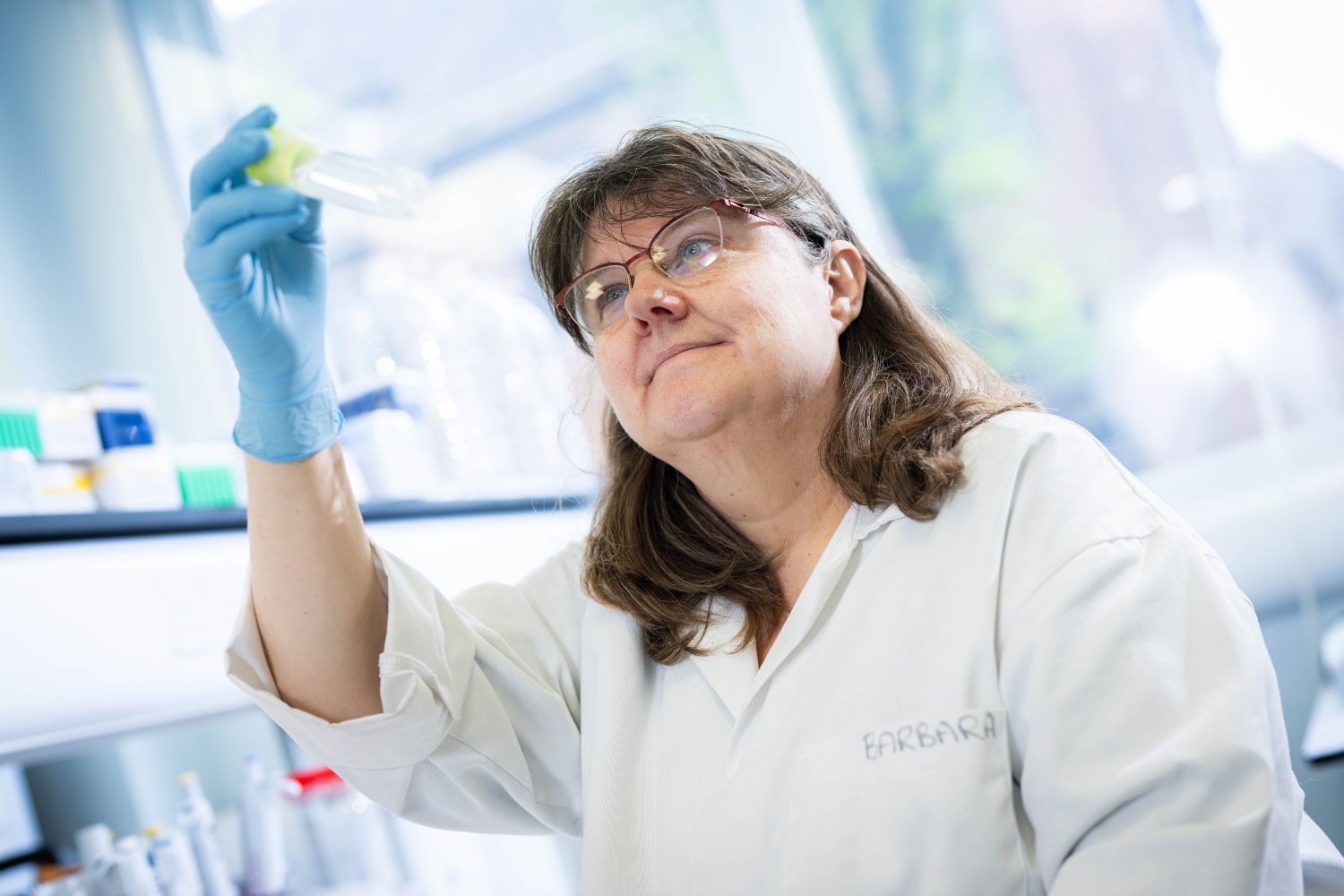
Dr Barbara Guinn at the University of Hull is set to transform this.

She has developed EndoTect, a urine test that could reduce time to diagnosis from nine years to a matter of days. The innovation was backed by UK Research and Innovation (UKRI)  through proof-of-concept funding.

The test could be offered to women by GPs and other primary care professionals for use in care settings.

“Women visit their GPs about endometriosis symptoms an average of 10 times before being referred for investigations or treatment,” explained Dr Guinn.

“Our non-invasive urine test could tell medical practitioners whether a woman has endometriosis and, crucially, whether they have superficial or deep endometriosis.

“It will take less than a week for those results to be returned, and is 91% accurate.”

This could transform women’s experiences and outcomes and put them on a faster pathway to treatment.

New research mission

Dr Guinn has spent her career investigating biomarkers that can act as early indicators of disease. Biomarkers are things like proteins, genes or molecules that can signal the presence, absence or severity of disease in the body.

Dr Guinn had already identified proteins unique to leukaemia and ovarian cancer when, in 2018, a chance conversation with a friend prompted her new research mission.

“My friend had suffered badly from endometriosis; it had a devastating effect on her life. It remains difficult to diagnose, hard to treat and poorly understood as a disease.”

“Covid stopped our lab work, which forced us back into computer work, using datasets as sources for analysis. We kept seeing a recurring protein in endometriosis.

“We already knew this protein was associated with Alzheimer’s disease, and that its different levels could be detected in urine. That made us think: could we look for it in urine from people with endometriosis?”

HEY Endo

In 2022, Guinn and her colleagues ran a clinical study with 400 women with endometriosis and 200 healthy volunteers, based at the Hull and East Yorkshire Endometriosis Centre at Castle Hill Hospital near Hull.

HEY Endo, formally known as Hull & East Yorkshire Endometriosis Support, a peer support and advocacy group for people living with endometriosis, helped recruit participants.

Ashleigh co-founded the charity; she had to leave her previous job because they weren’t supportive of her condition.

“I’ve never had participants so keen to hand over a urine sample,” said Dr Guinn. “The average compliance rate for a clinical trial is 60-80%; ours was 96%.

“That shows you how keen women are for progress, for just a bit of help to improve the situation.

“And I’ve never worked with such a supportive and enthusiastic group of people; it has kept me motivated to find a solution, a quicker route to treatment.”

Dr Guinn was also able to draw on a critical university resource: students.

“I managed to recruit more than 20 medical students over the years to contribute to the work. They were absolutely essential to our success and made huge contributions, especially helping with data analysis of existing literature. This has helped inform what we do and how we do it.”

Associated health conditions

Radically reducing endometriosis diagnosis time should mean a quicker route to treatment and an improvement in symptoms, but it could have other health benefits.

Dr Guinn said, “Having endometriosis means you are four times more likely to have rheumatoid arthritis, and four times more likely to have a cardiac event like a heart attack.

“The more I learn, the more I believe chronic inflammation is central to many of the symptoms, and we really need to do more research.

“A faster diagnosis is the first step towards improving outcomes across the board.”

EndoTect is undergoing ISO13485 accreditation, a quality management standard for medical device manufacturers that ensures consistent, safe and regulated design, production and distribution.

Dr Guinn and her team hope it could be available from as early as 2027.

Asked what EndoTect means to her, Ashleigh summed it up, “This feels like a massive step forward, and it shouldn’t be underestimated.

“A diagnosis currently takes nearly 10 years, and for some of us it’s much longer.

“Having a test that can come back positive and validate what you’ve been feeling is absolutely massive. It tells women: this is real, what you’re experiencing is real, and you deserve help.

“It’s 2026. Women shouldn’t have to live in fear of the next flare-up or plan their lives around spare clothes and pain management.

“Anything that gets people answers faster will make a huge difference.”

About UKRI

UKRI invests taxpayers’ money into groundbreaking research and innovation to improve the lives and livelihoods of people everywhere.

This is the website for UKRI: our seven research councils, Research England and Innovate UK. Let us know if you have feedback or would like to help improve our online products and services.