UK-farmed king prawns could help improve food security

UK-farmed prawns using recycled water and renewable energy, making our food more secure.

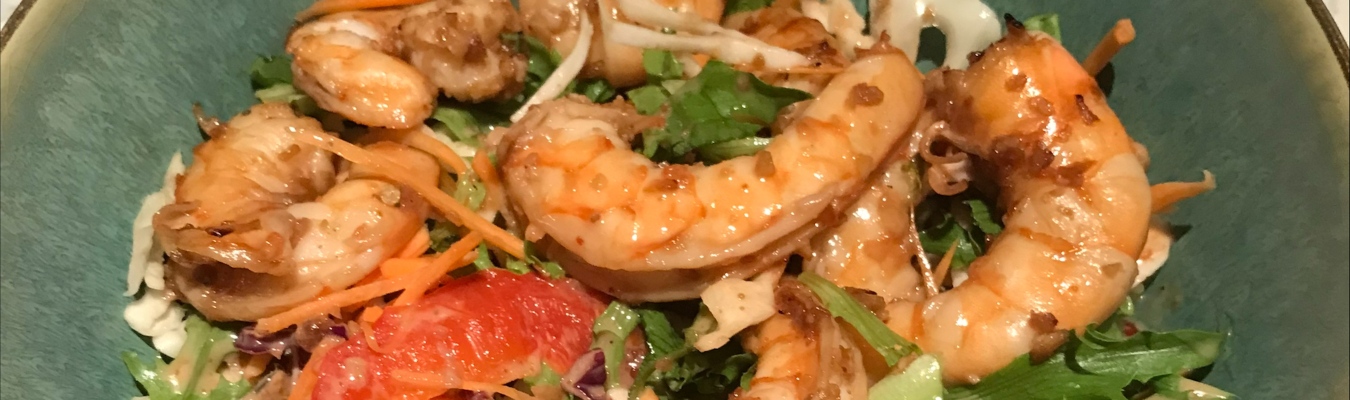
Imagine enjoying king prawns farmed in the UK in everything from curries, fish pie, or prawn kebabs to meals for special occasions.

Now imagine those prawns are produced in a way that reduces environmental impacts, supports food security, and creates valuable products, from healthcare to biodegradable plastics, from what would otherwise be waste.

That’s why the UK Sustainable King Prawn Project is so exciting.

Sustainable seafood farming

Scientists and economists at the University of Exeter, working with project partner RevolOcean in Scotland, investigated whether indoor seafood farming can be both financially and environmentally sustainable in the UK.

Using warm-water king prawns as a test case, the team explored how novel approaches to aquaculture could support more sustainable food production while reducing reliance on imports.

RevolOcean designed, built and operated a demonstrator at its Eden Campus site near St Andrews, using the company’s existing farming system and production methods.

The research focused on indoor Recirculating Aquaculture Systems (RAS), powered by renewable energy and designed around circular economy principles – like minimising waste and maximising reuse.

Freeing up land for conservation and biodiversity

RAS continuously cleans and recycles the water, using mechanical and biological filtration to restore it to ideal conditions after each pass through the tanks. This protects against disease, creates optimal growing conditions for the prawns, and minimises the waste.

Aquatic animals are generally more efficient to rear than terrestrial livestock on land. This farming approach can apply to any aquatic species (including crabs, lobsters and fish). This could free up land for conservation, biodiversity recovery and net zero targets, without compromising national food supply.

The system lets farmers pursue land-sparing and nature-positive practices while reducing reliance on imports, contributing to UK food security.

A useful byproduct

Prawn shells contain a particularly high-quality form of a natural polymer chitin, which can be converted into a valuable product called chitosan.

Chitosan is used in a number of industries including wound-healing, gene therapy, drug delivery, tissue engineering, and bone repair. It’s also used in biodegradable plastics, crop defences and even cosmetics.

Chitosan can exceed the per-kilogram value of prawn meat, creating an additional source of income for farmers.

We have been producing and selling fresh, never-frozen king prawns from our Eden Campus site in Fife for the past three years, supplying customers from London to the Highlands.

Our next step is to build on this commercial experience and scale up production, creating skilled jobs and helping to establish a new aquaculture industry in the UK.

Dr Andrew Whiston

Chief Technology Officer of RevolOcean

But the research has not just demonstrated high quality, sustainable UK seafood production.

This is a transformational opportunity to boost not only productivity and exports, but also the technology and engineering capabilities behind it.

Professor Ian Bateman OBE

Co-Director of the Land, Environment, Economics and Policy Institute, University of Exeter

The UK has the research expertise, entrepreneurial talent and growing market demand needed to lead the next generation of sustainable seafood production. The question is whether we act quickly enough to capture that opportunity.

Professor Rod Wilson

Department of Biosciences, University of Exeter

Despite its undoubted promise, to realise the full potential of this emerging sector the UK must overcome a number of key barriers we identified during the project.

Addressing these will require regulatory reform, tailored skills training, public outreach, and R&D. All are vital and require a coordinated national approach, to enable land-based aquaculture to drive a food system revolution in the UK.

Dr Rob Ellis

Department of Biosciences, University of Exeter

This is the website for UKRI: our seven research councils, Research England and Innovate UK. Let us know if you have feedback or would like to help improve our online products and services.