
Five new research and partnership hubs are being backed by over £52 million from the UK government through UK Research and Innovation (UKRI).
The hubs will develop tools that help people stay healthier for longer.
This investment builds on previous healthcare hubs whose work has already led to:
- the world’s first artificial intelligence (AI)-assisted brain tumour surgery
- new space suits fitted with artificial muscles for astronauts exploring the Moon and Mars
Transforming health through innovation
New technologies will help people manage their own health, bringing benefits such as shifting care out of hospitals and into communities, and helping to ease pressure on the NHS.
The five hubs will:
- create the UK’s first network of NHS brain health clinics, where AI combines blood tests, brain scans and memory tests to reduce the risk of dementia, and to speed up diagnosis by up to 50%
- build pitch side and car crash tools that alert people to how dangerous a blow to the head is in real-time
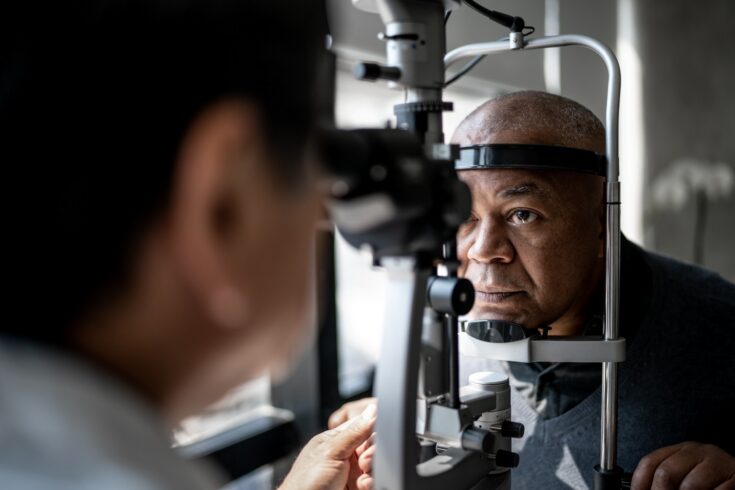
- use AI to spot early signs of diabetes and heart disease hidden in routine eye scans
- develop smartphone apps that listen to coughs and breathing, wearable devices and an easy-to-use test to advise people with a respiratory infection whether to rest or contact a pharmacist or GP
- create an AI-powered wellbeing coach to give people personalised support on managing cardiovascular disease from home
Catching illness earlier
To mark the announcement, Science Minister Chris McDonald visited the Sunderland Specialist Eye Hospital as part of the launch of the Northern Ophthalmic Research and Innovation (NORI) partnership hub.
This hub will use AI to spot early signs of diabetes and heart disease hidden in routine eye scans, meaning patients will be diagnosed and able to access treatment far sooner.
This pioneering technology could help to address some of the most pressing health issues in the North East, which currently experiences some of the worst health outcomes in England.
Pioneering use of technology
Science minister Chris McDonald said:
Sunderland has long been a centre of innovation and scientific endeavour, from glassmaking to shipbuilding, and now in the pioneering use of technology to diagnose illnesses like diabetes and heart disease earlier.
Earlier diagnosis means better outcomes for patients and less pressure on our NHS, and technology has a vital role to play.
These healthcare hubs offer a powerful example of how scientific research can improve lives, whether that is using scans to catch heart disease earlier, or using AI to assess head injuries quicker.
Partnering with the right people
The national hubs are based in Exeter, London, Southampton and Sunderland.
They will bring together experts in engineering and physical sciences from across all four nations in the UK.
To make sure research provides real benefits to patients, the teams will work closely with people with lived experience of these conditions, alongside healthcare professionals.
Partners include:
- the NHS
- charities such as Alzheimer’s Society
- sport leagues including the Rugby Football League and GB boxing
- global industry partners like Google, Siemens and Medtronic
They will provide an additional £37.5 million in cash and in-kind support.
A £1 million contribution from the UKRI Life Science Programme is included in the £52 million investment.
Building on proven results
Professor Charlotte Deane, Executive Chair of the Engineering and Physical Sciences Research Council (UKRI), said:
These five new hubs will improve the lives and livelihoods of people and patients right across the UK.
They build on the proven success of our previous hubs, which are already translating cutting-edge research into real benefits, advancing healthcare innovation, including the world’s first AI-assisted brain tumour surgery.
By working closely with patients, the NHS and industry, we’re helping people live healthier lives and preventing ill health before it starts.
Further information
Hub summaries in alphabetical order by research organisation
AI and Emerging Technologies for Next Generation Brain Health Clinics (BRAINIAC) hub
Led by: Professor David Llewellyn, University of Exeter.
Partners include:
- Dementia UK
- Alzheimer’s Society
- National Institute for Health and Care Research HealthTech Research Centre
New blood tests, brain scans and digital tools can now detect early signs of dementia disease years before symptoms appear, but the NHS has no reliable way to combine them.
BRAINIAC will create the UK’s first network of NHS brain health clinics.
Ten sites across the UK will test AI that brings this information together into one clear picture of a person’s brain health, with more than 1,700 patients, so it is ready for everyday NHS use.
The aim is to reduce the risk of dementia and speed up diagnosis by 50% faster, so people get support when it makes the biggest difference.
Brain Research for Adaptive Traumatic Injury: Simulation, Assessment, Forecasting & Education (BRAIN-SAFE) hub
Led by: Professor David Sharp, Imperial College London.
Partners include:
- Royal Air Force
- Rugby Football league
- World Rugby
- Premiership Women’s Rugby
- GB Boxing
- Jaguar Landrover
Traumatic brain injury is the leading cause of death and disability in under-40s.
Yet there is still no reliable way to determine how dangerous a head impact is or when repeated blows become harmful.
BRAIN-SAFE is bringing together engineers, AI experts and clinicians to develop computer models that can predict an individual’s risk of brain injury following a head impact.
It will take into account factors such as age, sex and previous injuries.
The technology could enable:
- real-time pitch side alerts for potentially dangerous impacts in sports
- car and smartphone crash data that alerts paramedics to likely brain injury
- safer helmets, improved vehicle safety ratings and better military protection
EPSRC HeartTech Hub: Engineering the Future of Personalised Cardiovascular Care
Led by: Professor Sebastien Ourselin, King’s College London.
Partners include:
- Siemens Healthineers
- GE Healthcare
- Google Health UK
- Garmin
- Canon
- Heartfelt Technologies Ltd
- Cardiology Devices Ltd
- Medtronic
Cardiovascular disease affects more than 7 million people in the UK and causes a quarter of all deaths.
Current care relies on costly, hospital-based specialist equipment, making it harder for people in some areas to get the support they need.
The HeartTech hub will combine data from wearable devices, advanced imaging and health records to identify people at risk earlier and deliver personalised support to prevent disease.
The team will develop new tools to help people monitor and manage their heart health in their local community and from home.
This includes an AI-powered wellbeing coach that could provide personalised prompts towards lifestyle adjustments and flag when to see a clinical professional.
£1 million of funding has been provided by the UKRI Life Science Programme.
Community Respiratory Infection Screening and Prognostics (CRISP) Hub
Led by: Associate Professor Alexander Edwards, University of Southampton.
Partners include:
- Nokia
- Samsung
- Department of Health and Social Care
- South Central Ambulance Service
- Community Pharmacy Hampshire
Acute respiratory infections, including flu, COVID-19 and chest infections, place huge pressure on the NHS every winter with around 25 million GP consultations and 850,000 hospital admissions a year in England.
It can be difficult for people to know when to recover at home and when to seek medical help.
For doctors assessing patients, it’s also challenging to tell who will recover without treatment and who is at risk of becoming seriously ill.
CRISP will develop wearable sensors, smartphone apps that analyse coughs and breathing, and rapid tests for home and community healthcare use.
AI will combine this data to predict how an illness is likely to develop.
This means people could safely monitor infection at home and get clear, personalised guidance on whether to rest or contact a pharmacist or GP.
The NHS will also be able to make better treatment decisions.
The Northern Ophthalmic Research and Innovation (NORI) hub
Led by: Professor Matthew Campbell, University of Sunderland.
Partners include:
- South Tyneside and Sunderland NHS Foundation Trust
- Sunderland City Council
- Moorfields Eye Hospital
- TopCon Healthcare
People in the North East and North Cumbria face the worst health outcomes in England, with life expectancy up to 10 years shorter in some areas.
The tiny blood vessels and nerve tissue at the back of the eye can reveal important clues about a person’s wider health, often before symptoms appear.
NORI will use AI to analyse routine eye scans alongside NHS health records and community data, identifying subtle changes in retinal images that may signal early signs of disease.
This will help doctors identify which patients need further investigation, close monitoring and earlier preventative treatment.
NORI will initially focus on diabetes and cardiovascular disease.
The approach could later be expanded to conditions like stroke, heart disease and dementia, providing a blueprint for earlier diagnosis across the NHS.