
Each year, billions of doses of medicines are prescribed across the UK.
Many medicines are not fully broken down by the body and are, instead, excreted into wastewater systems.
Others are disposed of inappropriately.
Standard wastewater treatment does not fully remove pharmaceuticals.
That means they pose risks to aquatic ecosystems and may accelerate antimicrobial resistance, where diseases in humans and animals and plants are able to overcome the treatments that once worked.
Working across disciplines to solve society’s problems
With the aim of developing a novel approach to addressing pharmaceutical pollution in our water a new project, funded by UK Research and Innovation (UKRI), brings together:
- environmental
- materials
- social scientists
- health services researchers
- pharmacologists
- microbiologists
- modelling experts
- the NHS
- water companies
- environment regulator
- policymakers
And it’s just one of around 30 projects, many of them designed to tackle pollution and other environmental impacts, whose funding was announced today.
All the projects are interdisciplinary, spanning the expertise of multiple research disciplines.
This ensures new approaches and methods are developed that would not be possible from established, single discipline thinking.
They are also applicant-led, meaning that the research ideas come directly from the research community identifying a problem to solve.
Environment-related research projects
Other projects designed to protect the environment include the following.
Plastic fantastic, how enzymes can rid us of plastic pollution
A project to speed up our knowledge of which nature-based enzymes can break down the microplastic waste in our water, environment and even our bodies.
It will also work on developing enzymes able to break down microplastic waste.
It will tackle the challenges these pollutants are causing within the environment and the toxic effects they have on marine and freshwater organisms.
Air spaces: getting the measure of air
Air pollution affects people unequally due to factors such as housing, geography, and occupation, and raises significant health, social, and environmental challenges.
Current responses are limited by fragmented data and research siloed within separate disciplines.
Now a new, interdisciplinary project will understand air quality in all its multiple dimensions.
Drawing from atmospheric sciences, social sciences and heritage studies it will develop the new concept of air inequalities, by focusing on people’s everyday experiences of pollution in Manchester.
It will bring scientific measurements, qualitative and creative methods together with community knowledge.
Collaborating with community groups and local councils it aims to shift how policymakers understand and respond to air pollution in more inclusive ways.
How listening (not talking) to plants might save our crops
Plants respond to and generate sound, especially when under stress, but we still know surprisingly little about how this works.
Understanding plant sounds may enable early detection of stress, such as drought or nutrient deficiencies, which impacts crop health.
Noise may also disturb plant life and the interactions with pollinators they rely on to reproduce.
This project brings together acoustical engineers, biologists, and mathematicians to explain the mechanisms and role of sound in plants.
Combining experiments with innovative modelling and signal processing, the project will create a strong foundation for sound-based sensing and pollination protection.,
It will enhance plant health and reinforce food security in the face of climate change.
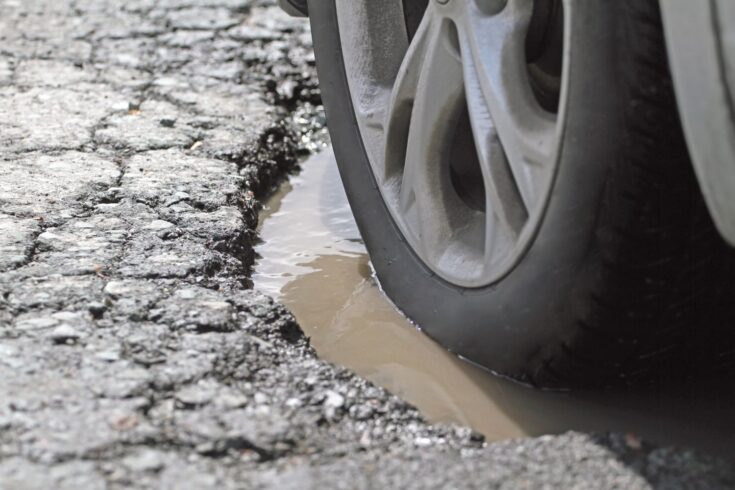
Do potholes create more pollution?
Vehicle tyres create over 30% of the world’s microplastic pollution and emit over a third of a modern combustion engine car’s airborne particulate during use.
However, electric vehicles will produce more of this pollution due to their increased mass and instant torque generation.
Now a new project will develop a method of quantifying those impacts, looking both at the state of the tyre and the road surface.
Engineers, biologists and environmental scientists will generate new knowledge about tyre particulate generation, transmission and effects.
This will help ensure that future tyre design and vehicle emissions policies can use appropriate standards, maximising their effectiveness at protecting people and places from harm.
Working together across disciplines
Professor Alison Park, UKRI cross disciplinary working champion and Deputy Executive Chair of the Economic and Social Research Council said:
Many of our most pressing problems can only be addressed by researchers working together across different disciplines – engineers working with environmental researchers and social scientists, for example.
Through interdisciplinary research like this we can tackle environmental threats, like pollution or crop damage, more quickly and effectively than research that occurs only within the boundaries of a single discipline.
Many of the projects whose funding we’ve announced today could transform our environment, and millions of lives, for the better.