
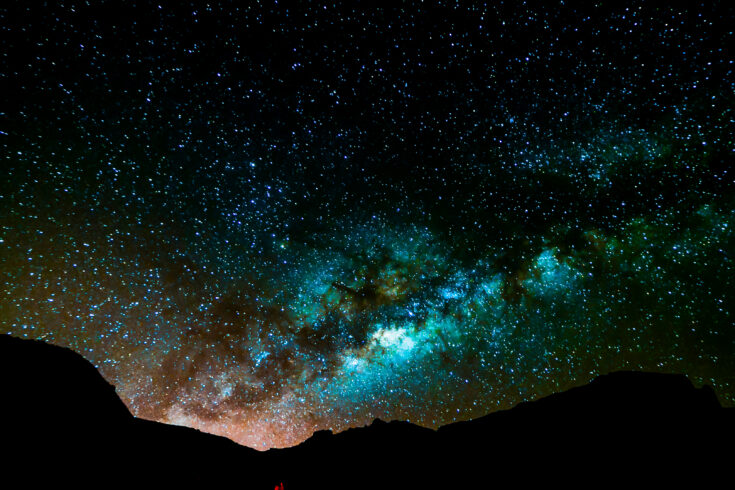
The mission, known as the Probe Mission for Far-Infrared Astrophysics (PRIMA), will use a 1.8 metre telescope that sees far-infrared wavelengths.
It will reveal parts of the Universe that are impossible to observe with ordinary telescopes.
This space telescope will conduct deep, sensitive surveys of the Universe in far-infrared light to help address a wide range of questions about the Universe.
This includes:
- the origins of planets outside our solar system
- how galaxies and their black holes have grown and evolved over cosmic history
- how dust and heavy elements have built up in the Universe over time
This will help us paint a better picture of why the Universe looks the way it does today.
An international major milestone
If confirmed, PRIMA’s project cost is capped at $1.2 billion, not including launch and other non-project costs, according to NASA.
The selection of PRIMA marks a major milestone for the international collaboration and builds on more than four decades of UK, University of Sussex and RAL Space involvement in pioneering far-infrared space astronomy.
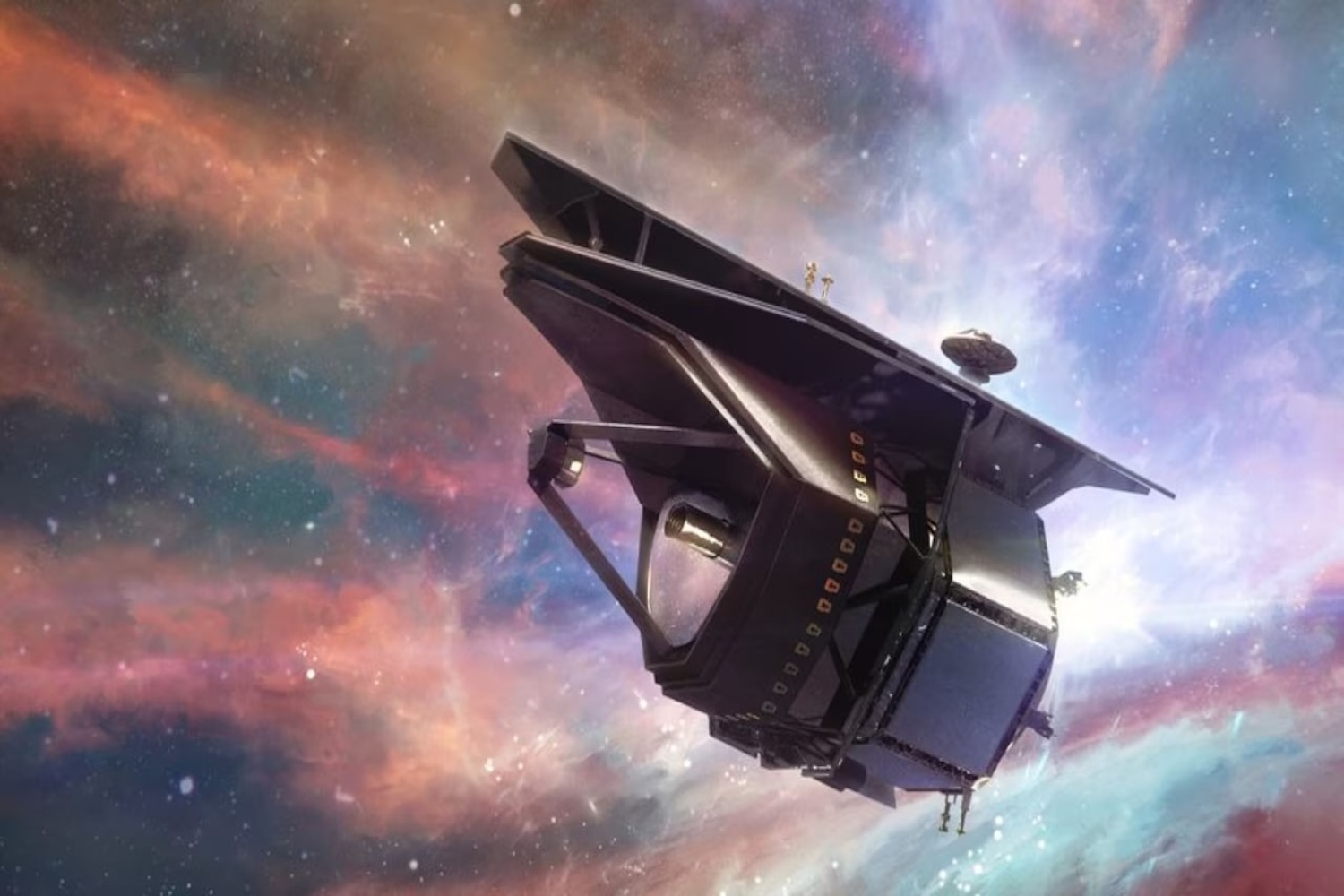
Artist’s impression of the Probe Mission for Far-Infrared Astrophysics (PRIMA).
UK expertise for PRIMA
The UK’s participation in PRIMA draws upon expertise developed through a succession of world-leading missions stretching back to the 1980s, including:
- Infrared Astronomical Satellite
- Infrared Space Observatory
- Spitzer Space Telescope
- AKARI
- Herschel Space Observatory
Supported by the UK Space Agency, the UK’s PRIMA team brings together expertise from:
- Science and Technology Facilities Council’s (STFC) RAL Space
- University of Sussex
- Cardiff University
- Imperial College London
- Celtic Terahertz Technologies
Collectively, these institutions will provide critical technologies and capabilities that are central to the mission’s success.
The PRIMA proposal calls for the UK to supply the mission’s far-infrared filters.
This is an area in which the UK has developed a unique international capability through expertise at Cardiff University and Celtic Terahertz Technologies.
RAL Space contribution
RAL Space is contributing to the development of the PRIMA Ground Segment, the system that will handle the flow and analysis of scientific data returned from the mission.
This includes the development of a specialised observation simulator.
The observation simulator can be used to model the movement of the telescope and imaging instrument as they scan across the sky, simulating how these observations will map the Universe.
Dr Chris Pearson, Astrophysics Programme Lead at STFC RAL Space, said:
As the first mission dedicated to observing the infrared universe for over a decade, PRIMA will usher in a new era of infrared astronomy.
We are incredibly thrilled and proud to be a part of its exciting story.
A proud record in space science
Space Minister Liz Lloyd said:
NASA’s PRIMA will lift the veil on parts of the universe that are incredibly difficult to probe, even through the most powerful telescopes, allowing us to better understand how planets, stars and black holes are formed.
It is fantastic that a consortium led by the University of Sussex is developing technology and software critical to the mission, backed by £3.3 million in Government funding.
It is another testament to Britain’s proud record in space science, helping uncover the secrets of deep space to benefit people around the world.
Strength of our national capability
Professor Seb Oliver, who leads the UK’s contribution to PRIMA from the University of Sussex, said:
The UK’s contributions in instrumentation, calibration and mission operations demonstrate the strength of our national capability.
It is a tremendous honour to be part of such an exceptional international team.
PRIMA will provide an unprecedented view of the far-infrared universe, revealing how galaxies form and evolve through cosmic history, and helping answer some of the biggest questions in astrophysics.
We are delighted that the UK will play a leading role in delivering this exciting new mission.
Humanity’s next window into the deep Universe
Nicky Fox, Associate Administrator of NASA’s Science Mission Directorate, said:
The PRIMA mission is humanity’s next window into the deep universe.
It will unveil the obscure across cosmic time to better understand the formation of planets, stars, black holes, and even how water on Earth came to be.