
The strategy will deliver benefits for people across the UK, including:
- better mobile coverage on trains
- new materials developed in space to support the NHS
- smarter environmental management
- stronger protection for the power systems and satellites we all rely on
The strategy replaces the National Space Strategy published in 2021 and will contribute to delivery of the government’s Modern Industrial Strategy.
UKRI’s role in shaping the strategy
Professor Michele Dougherty, Science and Technology Facility Council (STFC) Executive Chair and UK Research and Innovation Space Senior Responsible Officer, said:
As a key strategic partner in the UK’s One Government approach to space, UKRI has been working with the UK Space Agency and partners across Government to develop the National Space Strategy. We will invest across our portfolio to support world leading research, support early career researchers, technology development and innovation as well as investing in international astronomy facilities.
Investment across UKRI’s portfolio
Over the current spending review period, UKRI will invest over £500 million in space across our portfolio.
This includes funding for STFC’s astronomy and space science programme as well as support for international research infrastructure and in using space data for security and growth.
This will support world leading research, support for early career researchers, technology development, innovation and investment in international astronomy facilities.
Business, Innovation, Science and Trade Secretary, Jonathan Reynolds, said:
As space becomes a new frontier of economic and military competition, this plan will help keep Britain secure by strengthening our ability to launch satellites, detect threats and protect the services people rely on every day.
At the same time, this plan will enable our excellent UK industry to seize the boundless opportunities of this new age in space, creating skilled jobs, driving growth and improving connectivity for all of us.
Related commitments in the strategy
This investment sits alongside related commitments confirmed in the strategy, including:
- £163 million for space science and exploration missions, including delivery of the Rosalind Franklin Mars Rover, built in Stevenage
- £149 million for the European Space Agency’s Vigil mission, which will provide earlier warning of solar storms
- £9 million from the Met Office to strengthen space weather forecasting
RAL Space, part of STFC, contributes to this work through its role in developing space science instrumentation.
It supports UK and international missions, including space weather monitoring and Earth observation.
Dr Sarah Beardsley, Director of STFC RAL Space, said:
The UK’s space scientists and innovators are driving the advancements that help protect our planet, bring vital services to our citizens, and create opportunity across the country. This new strategy recognises the fundamental role that space plays and the potential we can unlock by working together.
As the UK’s National Space Laboratory, we are here to deliver on the Government’s priorities in space, by testing and tracking satellites to help keep them safe, providing the expertise to mitigate the effects of solar storms, and pioneering the technologies that connect, protect and inspire us all.
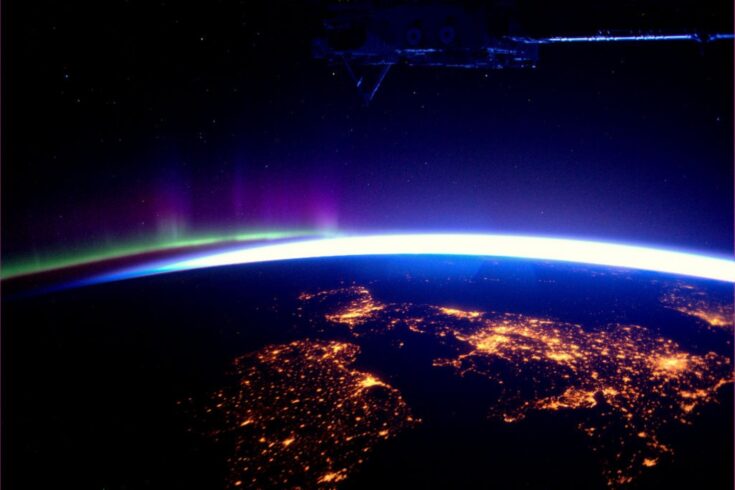
Top image: The UK, Ireland and distant Aurora Borealis as seen by ESA astronaut André Kuipers from his position on the ISS. Andre is onboard the ISS as part of ESA's long duration mission, PromISSe.