
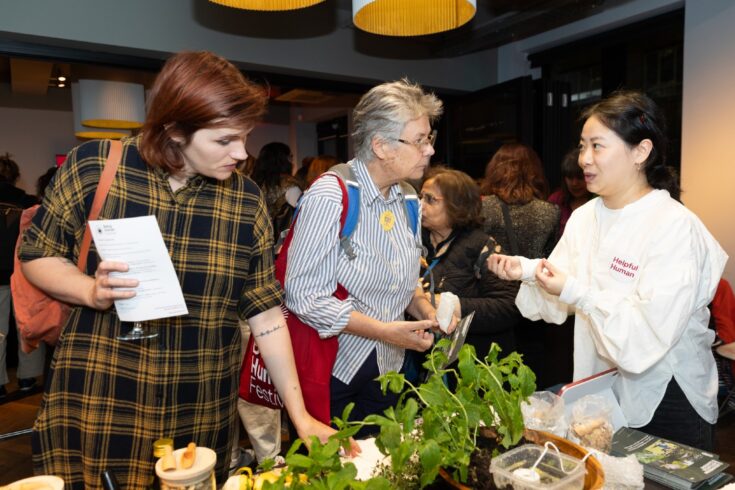
The Being Human Festival is supported by the Arts and Humanities Research Council (AHRC) and its partner the British Academy.
Over the past decade, the festival has played an important role in helping to reshape how arts and humanities researchers connect with the public.
At its heart, the festival champions collaboration, experimentation and accessibility. Its funding and learning programme has helped break down barriers between researchers and communities, supporting hundreds of events across the UK and reaching thousands of people every year.
Through walking tours, comedy nights and collaborative exhibitions, Being Human has enabled researchers to place people at the heart of humanities research, not as passive listeners, but as active participants. The festival has also helped researchers build lasting relationships with cultural organisations, schools and community groups, opening new ways for humanities research to engage with society.
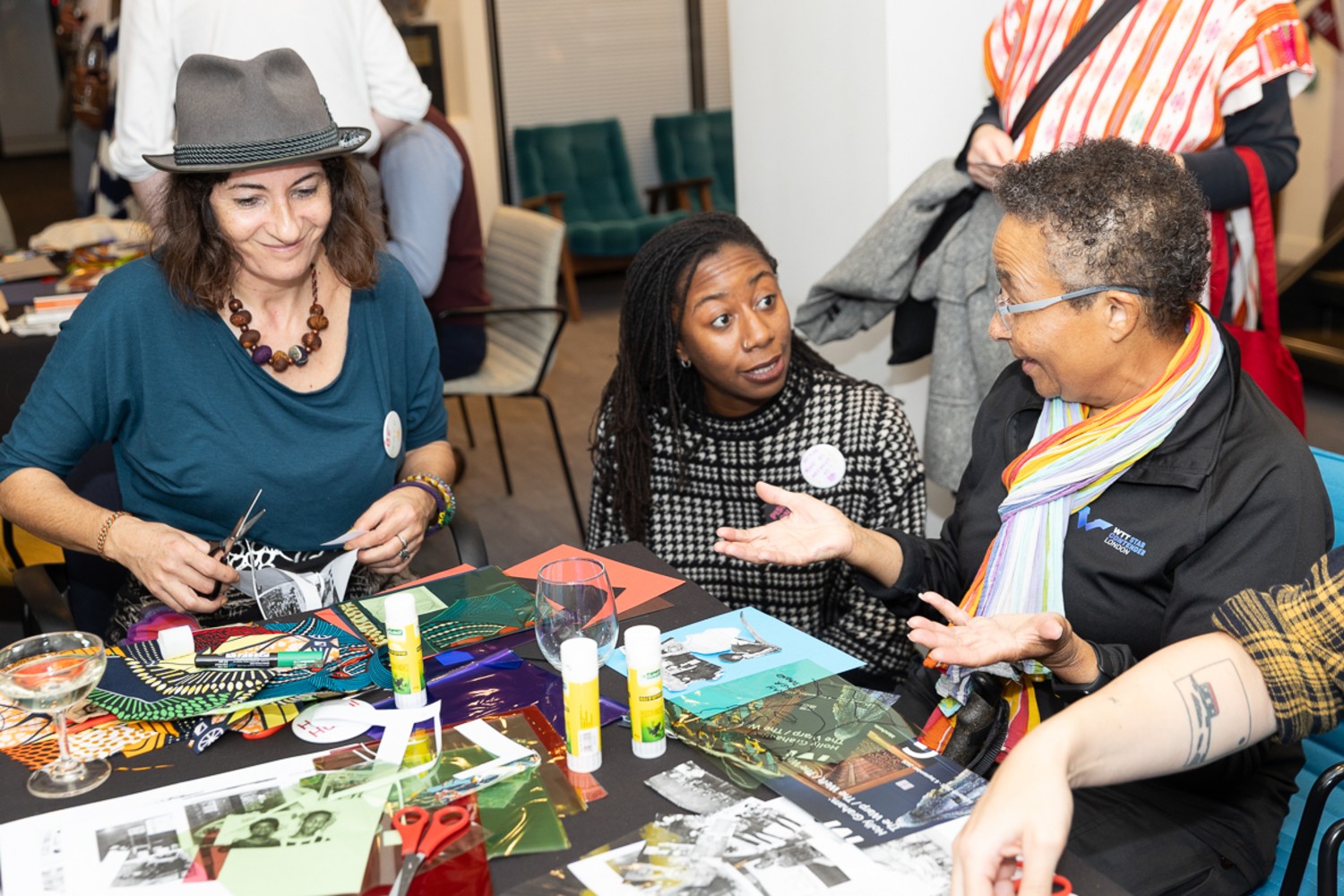
Three people are sitting around a table of crafting materials, two are in conversation and the third person is smiling. Credit: Teri Pengilley
Changing the conversation
The festival supports researchers to engage directly with communities. Through this engagement, the festival has demonstrated that the humanities are not only relevant to people’s lives and livelihoods, but essential for helping communities explore questions of culture, identity and society. This has strengthened public understanding, encouraged dialogue, and connected people with the histories and experiences that shape everyday life, taking research off campus to the places people live.
More than 60% of researchers that have taken part in the festival reported:
- increased confidence in engaging non-academic audiences
- new perspectives on how their work connects with public concerns
- stronger relationships with local communities and organisations
In many cases, events developed through the festival have led to new collaborations and ongoing engagement activities. Through a competitive funding programme, tailored training, and access to toolkits and communications support, researchers are equipped to:
- design and deliver events that reach wider audiences
- build partnerships with community organisations
- communicate their research beyond academia
A close up of the Being Human Festival branded red bunting on display at the festival. Credit: Teri Pengilley
National reach, local impact
Since its launch in 2014, the festival has supported over 3,100 free events through 426 grants in 181 towns and cities across the UK, reaching more than 299,000 people. In the 2025 festival, over 220 events took place in 39 towns and cities across the UK, with Festival Hubs led by:
- Cardiff and Swansea universities
- De Montfort University
- University of Bristol
- University of Hertfordshire
- University of Surrey
Throughout the 12 years of the festival, 221 universities and research organisations have delivered events, working with over 3,000 cultural and community partners, reflecting a growing appetite for humanities-led public engagement. But more importantly, they show how the festival has opened new opportunities for partnerships. Working with libraries, museums, archives, galleries, artists and community groups to co-create events that matter to communities.
For Professor Jade Munslow Ong at the University of Salford taking part in the festival provided the perfect opportunity to test new approaches to public engagement that ultimately led to new research funding:
I took part in the 2022 and 2023 Being Human Festivals, which helped to shape new research and my plans for public engagement and impact work. The art, writing and zine-making workshops that I ran for the festival form a core part of our impact activities with 16-18 year old learners in colleges in the UK, South Africa, Sweden and Australia as part of an AHRC follow-on-funded project.
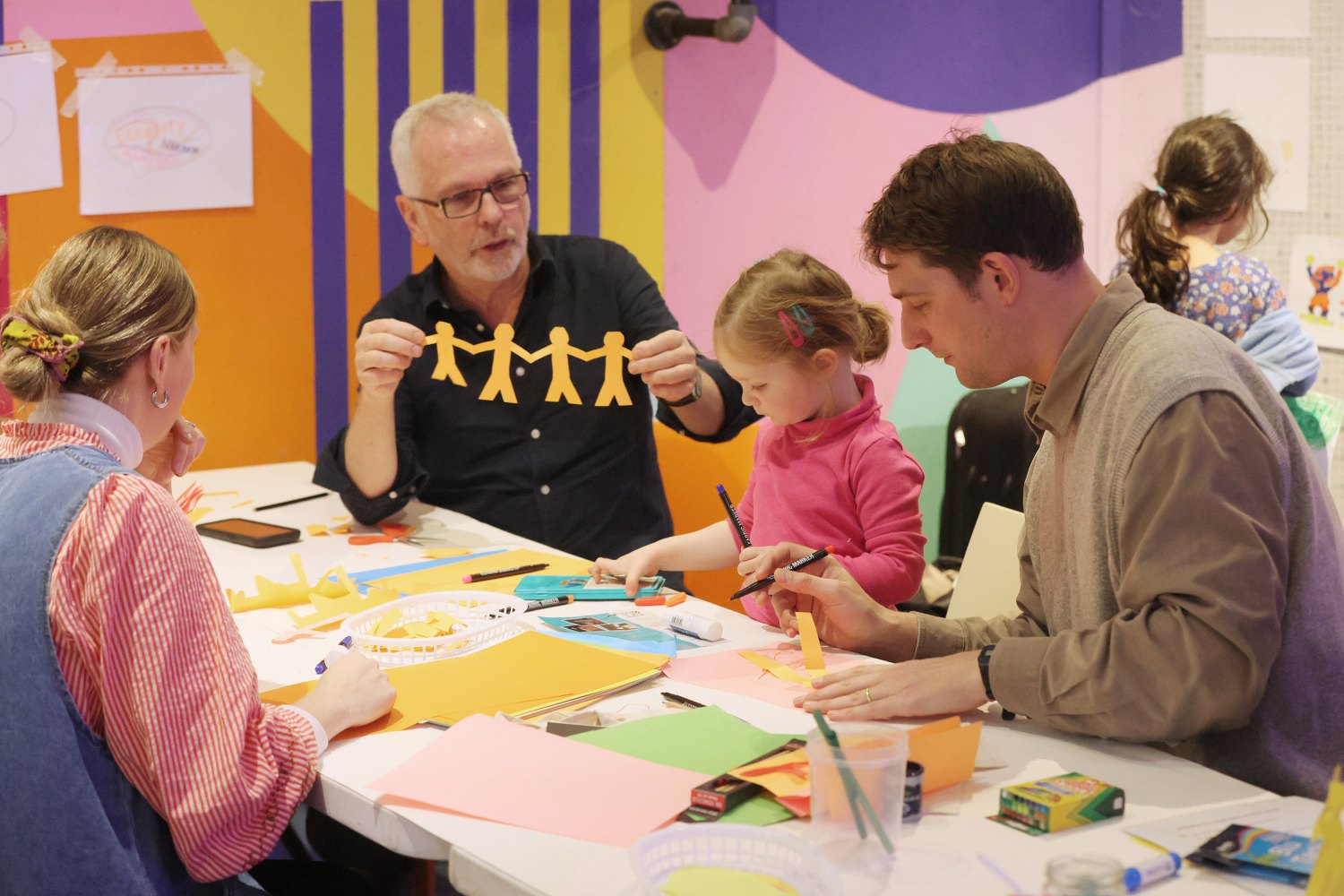
A man is holding a paper chain of connected people, next to him a little girl is drawing and is accompanied by her parents. Credit: Lloyd Sturdy
A launchpad for innovation
For many researchers, Being Human can be a springboard, whether at the start of or during a project.
Projects such as Dr Mykaell Riley’s ‘Bass Culture’ (University of Westminster) and Dr Faye Hamill’s ‘Ocean Modern’ (University of Glasgow). They received funding from Being Human Festival to test and develop their public engagement activities and have evolved into major research initiatives.
These stories highlight how taking part in the festival can inspire new ways of working with collaborators, test new approaches to engagement and open doors to further funding.
The Being Human Festival has helped shape what public engagement in the humanities can be: creative, experimental, and deeply connected to the world beyond academia. It has shown that when researchers share their work and collaborate in ways that resonate, they do not just inform, they inspire and connect.