
International non-governmental organisations (INGOs) operate across borders to assist in delivering social good independently of governments.
These are organisations like Amnesty International and Greenpeace, and their causes can range from education, human rights, public health, humanitarian aid, environmental change, and many more.
Because of their dynamic work, most INGOs employ workers from the ‘local’ country, where the work is conducted, with pay and conditions in line with domestic job markets. But they also hire from other countries, particularly from the home country of the INGO, where salaries may be higher.
Consequences for wellbeing and finances
This leads many INGOs to use inequitable salary systems that can favour international workers over local employees, with consequences for staff wellbeing and finances.
An Economic and Social Research Council (ESRC)-funded project that ran between 2007 and 2010 found that, on average, international workers earn four times the wage in the local country. This left up to 80% of domestic employees unable to meet their everyday financial needs.
The study also revealed that a lack of pay equity led to a sense of demotivation and a desire to quit.
Project to find practical solutions
Building on the findings of the ESRC project, The University of Edinburgh created Project Fair in 2017 to find practical solutions to pay inequality that could improve lives and also be commercialised.
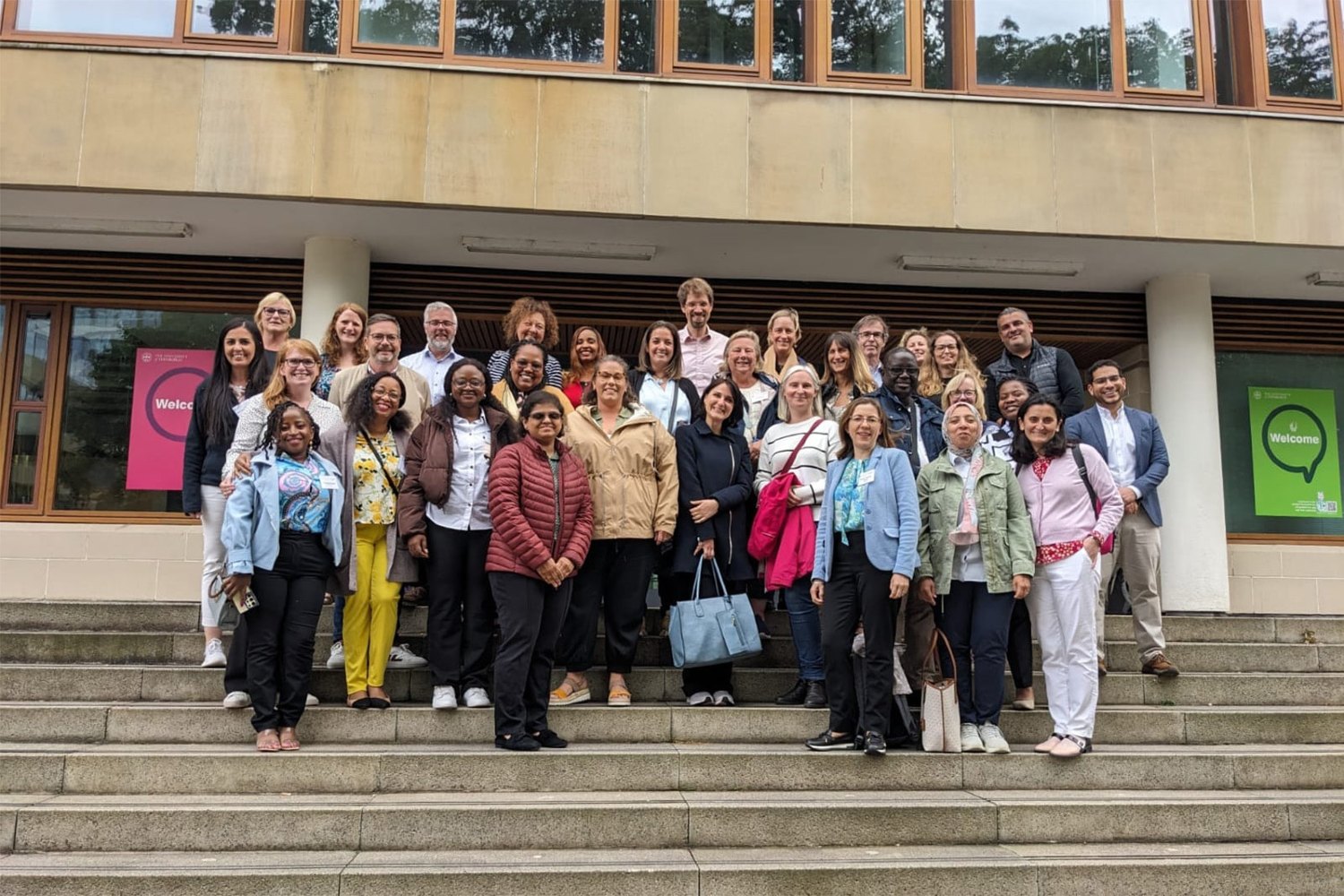
Project Fair surveyed 18 participants from 13 INGOs based across Asia, Europe and Africa, finding that INGOs consistently experienced challenges in trying to implement fair reward packages for employees.
Credit: Project Fair
Joint funding
In 2024, Project Fair secured funding from the joint Arts and Humanities Research Council and ESRC SHAPE catalyst that helped it to scale and grow.
The project has facilitated solutions to the issue of pay inequality through enabling knowledge sharing amongst INGOs via masterclasses and webinars, workshops and conferences, and an online email forum.
In addition to providing a selection of free resources, Project Fair has introduced a successful commercial venture, offering paid-for conferences and training, with a scaled membership package for INGOs of all sizes. They now have a community of over 40 members, including:
- Medecins Sans Frontieres
- the Danish Refugee Council
- WaterAid
100 organisations, 190 countries
Over the past two years Project Fair has engaged globally with over 100 organisations, operating in 190 countries globally.
The project is now working toward becoming the preferred supplier for the resolution of fair pay issues. It provides global leadership on pay parity for the aid and development sector and positively affecting more than 178,000 employees to date.