
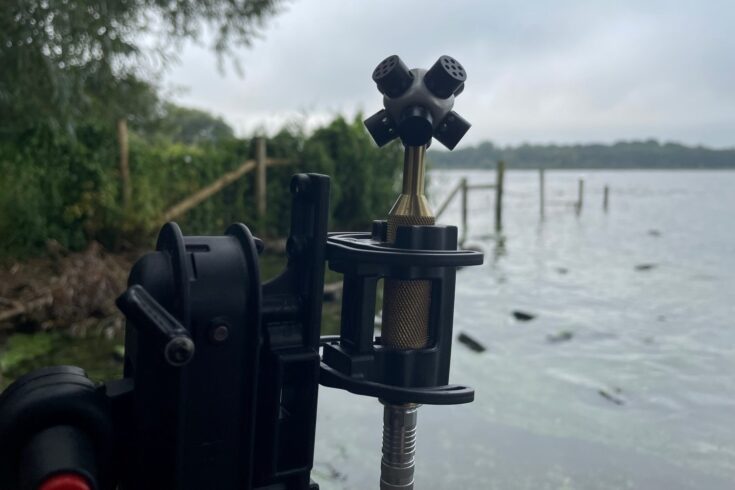
The Maritime Trail app is helping tourists and communities discover Northern Ireland’s rich heritage, promising new ways for museums to preserve their collections and showcase them to a wider audience. Funded by the Arts and Humanities Research Council’s follow-on funding scheme, this new app connects 3D scans of six historic fishing vessels from the Ulster Transport Museum with coastal locations, folklore and audio storytelling.
Backed by InvestNI, the team behind the app is now developing plans for a startup service that could help museums digitise their collections and showcase them to local people and tourists. This will help expand the project’s long term commercial potential. By addressing limited access to fragile stored collections, the app supports regional tourism and offers a scalable model for digital heritage.
Making hidden collections public through digital innovation
The Marine Trail app has provided an innovative solution to help showcase fragile items in museum collections that are typically kept in storage. Through its immersive digital experiences, the app is helping to widen the exploration of coastal and lakeside areas beyond traditional tourist hotspots, with the potential to support local economies and broaden cultural engagement.
The project demonstrates how digital technology can support heritage learning, benefiting both the research community and local populations. By preserving oral histories and fostering community connections, it strengthens cultural ties and promotes inclusive heritage practices.
Connecting collections to coastlines through immersive storytelling
The free app digitally links five scanned vessels to six locations across Northern Ireland and Donegal:
- Portbradden
- Rathlin Island
- Gola Island
- Bunbeg
- Lough Erne
- Lough Neagh
These sites reflect the boats’ origins and are enhanced with audio content from museum archives, including interviews, music and storytelling.
As Claire Ablett, Curator at Ulster Transport Museum, explains:
Being able to use augmented reality as part of the app places these boats in their locations. That gives people context that a boat sitting on its own within a museum gallery is unable to do.
Among the stories featured is that of late salmon fisherman Bertie McKay, whose double-ended coble boat, donated to the museum in 1982, is now digitally accessible. His daughters expressed pride in seeing their father’s legacy preserved, helping to keep the story of local maritime history alive.
Strong support from local communities
The app also showcases a 3D replica of a currach boat from County Kerry, featured during the Rathlin Maritime Sound Festival. With around 50,000 visitors every year, Rathlin Island has been the ideal place to trial the app. Support from people living on the island has been strong with a real sense of pride in seeing the story of their heritage brought alive for people visiting and further afield.
David Quinney Mee of the Rathlin Development and Community Association noted:
There is a clear interest from visitors in the island’s culture and heritage. The islanders are also proud to see the app and will help to promote it.
I hope it will lead to a stronger understanding of maritime heritage and the importance of protecting marine biodiversity.
Also being available in Irish and French has helped to make the app more accessible to tourists. Plans to create a Mandarin version are being explored supporting educational use in the 160 Northern Irish schools that teach Mandarin. Teachers are already integrating the app into their lessons as a dynamic learning tool.
Partnerships with universities in Scotland and Wales are also helping to expand the app’s content, incorporating additional boats and maritime data to deepen its cultural value across the UK.
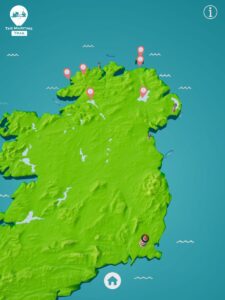
A 3D illustrated map of Ireland and Northern Ireland showing coastal locations as part of ‘The Maritime Trail.’ Credit: Maxim Formin
Research team and collaboration
Led by Professors Maxim Fomin and Séamus Mac Mathúna, the project is a collaboration between Ulster University and the Ulster Transport Museum. Professor Formin was assisted by Brian Coyle and Dr Michael McKnight.
The project brings together academics, curators, tech experts, and game design students to create a free, immersive experience for museum visitors, local citizens, and international tourists. The app allows users to explore National Museums Northern Ireland (NMNI) collections in their natural coastal contexts, enriching understanding and accessibility.
The app was launched in 2025, with events across Northern Ireland, including at Ulster Transport Museum and it has been showcased at a major international education conference in Prague.
Digital heritage tools powering growth
Piloting this innovative app and exploring its potential longer term commercial success has showcased the vital role of arts and humanities research. It demonstrates how smartphone technology can enhance the visitor experience and support the growth of cross-border tourism through the island’s rich maritime heritage.
Digital heritage tools like this app are key to enabling the visitor economy. A May 2024 report by Ulster University and Dublin City University found that tourism alone generates nearly €17 billion in gross value added and supports over 300,000 jobs across the Island of Ireland.