
A more sustainable, innovative, and thriving future for UK fashion
The UK is actively driving the opportunity to build a stronger, more sustainable, and more innovative fashion industry. It is being supported by cross‑council UK Research and Innovation (UKRI) investment led by the Arts and Humanities Research Council (AHRC) through initiatives such as Manchester Metropolitan Universities’ (MMU) Robotics Living Lab (RoLL).
These investments are helping turn research and creativity into practical solutions that support lower‑carbon production, new skills, and more resilient UK supply chains.
Fast fashion is now a familiar part of how we shop, shaped by low prices, constantly changing styles, and fast delivery. However, producing clothing at this speed and scale brings significant environmental challenges, including rising levels of textile waste and heavy use of energy and water.
Globally, the fashion industry is estimated to have produced up to 8% of carbon emissions in 2018. More recent research shows these emissions are still rising, with rapid production cycles playing a key role. These impacts affect our climate, the natural world, and the health of the ecosystems we rely on.
One of the UK’s most important industry
At the same time, the economic picture has changed. As more manufacturing has moved overseas, many UK textile and clothing jobs have disappeared.
Yet despite these pressures, fashion and textiles remain one of the UK’s most important industries. The sector contributes £62 billion to the economy, supports 1.3 million jobs, and generates £23 billion in tax revenue. This is the equivalent of £1 in every £34 of UK output and £1 in every £30 collected by HM Revenue and Customs.
Together, these figures show why transforming fashion, through sustained public investment in innovation, skills, and sustainability is not just an environmental necessity. It is a major opportunity to strengthen the UK’s economy, workforce, and global leadership.
RoLL: a new approach to sustainable fashion manufacturing
The RoLL, based at the MMU’s Manchester Fashion Institute and funded by AHRC under the Creative Research Capability (CResCa) programme, shows what this future can look like.
RoLL is backed by £4.04 million in UKRI funding and a total value of £5.51 million. It brings together industry, technology, and sustainability to help reduce the environmental cost of clothing production while strengthening local manufacturing.
RoLL’s mission is simple but ambitious: make it possible to produce clothes more sustainably, more locally, and with cutting‑edge technology.
By reducing reliance on long, high‑carbon global supply chains, RoLL is supporting cities like Manchester, a former textile powerhouse that has faced decades of manufacturing decline. Manchester is rebuilding local production in a cleaner, more modern and sustainable way.
Innovation that opens doors
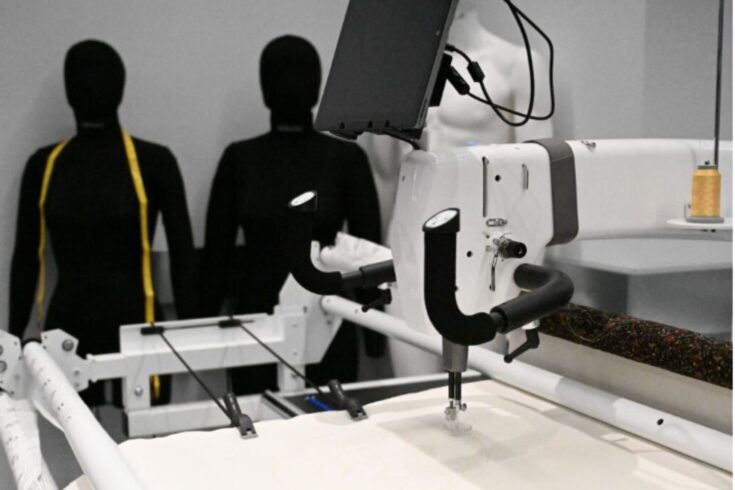
RoLL’s lab combines smart collaborative robots with full garment‑production tools, creating an end‑to‑end system for making clothing in more efficient, lower‑impact ways.
One standout feature is that RoLL uses Scratch, the coding language taught in many UK schools, to program its robots. This makes automation more accessible for beginners and helps young people see a place for themselves in the future of fashion technology.
The lab has already:
- created six full‑time equivalent jobs, including skilled technical and research roles
- delivered over 25 days of advanced training in robotics and textile machinery
Training covers:
- how to program and safely operate manufacturing robots
- how to use advanced spinning, knitting, and drafting machines
- software such as HAL, which helps different robotic parts work together
- CNC sewing machines, which complete precise stitching automatically
- high‑tech tools like Vetron automated sewing systems and BitBrain, which study how people and machines work together
This investment in people, not just machines, ensures the UK workforce stays competitive as global manufacturing becomes more automated. It also inspires the next generation of makers, engineers, and designers.
Boosting small businesses and local growth
RoLL isn’t just a lab: it’s a hub for collaboration across the UK fashion and textile ecosystem.
It works closely with small and medium‑sized businesses (SME) such as Restrap and Joint Design Direction. It is helping them test new technologies, explore lower‑impact production methods, and build the confidence they need to adopt automation in their own workshops.
The project also works with major industry players, including:
- Burberry
- CITEVE (Portugal’s leading textile technology centre)
- ADOTC, specialists in ethical automation and digital process innovation
These partnerships ensure new ideas spread across the supply chain. From early‑stage innovators to global brands.
One of RoLL’s standout technical achievements is a £67,000 cutting‑tool end effect or, developed with POMO Robotics and funded by the Cotton Textile Research Trust. This state‑of‑the‑art tool has already appeared in national exhibitions and represents the kind of world‑leading innovation the UK can offer.
Building national momentum
RoLL’s work is reaching audiences far beyond the lab.
Across major exhibitions, conferences, and industry events, it has:
- engaged over 505,000 attendees, visitors, and participants, including around 500,000 visitors to the Design Museum’s Tomorrow’s Wardrobe exhibition
- more than 4,000 visitors at the Future Fabrics Expo
- around 400 delegates at the MTC Robotics and Automation Conference
Supporting the UK and Greater Manchester’s net zero ambitions
RoLL is helping shape national thinking on the future of the fashion industry. The project has co‑authored the Advancing Automation and Robotics for Sustainable Manufacturing strategy paper with the Creative Future Innovation Network, the UK Fashion & Textile Association, and the British Fashion Council.
RoLL has also contributed to the Coronation Challenge: CreaTech Report, which explores how emerging technologies can strengthen UK innovation, productivity, and skills. This features in Greater Manchester’s Circular Economy Policy Briefing, supporting the region’s goal to reach net zero by 2038.
National media coverage and industry recognition
RoLL coverage includes features in Vogue Business and PC Pro, together with a Manufacturing and Supply Chain Award win at the Innovate Textile Awards 2025.
These highlight RoLL’s growing influence and leadership within the UK fashion and manufacturing sector.
A building that demonstrates sustainability in action
RoLL’s physical home, the Work in Progress Pavilion, is itself a model of sustainable design. Created by Bennetts Associates and supported by AHRC funding, it is one of the first UK buildings assessed using the Net Zero Carbon Standard.
Built from timber and straw insulation, the pavilion cuts emissions while providing a shared workspace for training, collaboration, and public engagement, anchoring Manchester’s re‑emerging textile economy.
A more sustainable, innovative, and fair future for UK fashion
RoLL shows what the future of UK fashion could look like: cleaner, smarter, more local, and more connected to communities.
By combining advanced robotics, strong training opportunities, SME support, and national policy leadership, the Robotics Living Lab is helping:
- reduce environmental impact
- strengthen the UK’s manufacturing skills and technological leadership
- support small businesses and regional supply chains
- build a fairer, more resilient industry for the next generation
RoLL is contributing to a fashion sector that is both globally competitive and a sustainability leader, while supporting long‑term economic growth across the UK.