
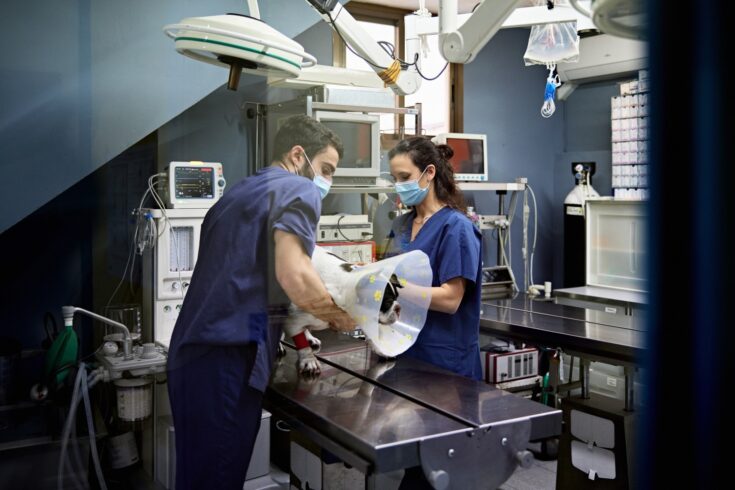
Antimicrobial resistance (AMR) is one of the biggest health challenges of our time, yet in busy veterinary clinics the risks often go unseen. The World Health Organization reports growing resistance to antibiotics, drawing on data from more than 23 million confirmed infections across over 100 countries, threatening the effectiveness of everyday medical treatment.
Research also shows that AMR has claimed at least one million lives each year since 1990, with deaths projected to rise to nearly two million annually by 2050 if urgent action is not taken.
Veterinary Infection Prevention through Visualisation (VIPVis) is a new training tool that makes invisible germs visible, helping veterinary teams understand how infections spread. VIPVis was developed by the Glasgow School of Art and the University of Surrey and funded through the Arts and Humanities Research Council (AHRC) Follow‑on Fund (FoF). Its aim was to translate learning from the earlier A Microbial Reality Simulator (AMRSim) project into a practical app for real‑world use.
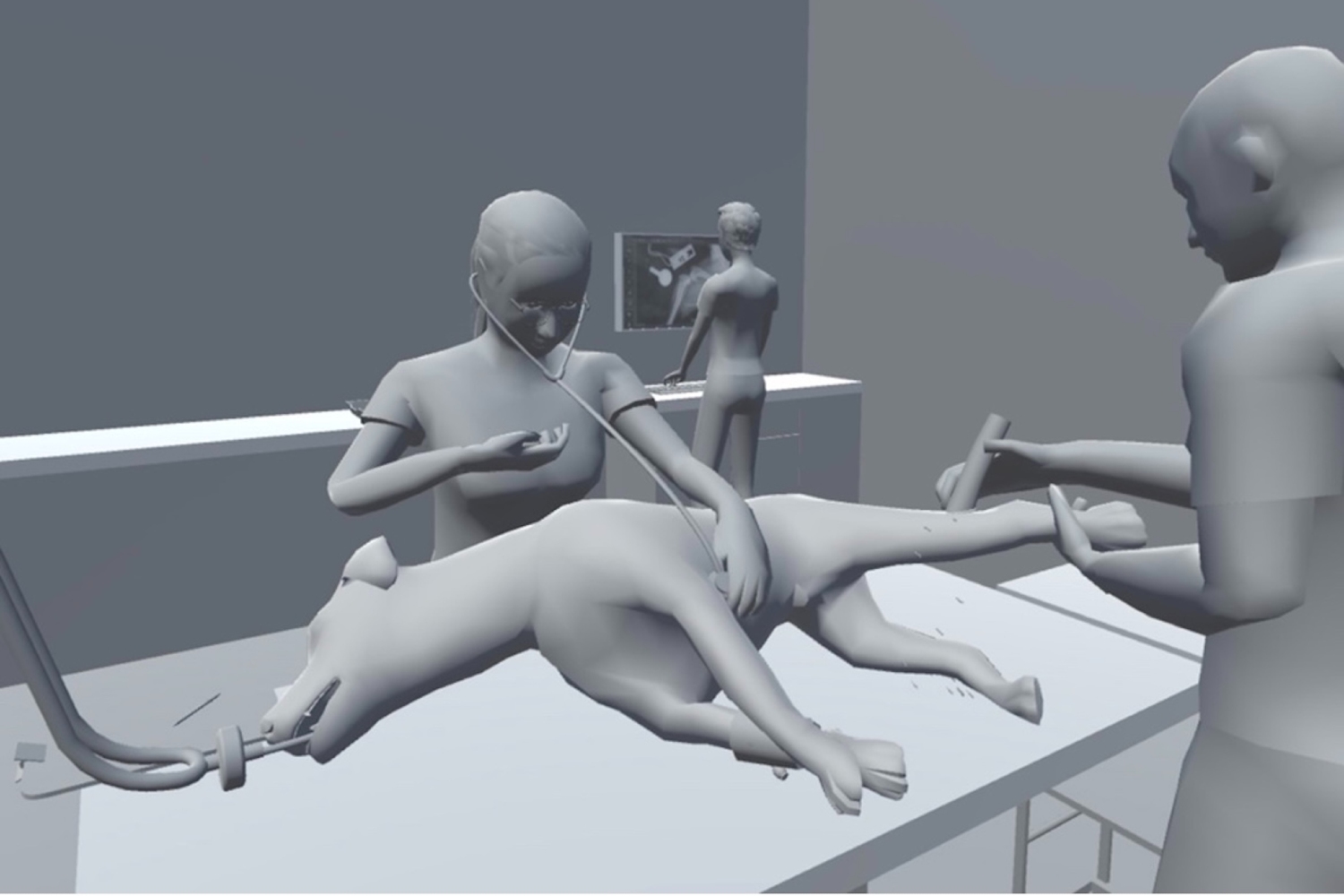
Trainees are invited to identify potential infection risks from the animated sequences showing the pre-surgical procedure with in-built risky behaviours.
By helping veterinary practitioners reduce contamination, the project supports efforts to reduce unnecessary antibiotic use and tackle antimicrobial resistance, one of the most urgent health challenges facing both animals and people today.
A new way to see risk
The project built on AMRSim, an earlier AHRC-funded research project that helped veterinary teams visualise how infections spread. Evaluation of the original prototype found that 92% of 51 veterinary students, nurses and surgeons reported an intention to change their behaviour and implement improved infection-control measures after using the training tool.
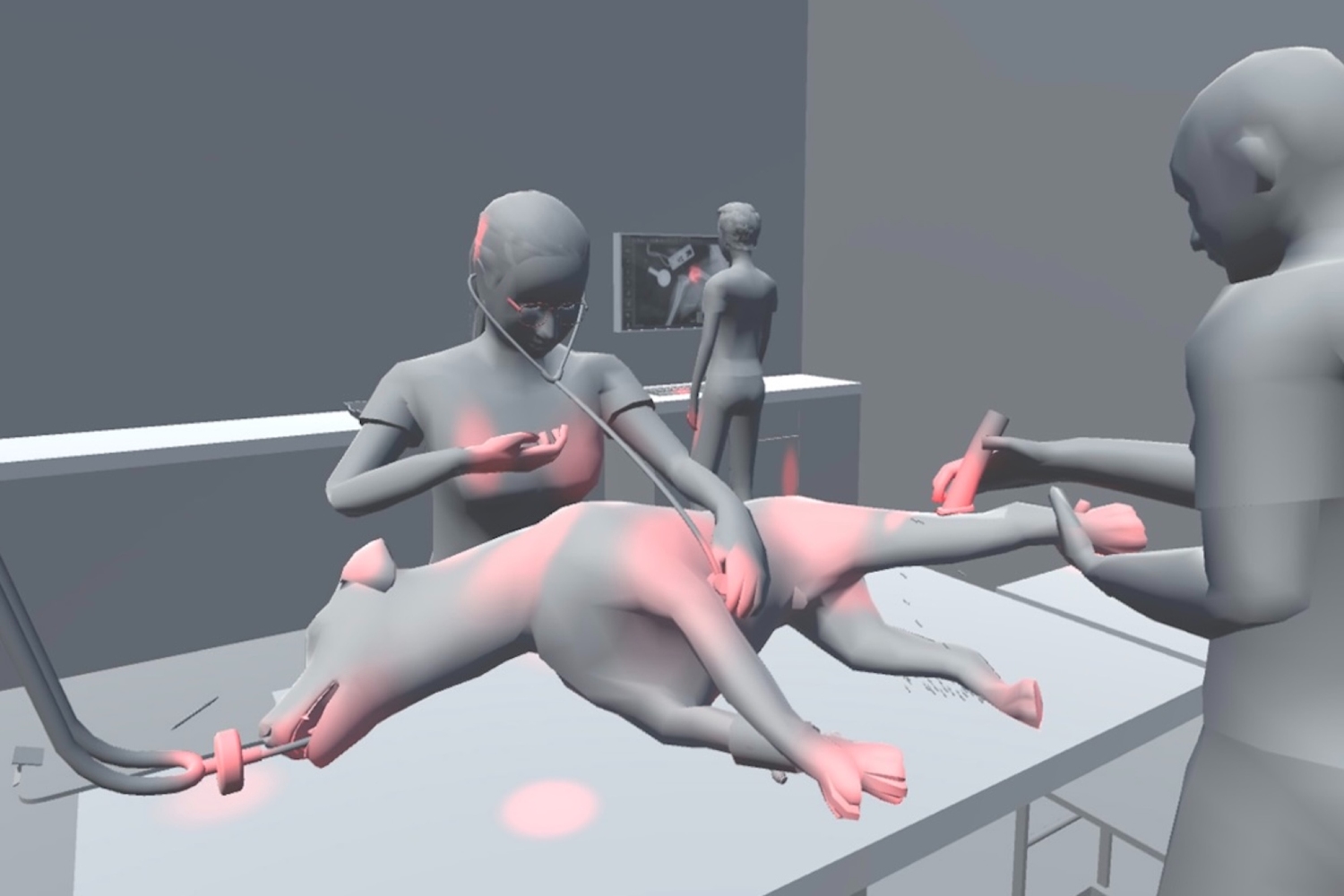
Digital layer 2: ‘Switched on’ to show transfer of ‘invisible’ direct and indirect contamination between animal, veterinary staff, surfaces and equipment during a pre-surgical procedure if proper infection control methods are not being observed.
Building on this success, AHRC’s FoF supported the development of VIPVis, transforming the original proof-of-concept into a beta-version training app designed for use on web and mobile platforms.
Through interactive visuals and clear, jargon-free storytelling, the app shows users how contamination moves between surfaces, equipment, people and animals, and how simple behavioural changes can significantly reduce infection risks. What was previously an abstract concept became something practitioners could see, explore and change.
Using digitally animated scenarios based on real veterinary procedures, the app reveals contamination pathways and infection risks that would otherwise remain invisible to the human eye.
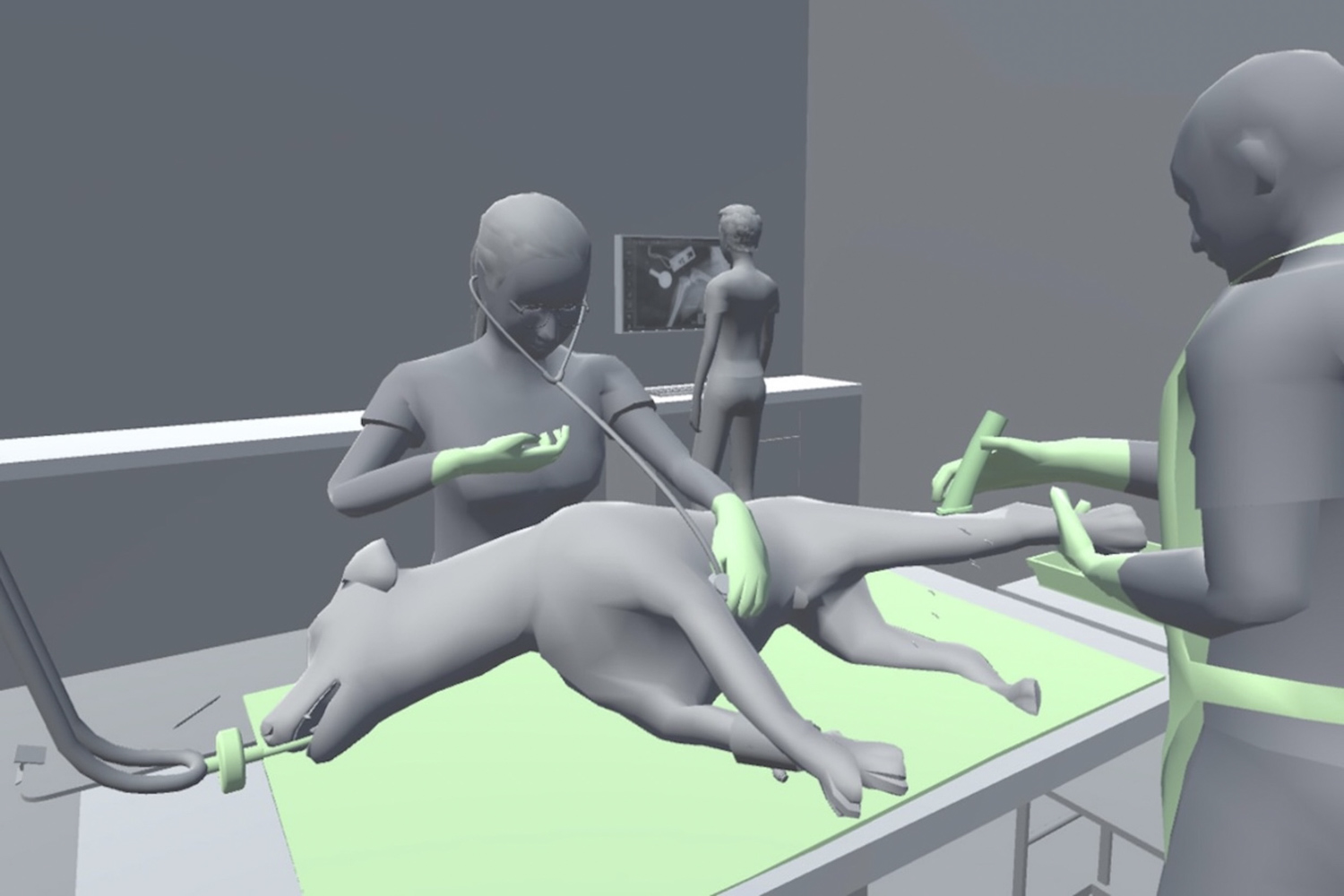
Digital layer 3: Showing the positive mitigating effects of properly observed infection prevention and control measures.
Shifting attitudes
Veterinary students, nurses and surgeons were involved in the development and evaluation. The participant feedback demonstrated the impact of the visual approach.
One veterinary surgeon reflected:
I think the visual representation is really useful to actually appreciate where the contamination occurs and how it spreads.
Another explained:
Just thinking about a theoretical contamination is not as easy as seeing it.
The project has made steps to shift attitudes in the research community by showing that design was not just decorative, but a core methodology used to shape how the science was communicated, taught and understood.
Collaboration that changed the conversation
What makes VIPVis stand out is not just the app, but the way it was created through a process of co-design and collaboration. The project brought together designers, microbiologists, veterinary scientists, and behavioural experts, disciplines that rarely collaborate so closely.
This partnership allowed the team to combine the strengths of visual storytelling with scientific evidence, producing a training experience that resonates with both novice and seasoned practitioners.
End users were involved throughout development, helping shape the app through iterative testing, workshops and structured feedback. Across the project, researchers collected 57 sets of written and verbal responses that informed successive versions of the tool.
Participants highlighted the value of the interactive approach. One veterinary surgeon commented:
I think that’s exactly what I would have wanted from this… if it’s a thing that’s interactive, it’s much easier to do.
One student reported:
The training app has taught me to consider the possible preventative measures to take, before handling an animal in a clinical setting, in order to reduce infection and the use of antibiotics.
The collaboration was so successful that it helped shift attitudes toward the role of design within scientific research. Following VIPVis, the project lead was invited to join two further UK Research and Innovation funded projects, People AMR and MOSAEC. This extended the use of transdisciplinary approaches and strengthening long‑term research capacity across multiple sectors.
From prototype to practice
The Follow‑on Fund was instrumental in taking VIPVis from a promising concept to a tool ready for real‑world testing. Working within a demanding nine-month development period, the team built on existing relationships from the earlier AMRSim project, refining the application’s visuals, narrative flow, and user experience.
Early trials suggest the app is prompting measurable shifts in attitudes and behaviours around infection‑prevention practices. By turning invisible microbial risks into vivid, easy‑to‑understand visualisations, the beta‑version training app has increased practitioners’ awareness of how contamination spreads in real clinical settings. Early users reported greater recognition of risky behaviours and improved confidence in applying infection‑control measures.
One veterinary nurse observed:
The app reiterates the requirement of PPE, cleanliness, reducing contamination etc, and will remind me not to become complacent when infections are not always seen.
A veterinary surgeon reported:
It has made me think about using PPE to avoid contamination.
Another veterinary surgeon and educator reflected that the app had:
Helped realise the need for more specific observance of these activities.
Continuing impact
The project’s impact continues to grow. The VIPVis app is now being further evaluated through a PhD project, jointly funded by the University of Surrey’s School of Veterinary Medicine and Zoetis, one of the world’s leading animal health companies. The research will explore how the app influences infection-prevention practices, levels of contamination, antibiotic use and post-surgical infections in veterinary settings.
The findings will help improve the app and provide evidence of its benefits, supporting wider use across veterinary education and practice. By working with an industry partner from an early stage, the project is creating a pathway towards future commercialisation. It is also helping to ensure that the training tool can reach veterinary professionals more widely and deliver impact at scale.
Together, the evaluation and industry partnership are helping the tool reach more veterinary professionals, creating opportunities for wider use and future commercialisation.
Towards safer veterinary practice and a safer world
By giving veterinary teams clear visual evidence of how infection spreads, VIPVis supports behaviour changing practices that directly reduce contamination, strengthen infection prevention practices and reduce reliance on antibiotic use. In doing so it contributes to global AMR reduction efforts, supporting safer clinical care for animals and the wider community.
The VIPVis project shows what can happen when creative design and scientific expertise come together with a shared purpose. It turns an invisible threat into something people can see, respond to, and prevent. In the fight against antimicrobial resistance, that shift from knowing to understanding is a crucial step toward lasting change.
The project also supports UK government priorities on innovation, health security and economic growth by advancing low-cost digital training that strengthens infection prevention behaviours. It also reduces antibiotic reliance and aligns with the UK government’s AMR national action plan and Global AMR mission. Through improved veterinary practice, VIPVis is contributing to safer healthcare systems, stronger veterinary practice resilience and improved long term public health outcomes.