
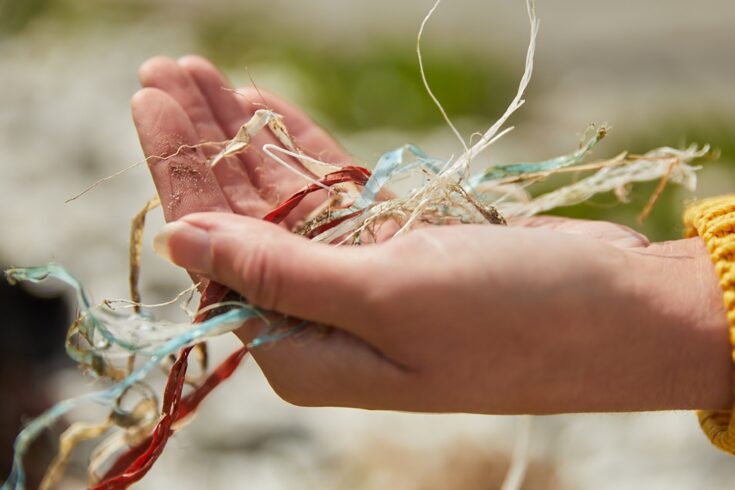
Around 85% of the waste found in our oceans is made from plastic. Much of this will wash up on our beaches with a significant impact on the coastal environment, wildlife such as seabirds and seals, and potentially human health. For decades people have been collecting and recycling the plastic found on beaches but is there a better way to deal with the growing tide of plastic waste?
Ocean plastics are central to wider research around putting a value on waste and what happens to it when collected. The OSPAR Commission is an EU mechanism to protect the North East Atlantic marine environment. Their survey methodology provides a robust framework for the survey of 70 beaches, 12 of which are in Northern Ireland, demonstrating the substantial scale of the issue of ocean plastics and marine debris.
In Northern Ireland, 500 pieces of litter are recorded for each 100-metre stretch of coastline, significantly above the 170 pieces per 100-metre stretch UK average (PDF, 2.4MB). On a global scale, it is estimated that ocean plastics amount to 75 to 199 million tons.
An innovative approach to cleaning up beaches
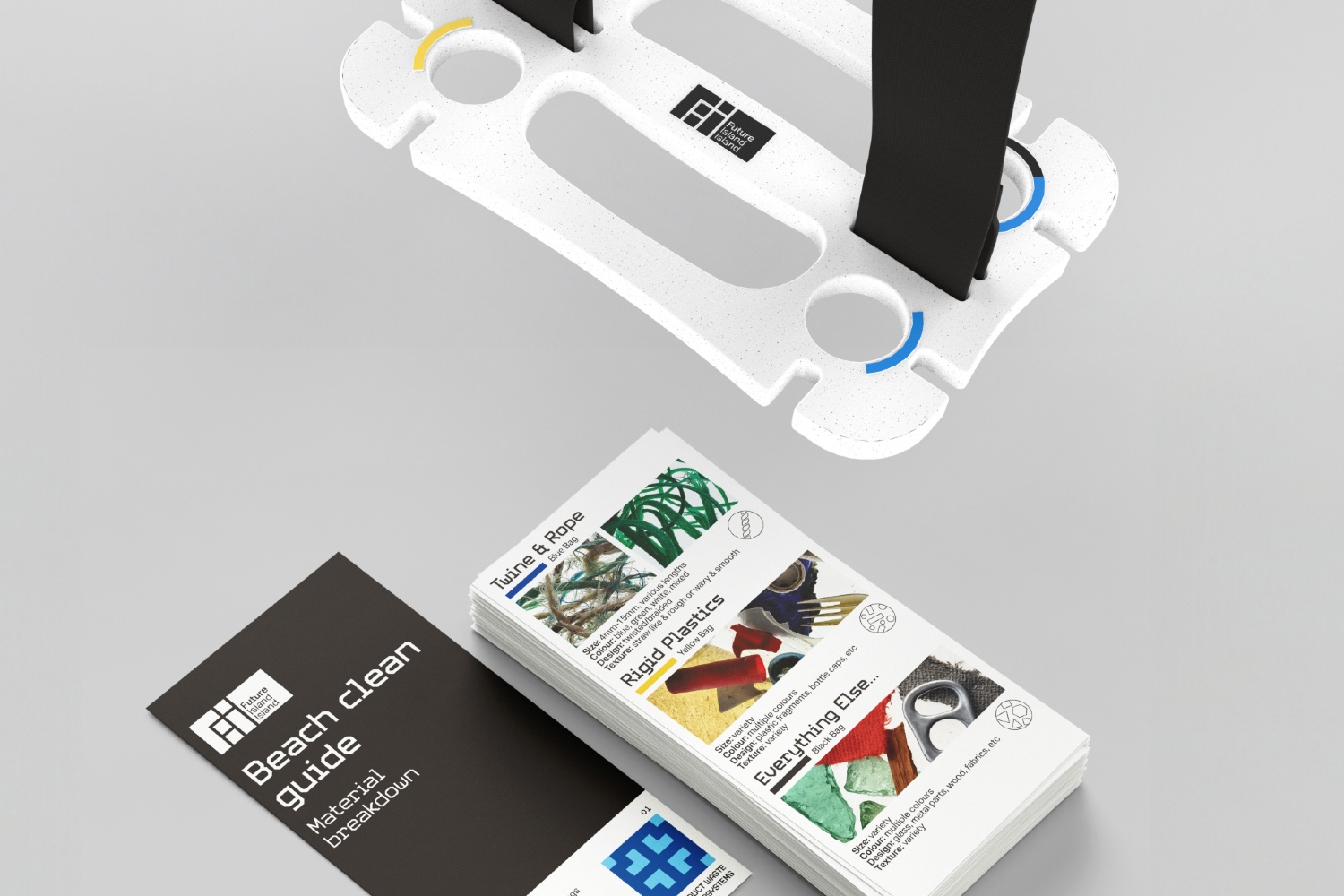
Beach clean 2.0 equipment. Credit Jonny Weir.
While beach cleaning removes litter and encourages ocean stewardship, it is typically difficult to recycle collected beach plastics due to their mixed composition, degraded condition and high contamination levels.
The Future Island-Island project, one of the Arts and Humanities Research Council (AHRC)-funded Green Transition Ecosystems projects, has been working with the community of Rathlin Island in Northern Ireland, to create Beach Clean 2.0. This innovative new approach to beach cleaning, led by Dr Susann Power, uses a methodology to overcome the challenge of recycling plastics collected on beaches. It does this by:
- promoting sorting at source
- improving material quality
- enabling pathways to put a value on waste
Beach Clean 2.0 uses colour-coded bags and carriers to sort materials into categories such as braided rope or plastic rigids. This new approach was informed by feedback from sixty-seven sources, including:
- beach cleaners
- private sector companies
- local councils
- organisations such as Keep Northern Ireland Beautiful and the National Trust
This methodology has the potential to transform beach cleans from litter removal to a circular plastics retrieval service.
Bringing communities and researchers together
The Future Island-Island project is led by Professor Justin Magee from Ulster University and Dr Clare Mulholland from Queen’s University Belfast. Based on Rathlin Island, the project brings together local people, researchers and practitioners to co-create design-led research for a greener, more sustainable Northern Ireland.
Over the past 10 years it is estimated that plastics account for 85% of marine litter in Northern Ireland. These are largely domestic, tourist or marine industries related, however also include other industry waste such construction agriculture and medical.
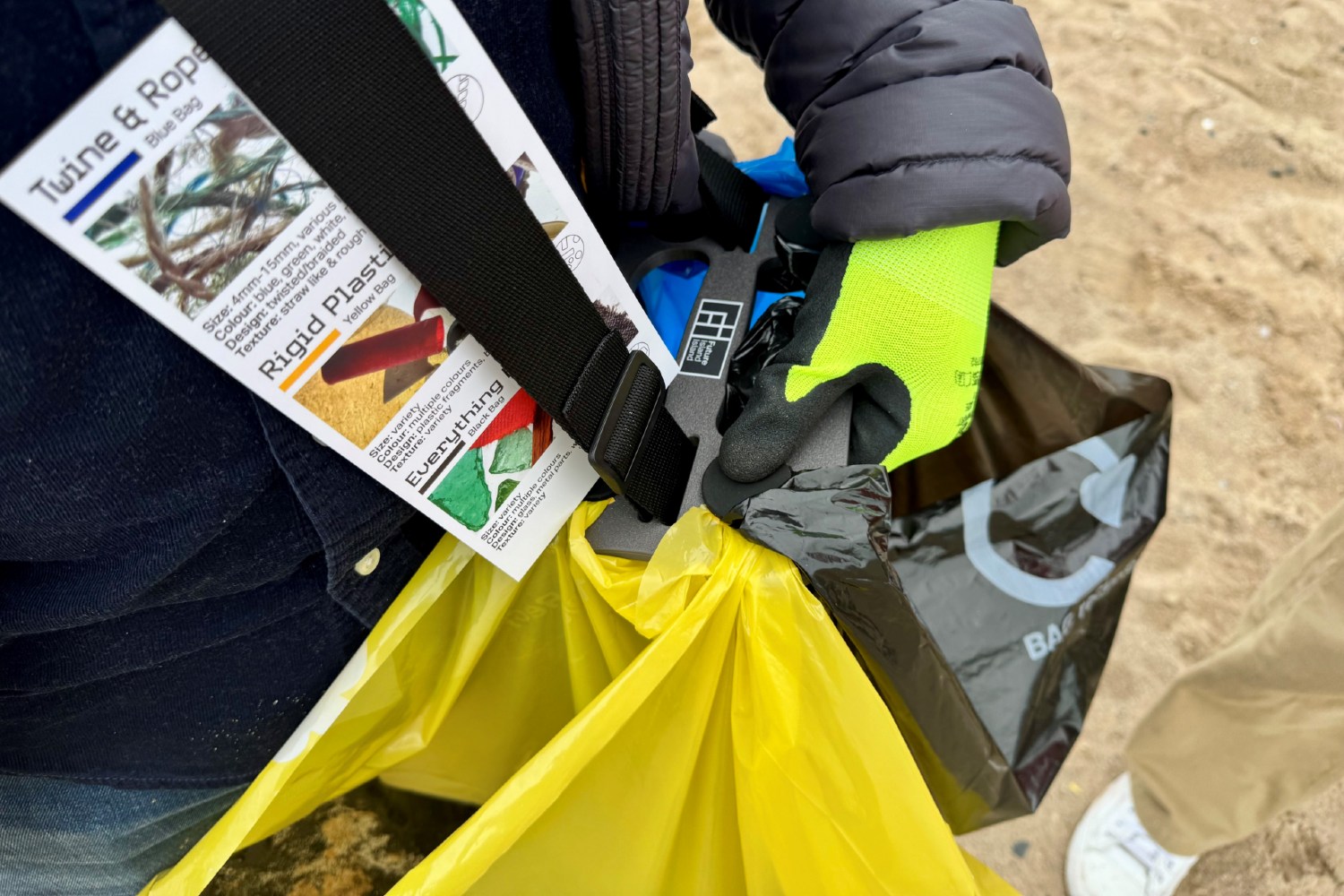
Beach clean 2.0 circular harvesting equipment in use. Credit: Jonny Weir.
The Beach Clean 2.0 approach was tested at three events in 2024:
- NI Science Festival
- Rathlin Sound Festival
- the International Coastal clean-up
The locations included Ireland’s northern coastline seven locations along from Kilkeel to Moville, including Rathlin Island. One hundred and forty-six people were involved in collecting more than 200kg of waste, 41% of the waste collected was ocean plastics that could be segregated for recycling.
Repair and reuse
The project was able to use some of these plastics to create a new 100% beach plastic filament that successfully 3D printed a test object. This demonstrated that beach plastics have potential function as circular manufacturing materials and systems.
Other mixed rigid plastics were compression moulded into blended-material polymer tiles as test prototypes. These tests lay the foundation for a repair and reuse culture on islands and showcase how structured citizen science can contribute to scalable circular economy solutions in coastal communities.
In response to the Fisheries and Water Environment Bill, Beach Clean 2.0 was published as a presentation and policy brief at the Northern Ireland Assembly, following a selection process. It informed legislative debate around water-land-edge environmental cleaning, proposing circular approaches, over the current linear landfill practices.
Beach Clean 2.0 is available as a downloadable toolkit under a non-executive and non-commercial license.
Future challenges
In the project’s second phase, which started in October 2025, the project aims to scale up Beach Clean 2.0 across Ireland, bridging different jurisdictions, by launching open-source visual guides and printable equipment.
While this method has been iteratively tested and improved with beach cleaning communities, the next challenge relates to the plastics processing capabilities and logistics within the region where distinct place-based policies may reside. The team are analysing and co-designing the service design blueprint, with a task and finish group of regional stakeholders across public, private and third sector partners.