
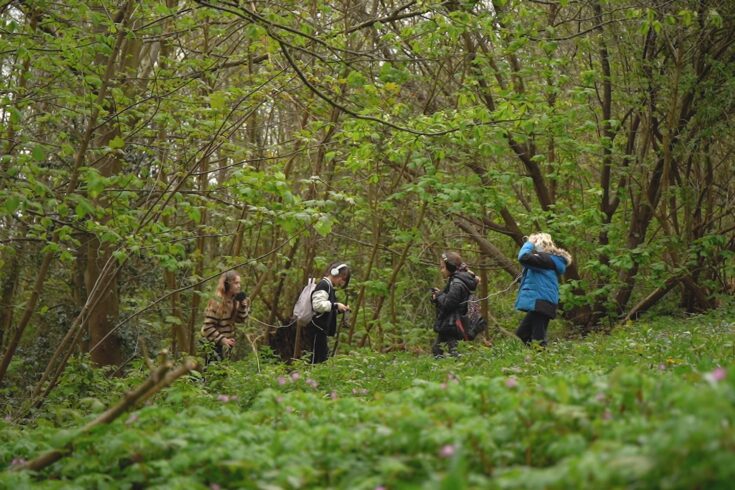
Co-created by Alice Eldridge and funded by the University of Sussex and the Arts and Humanities Research Council Impact Accelerator Accounts (IAAs), Bird Bath and Wilding Radio are two transformational sound art interventions.
They experiment with ways to bring the sounds of wild nature back into people’s everyday lives to inspire hope, connection to nature and action.
Sound art interventions for nature connection
Bird Bath, created in collaboration with Alistair Appleton, invites people to ‘bathe’ in the rich soundscapes of their local birdsong. First created for Newhaven Festival in 2017, Bird Bath featured in the 2024 Brighton Festival where over 1,600 people connected with the week-long installation and, more recently, Arundel’s Great Big Green Week.
Wilding Radio, created in collaboration with CiC Soundcamp is a long-term audio stream from pioneering rewilding project, Knepp. Created to document the ecological transformation following the reintroduction of beavers in 2022, it also provides a live ecological radio to which anyone, anywhere can tune in. Heard by more than 31,000 people from 120 countries to date, the project’s reach suggests a cultural thirst for nature connection.
The project inspired an eco vinyl release, ‘Sounds of Rewilding’ by Brighton-based Republic of Music, to encourage creative approaches to carbon-offsetting in the music industry. Wilding Radio also provided the soundtrack for a major exhibition, Water Pressure, which toured design museums across Europe with audiences of over 100,000.
Engaging schools and communities
Bird Bath aimed to also inspire communities to connect nature and culture through sound. It achieved this through shareable resources such as an ‘artist’s toolkit’ to help communities to create their own Bird Bath.
An education tool kit was trialled with seven to 11-year-olds (Key Stage 2) and their teachers in Sussex schools. ‘Field Trip: Listening with the Woods’ introduces students to basics of sound walking, deep listening and sound technologies. This helps them learn how to tune in to their place in the wider natural world and how to get in touch with that experience.
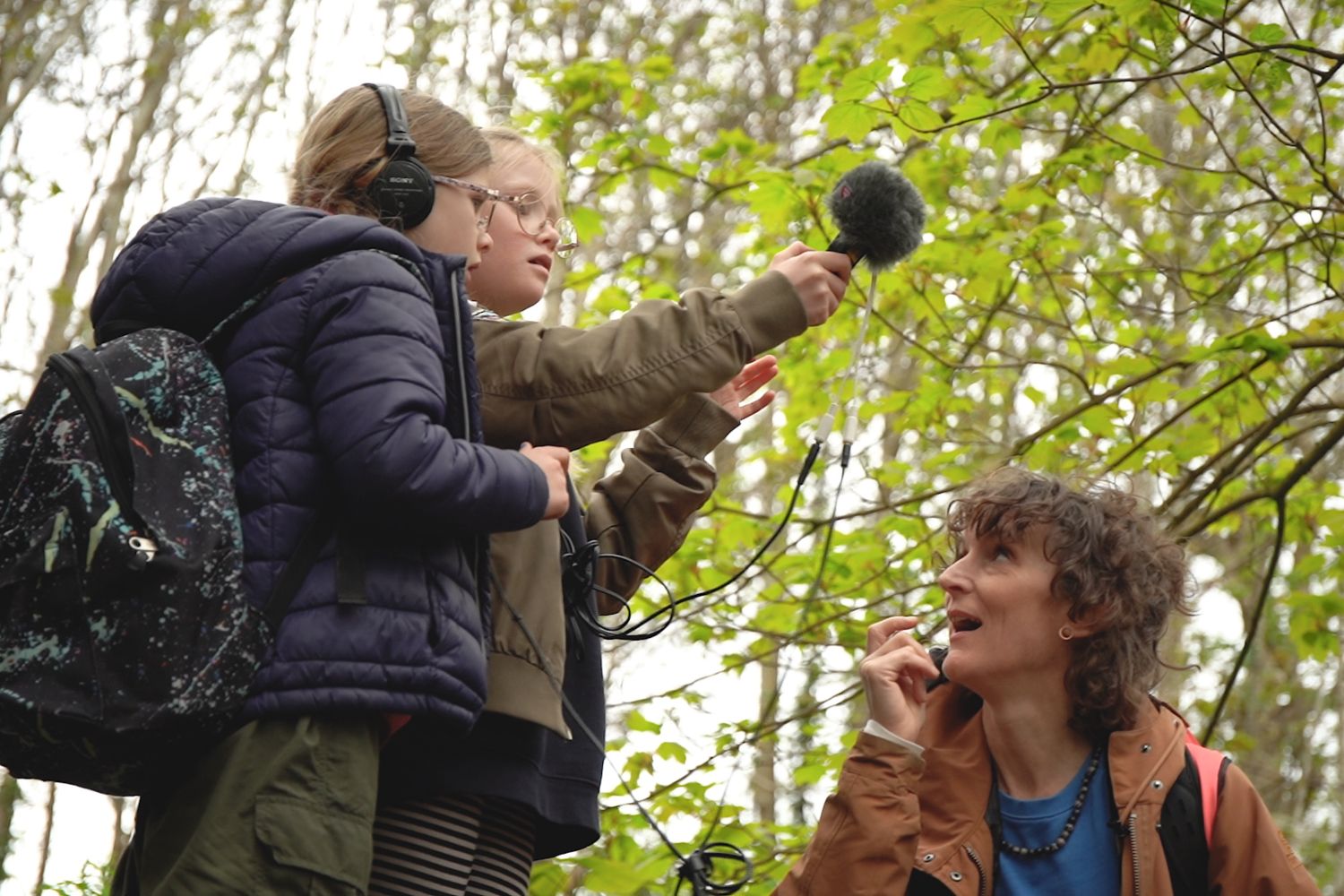
Image from the Young People’s Listening to the Woods workshop as part of Bird Bath. Credit: University of Sussex, consent granted by Alice Eldridge.
The follow-up toolkit introduces the students to the basics of soundscape composition. Bespoke worksheets focused on how soundscapes can be created using the free iPad application, Garageband, but could be adapted to instrumental music or even drama.
Wilding Radio’s success at Knepp has been replicated in Gair Wood in Yorkshire, one of the largest woodland creation projects in the north of England, and Helsinki Central Park in Finland. The team has developed an open-access Wilding Radio resource to support other spin-off initiatives.
Sound as sanctuary and therapy
In June 2024, Bird Bath was installed at Martlets Hospice in Hove, bringing the healing power of nature to sanctuary spaces for families visiting relatives and staff. These ecolistening projects have demonstrated how sound can be more than art; it can be therapeutic.
By encouraging people to tune in to the sounds of local wild ecosystems, Bird Bath and Wilding Radio are helping people to rediscover what’s being lost: a sensory, emotional, and ecological bond with the natural world. In doing so, they’re planting seeds of hope and action by engaging with local nature recovery and encouraging people to spend more time in contact with nature sounds, improving our health and wellbeing.