
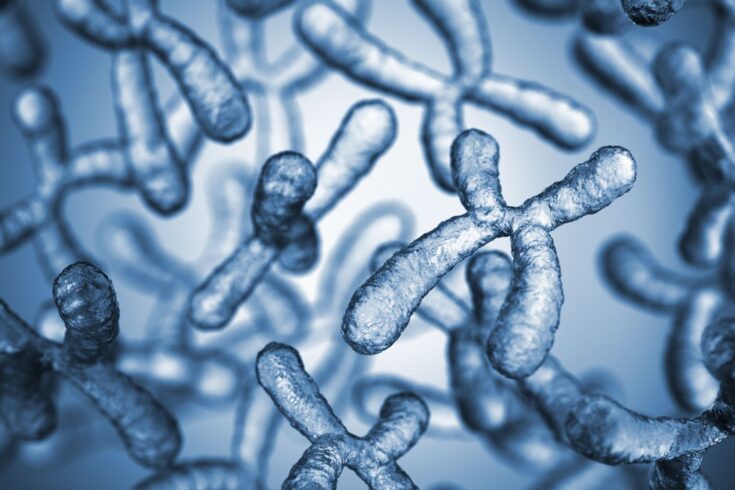
All living organisms contain DNA, which carries the genetic instructions for our life processes, from growth to metabolism. DNA is tightly coiled into chromosomes within the nucleus of our cells.
Researchers supported by the Biotechnology and Biological Sciences Research Council (BBSRC), have developed new technologies, called Karyomapping and enhanced translocation screening. The technologies enable us to better understand human and animal genetics by screening chromosomes.
Application of Karyomapping to healthcare has supported the births of healthy babies, free from genetic diseases worldwide.
Applying Karyomapping and enhanced translocation screening to livestock supports improvements in food production, by facilitating the potential for increased birth rates, as well as animal quality and welfare.
BBSRC investment drove the technologies forward, contributing to their development, application, and supporting the business case for their uptake in agriculture. Their continued use in livestock farming has the potential to improve food production and contribute towards increased food security.
Detecting genetic abnormalities
In humans, 99.9% of our genetic makeup is identical with the 0.1% difference accounting for variation between individuals. This 0.1% difference is what makes you, you.
Genetic abnormalities, deviations from the shared genetic makeup of a species due to mutation or chromosomal abnormalities (loss or gain of chromosomal DNA), can have significant health impacts. These can manifest early in pregnancy as miscarriage or result in severely affected offspring.
To detect damaging genetic defects, researchers at the University of Kent spearheaded the development of new genetic screening technologies:
- Karyomapping
- enhanced translocation screening
The technologies examine an individual or an embryo’s chromosomes, identifying gains, losses, translocations and chromosomal segments carrying disease genes. They have been used to improve assisted reproduction technology including in vitro fertilisation (IVF) and artificial insemination.
Use of assisted reproduction technology
In humans, assisted reproduction technology (ART) is used for fertility treatment and preventing genetic disease. Research shows that:
- one in six couples are infertile
- one in 50 couples are at risk of transmitting a genetic disorder
- more than 2.5 million IVF treatment cycles worldwide result in 500,000 successful deliveries every year
ART is also used in modern livestock production, for example:
- in 2022, more than 1.6 million transferrable cattle IVF embryos were produced globally
- artificial insemination is the leading approach to disseminating superior livestock genetics, with more than 100 million artificial insemination procedures each for pigs and cattle performed worldwide every year
Karyomapping and IVF
Karyomapping is a technique used to diagnose genetic disease in IVF embryos before they are transferred into the uterus. The hope is to establish a genetic disease-free pregnancy. This is known as preimplantation genetic testing for monogenic disease (PGT-M).
Professors Darren Griffin and Alan Handyside at the University of Kent were instrumental in the development of Karyomapping, supported by investment from BBSRC and Illumina.
Karyomapping in humans
Karyomapping was first developed as a universal means of diagnosing genetic conditions in human IVF embryos. It resulted in reducing the time to diagnosis, to a few days, as other PGT-M approaches previously took several months to complete.

Credit: SolStock, E+ via Getty Images.
The technology determines the inheritance of parts of parental chromosomes that carry disease genes. Accuracy has recently been established as 100% and embryos free of genetic disease can then be selected and transferred. Patients can proceed with their reproductive choices safe in the knowledge that children born as a result of Karyomapping are not affected with the disease that their parents carry.
In 2014, the first babies born free from genetic disease as a result of Karyomapping were reported. Karyomapping has now been applied to an estimated 30,000 IVF cycles.
Karyomapping cattle
Following the success of Karyomapping in human diagnostics, Griffin turned his attention to applying the technique to livestock, where IVF is also commonly used. In particular, Griffin was interested in increasing the success of IVF in cattle. This can often fail due to in vitro production (IVP) of embryos with extra or missing chromosomes, known as aneuploidy, which is a leading cause of pregnancy loss in cattle.
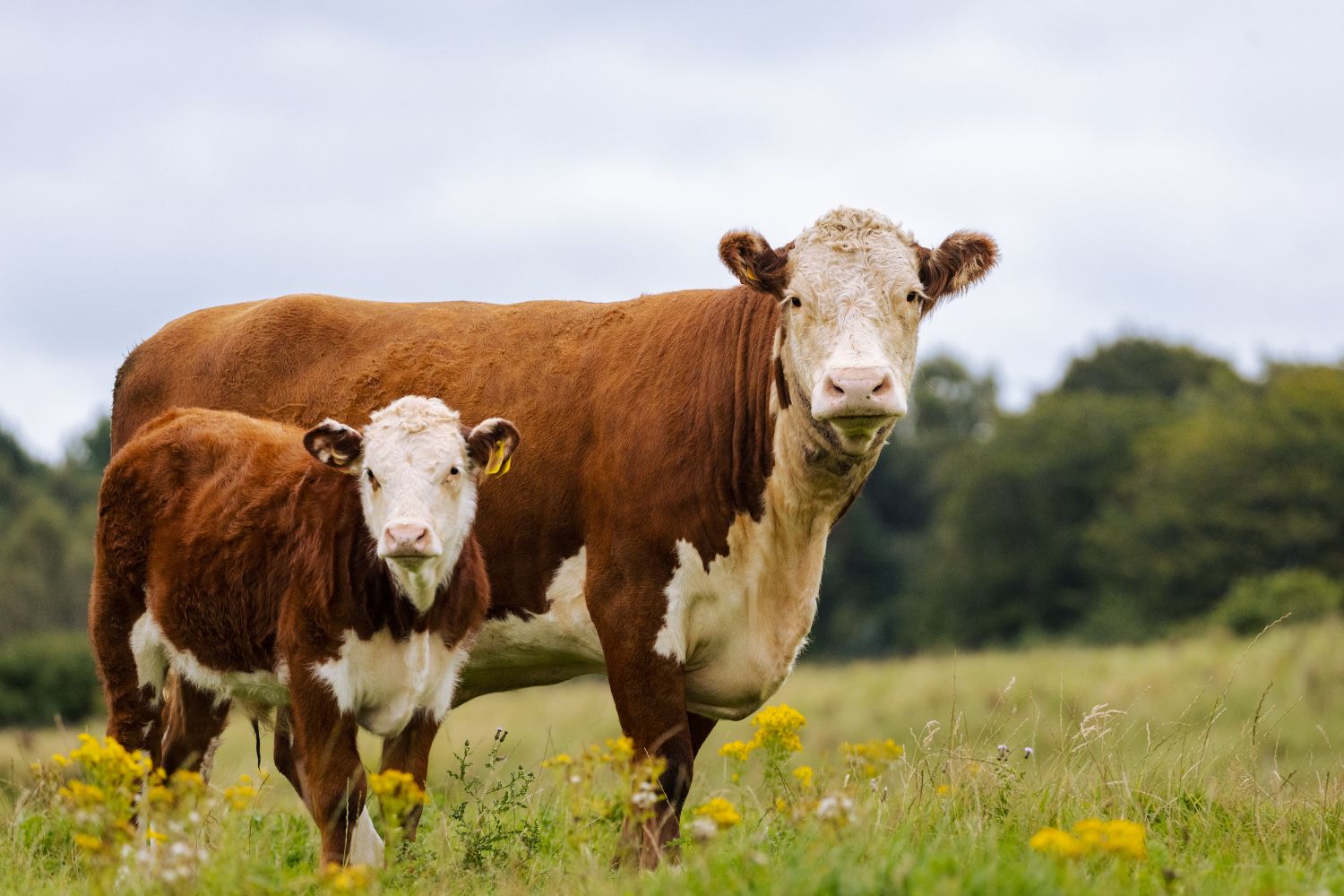
Credit: Scott Allen, iStock, Getty Images Plus via Getty Images.
BBSRC investment to Griffin and Professor Kevin Sinclair at the University of Nottingham allowed the researchers to explore aneuploidy in cattle. They established that chromosomally normal cattle embryos are around 10 times more likely to establish a pregnancy and live birth compared to aneuploid ones. This is important as up to 40% of cattle IVF embryos have a chromosomal abnormality.
Using Karyomapping, chromosomally normal embryos can be selected. This is known as preimplantation genetic testing for aneuploidy (PGT-A). With joint investment from BBSRC and Innovate UK, Griffin and Sinclair applied Karyomapping to livestock.
Using Karyomapping in cattle pregnancy rates have the potential to be increased by 8% and live birth rates by 6%. PGT-A can therefore boost efficient cattle production, with knock-on benefits for our supply of meat and milk.
Improving livestock genetics
The ability of Karyomapping to determine chromosomal imbalances in cattle embryos complements existing screening techniques that are used for the selection of traits such as:
- meat quality
- milk yield
- feed conversion
- disease resistance
Screening IVP cattle embryos genetically means that breeding for quality improvements can be achieved quicker than waiting for calves to be born. That is, selection decisions are made before embryo transfer, improving financial return and integrating traits such as disease resistance into cattle more rapidly.
The net effect is a healthier, more disease-free herd with less antibiotics used and fewer health and welfare concerns. By combining this pre-existing embryo selection technology with Karyomapping we can significantly increase the efficiency of breeding programmes. Therefore, Karyomapping allows breeders to maximise pregnancy rates of high quality and healthy livestock.
Enhanced translocation screening and artificial insemination
Artificial insemination is used worldwide to direct breeding and improve the genetics of offspring, with over 100 million procedures conducted each year for both cattle and pigs worldwide.
Enhanced translocation screening in pigs
Pork is the most widely consumed meat worldwide, accounting for around 36% of global meat consumption. To meet demand, it is essential that pig breeding is efficient.
Semen from a stud male pig, called a boar, is often used for artificial insemination of up to hundreds of female pigs. If a stud male is sub-fertile therefore, it needs to be excluded from the breeding programme to avoid economic losses for the food production industry.
Chromosomal abnormalities such as translocations, where a section of one chromosome breaks off and reattaches to a different location are the leading cause of sub-fertility in pigs. They can result in the production of unbalanced sperm with missing or extra genetic material, significantly increasing the risk of miscarriage and thus reducing litter size in pigs.
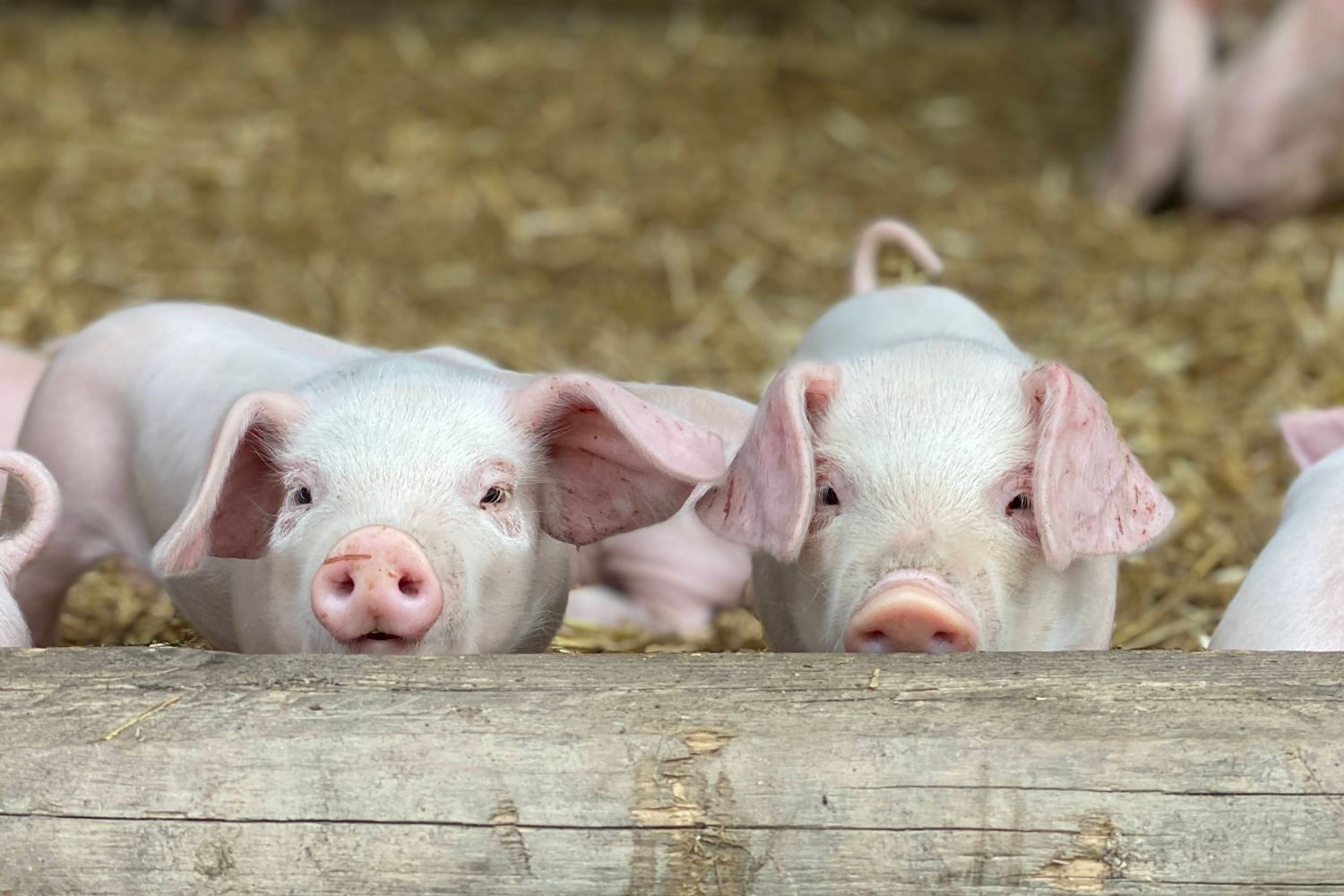
British lop piglets. Credit: ChrisEcob999, iStock, Getty Images Plus, via Getty Images.
Traditional means of screening for chromosome translocations cannot identity subtle (so called ‘cryptic’) translocations, which also greatly impact fertility. Griffin and Dr Rebecca O’Connor, also at the University of Kent, developed enhanced translocation screening (ETS) to overcome this issue.
ETS was first developed for pigs. Working with the company Cytocell, and supported by Innovate UK investment, a screening device was produced by the researchers. Using the technology, and BBSRC investment, the occurrence of chromosome translocations in male pigs was identified. This incidence was higher than previously reported, as ETS detected around twice as many defects, including the cryptic ones. The importance of this new screening method in breeding programmes was thus highlighted.
Take-up and translation of ETS
The ETS device for pigs has been taken up by breeding companies across Europe and the US, saving companies from significant financial losses associated with undetected sub-fertile animals. Further investment from BBSRC has also enabled the translation of the technology to cattle, where chromosomal abnormalities are also the leading cause of sub-fertility.
Find out more
Read ‘Preimplantation genetic testing for aneuploidy improves live birth rates with in vitro produced bovine embryos: a blind retrospective study’ to find out more.