

The early bird gets the metaphorical worm.
Cumulus Neuroscience founder Brian Murphy is the definition of an early adopter.
Brian Murphy is habitually early. In the 1990s, he set up China’s first English language online magazine, which also became the first to be taken down a few months later. In the mid-2000s, he was already studying large-language models, at least, what they then considered to be ‘large’, at the University of Trento. And, in 2011, he moved to Carnegie Mellon as a research scientist, joining the only machine learning department in the world at that time.
Murphy’s CV is so varied he’s been called ‘an intellectual Forrest Gump’, but more striking is how ahead of the curve he’s consistently been. Perhaps it’s an inherited trait. His father, a farmer turned multi-Ivy-League academic, was running computational architecture simulations in the 1960s. Or perhaps it’s just due to impatience.
“I just wish it happened faster,” Murphy laughs, while chatting to Innovate UK about Cumulus Neuroscience, the company he founded in 2015 and now runs as Chief Scientific Officer.
Cumulus sits at the intersection of life sciences and technology. While progress is faster than in traditional science, it is substantially slower compared to Silicon Valley. “I’m an impatient scientist, but a patient engineer,” Murphy clarifies. He started the company a few years after completing a study in Professor Tom Mitchell’s lab at Carnegie Mellon. They used fMRI technology to scan people’s brains while they were reading a chapter of ‘Harry Potter’, then use algorithmic models to correlate their brain activity to the words on the page.
“Our models were so accurate we could tell which sentence you just read in the chapter based on your brain read-out,” explains Murphy. It was incredible, and drew attention from the global press, but Murphy, though proud of the study, couldn’t help but see its limitations. “We’d never be able to scale it to anywhere it could make a difference,” he says.
Origin story
The experiment was done with just eight people using just one 45-minute slice of their lives. “That’s not representative of their normal day-to-day brain activity, or how they function out in the world,” says Murphy. To properly comprehend the brain, they’d need a much bigger dataset. “And you’re never going to get large datasets with fMRI because these are huge machines, they’re in basements, they’re cooled with liquid cryogens.”
That was the moment Murphy realised he needed to build those datasets and develop a technology that could objectively measure brain activity at scale. With that amount of interpretable data, algorithmic systems would be able to learn so much more about the human brain, and the diseases degrading it.
Today, more than 10 years later, the Cumulus NeuLogiq Platform is being used in clinical trials to capture data in clinic and at home. This includes an FDA 510(k) cleared wireless dry-EEG headset that syncs to gamified tasks performed on a tablet, measuring the impact of new medications on neurological disorders.
Typical neuroscience clinical trials only have enough staff resources, and patient time and energy to include a limited number of assessments. But Cumulus’s tech allows study sponsors to capture longitudinal assessment data, including various cognitive functions, memory and sleep. Short-term, that means pharma companies can figure out if a drug is worth pursuing quicker. Longer term, it ensures they get the most out of the time and commitment of clinical trial patients. “To use up that time and commitment, but only find out a couple of things is almost criminal if you’ve got the option to find out more,” says Murphy.
Pre-optimisation
But transforming clinical trials wasn’t Murphy’s initial intention. He’d first planned to build a Fitbit for the Brain. “We actually had a basketball cap design,” he says, sensors would have been built in to monitor brain activity continuously. This was back when Cumulus Neuroscience was called BrainWaveBank. In this phase, the company was working on a massive citizen brain-mapping project. Murphy and his team wanted to get a good dataset of healthy brain activity, “because if you want to detect disease, you have to know what normal looks like”.
Fitbit for the Brain was one way they considered monetising it, but, considering the current obsession with health optimisation technology, Murphy was arguably too early to that idea. “In 2018, nobody knew they needed a Fitbit for their brain,” says Murphy. Today, optimisation culture obsesses over that question as part of the quest to reach a numerically defined ideal state of cognitive function.
While it seems normal now to measure our bodies like fleshy dashboards, a near-decade ago the practice wasn’t so engrained. Getting investment for an experimental large-scale brain-mapping project of healthy people was challenging to say the least. BrainWaveBank’s first study was funded by an Innovate UK grant, the first of six the company (as Cumulus too) has received.
“It’s something that has enabled us to have a shot at this, in a way that otherwise would have been really tough,” Cumulus Neuroscience Chief Operating Officer Siggi Saevarsson says of the grants. “Genuinely, this wouldn’t have been possible without that support.” The company has also received more than £9 million in funding over multiple rounds, one led by SV Health Ventures’ Dementia Discovery Fund.
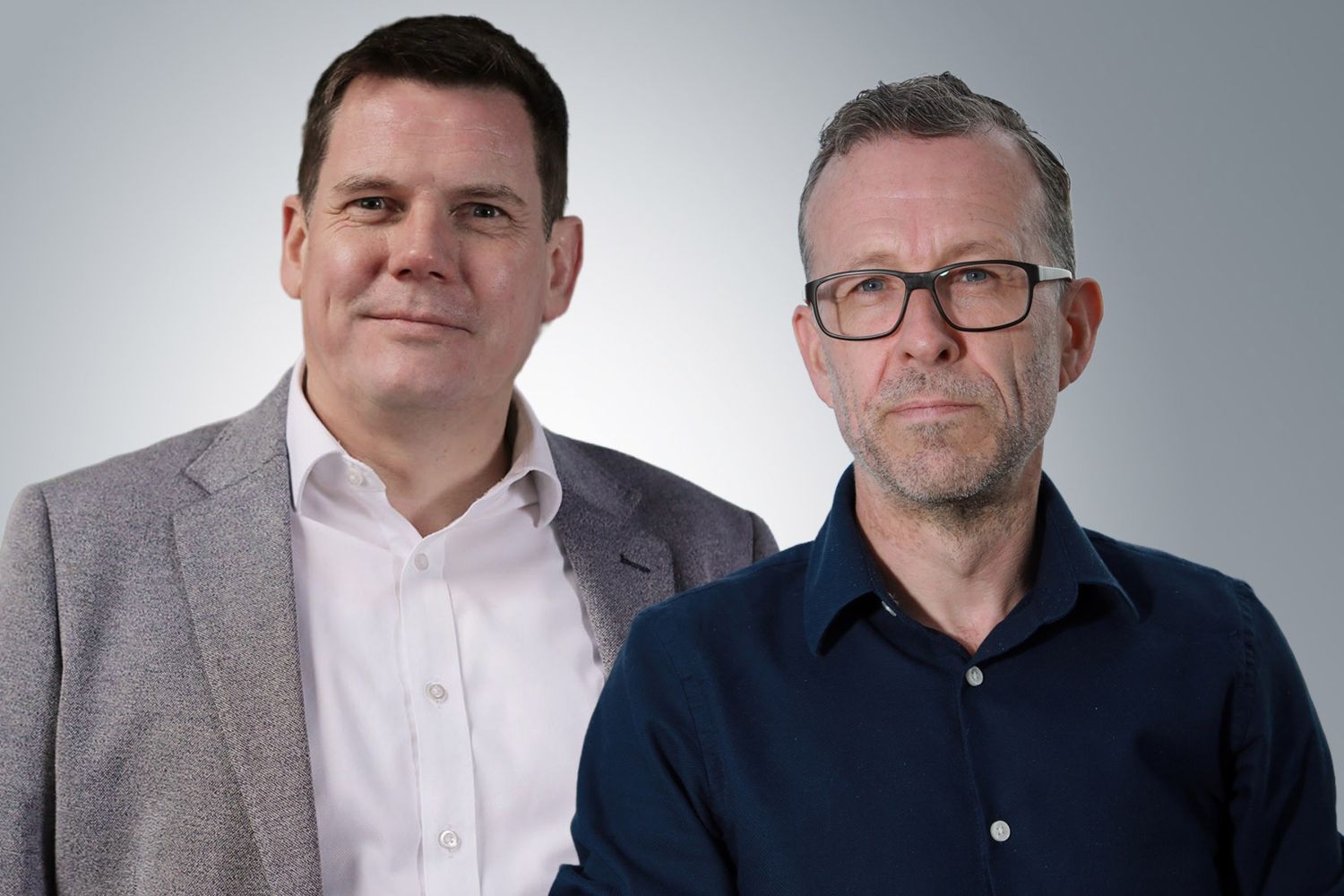
(Left) Brian Murphy, PhD, Co-Founder and Chief Scientific Officer, Cumulus Neuroscience. (Right) Siggi Saevarsson, Chief Operating Officer, Cumulus Neuroscience. Credit: Cumulus Neuroscience
While Murphy, earnest Irishman that he is, humours a few questions about Oura-ring-esque, brain-mapping wearables, it’s clear the company’s technology was always destined for more than consumer applications. In a medical setting, the optimisation trend becomes preventative healthcare, using data to identify problems before they emerge. And this is the basis of the other less-commercial side of Cumulus’s current business, early detection of neurodegenerative diseases like Alzheimer’s.
The first Innovate UK-funded study measured what normal ageing looked like within the brain. More recent grants have gone towards testing AccelADx, Cumulus’s screening test for Alzheimer’s. It uses its headset and artificial intelligence (AI) technology to measure subtle changes in brainwaves associated with memory recall.
Long-term vision
After hearing about the development of an at-home brain-monitoring system which produces data that’s then processed by AI, you might reasonably think neurological healthcare is working at the frontier. But many of its processes are still “Stone Age”, says Murphy. “The ‘standard of care’ tools used today for assessing these diseases are very limited.”
It took months, he says, for Cumulus’s CEO Tina Sampath to fully grasp the extent of the problem. She came from the oncology space where advances in next generation sequencing and genomics have transformed how clinical trials for cancer therapies are conducted, and how patients living with cancer are diagnosed and treated. She could not fathom that antiquated pen and paper-based assessments are the ‘standard of care’ used for screening and monitoring patients in healthcare clinics and neurology clinical trials.
Murphy points also to psychiatric treatments, where drug efficacy varies from patient to patient, where doctors are forced to rely on trial and error. He acknowledges doctors are doing their best, but we really need to drive change in this field, to find quicker and more effective ways to figure out what therapy and what dose will work for an individual patient.
Cumulus’s NeuLogiq Platform could replace and improve on these current processes. “We want to get them into every doctor’s office,” says Murphy. This, again, cannot happen fast enough, and Murphy says the platform is technologically ready now. Though Saevarsson says it’s still unlikely to happen within the next five years due to the slow-moving nature of change in the healthcare industry at the point of care.
As Murphy says: “It’s surprising to me how easy it is to match or beat the conventional way of doing things with just good design.”
Author credit: Sophia Epstein