

The award, and the opportunities that followed, have changed the way dementia PhD student Vanessa Drevenakova communicates. The experience also gave her extra motivation to continue pushing her research forward, to benefit patients and their families living with dementia.
This impact shows the value of the Medical Research Council (MRC) Max Perutz Award and how it can help link up science and society. A longstanding science communication competition for MRC PhD students, it aims to:
- encourage and recognise outstanding science communication
- help MRC PhD students build their science communication skills
Hearing from patients for the first time
Vanessa had never spoken to a patient about her early-stage dementia research before. She is a bioengineering first-year PhD student at Imperial College London, working on using focused ultrasound to delay brain ageing.
After winning the writing category of the MRC Max Perutz Award in November 2025, her article was published by The Observer as part of the prize. In the article she explains why her research matters in simple, clear language aimed at non-scientists.
In response she started receiving emails, and even a handwritten letter, from patients and their families living with dementia, Parkinson’s disease or cognitive decline. Some messages were hopeful. Some frightened. Many simply asked, “Can we take part in your research?”. She carefully replied to each one, receiving positive replies.
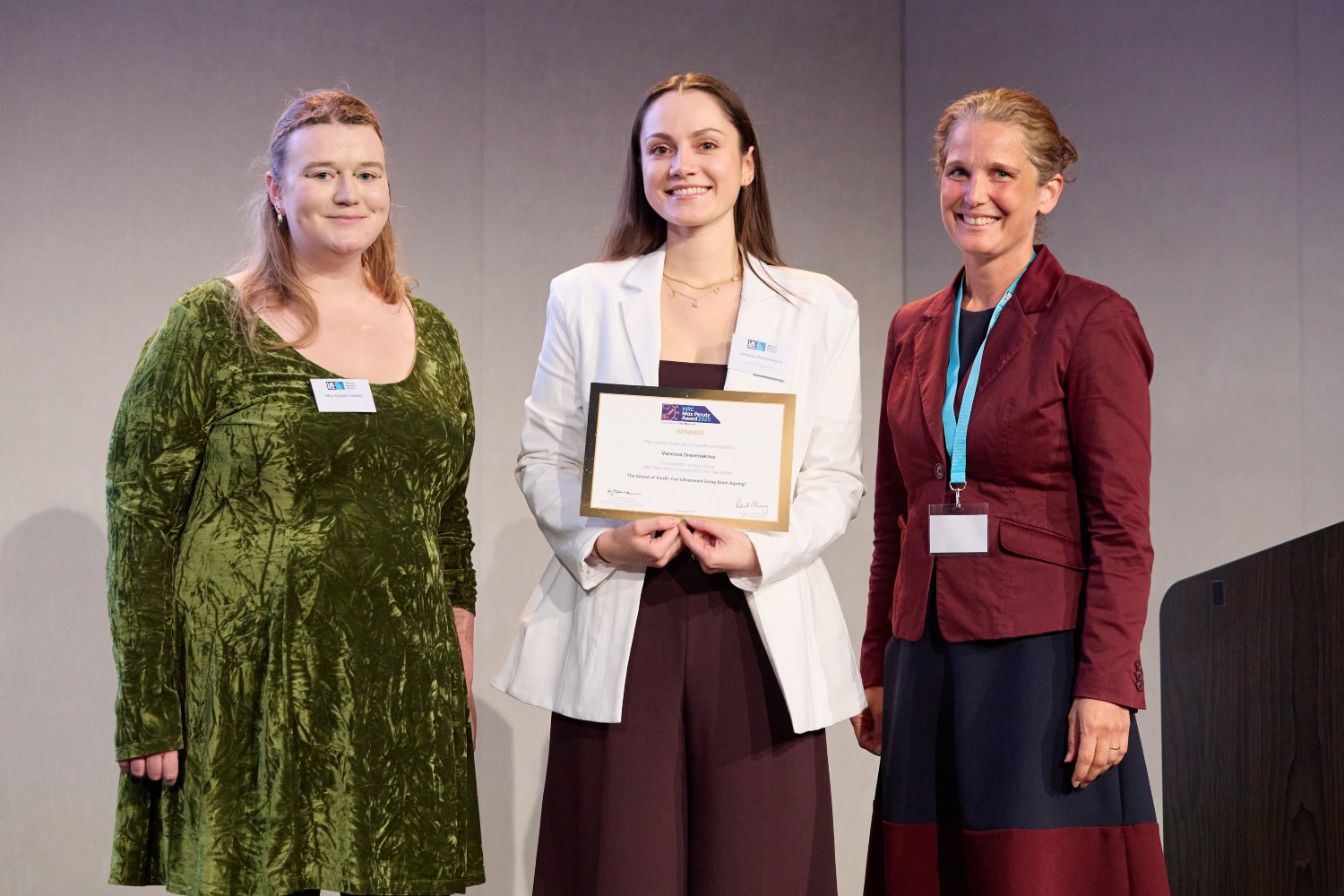
Vanessa winning the writing category of the MRC Max Perutz Award 2025. From left to right: Elspeth Oakley (Judging Panel Public Member), Vanessa, and Dr Joanna Robinson (Chair of the Judging Panel). Credit: Joel Knight Photography.
Science in the spotlight
The media spotlight on Vanessa’s work led to three TV appearances. She was interviewed on Sky News on 11 December 2025, with wider-ranging questions, promoting more emails from patients.
Her native country of Slovakia invited her to do an interview on 9 January 2026. She appeared on the popular Slovak morning TV show Teleráno, Markíza, speaking in her native Slovak language. She shared her work and why she cares so much about brain ageing research. She received strong support and interest from people in Slovakia.
On 20 February 2026, she also appeared in a short Slovak documentary produced by Reflex, a daily current affairs programme on TV Markíza. The documentary followed her journey from Slovakia to London and her path into brain ageing research. She used this opportunity to raise awareness of neurodegenerative diseases and non-invasive therapeutic approaches.
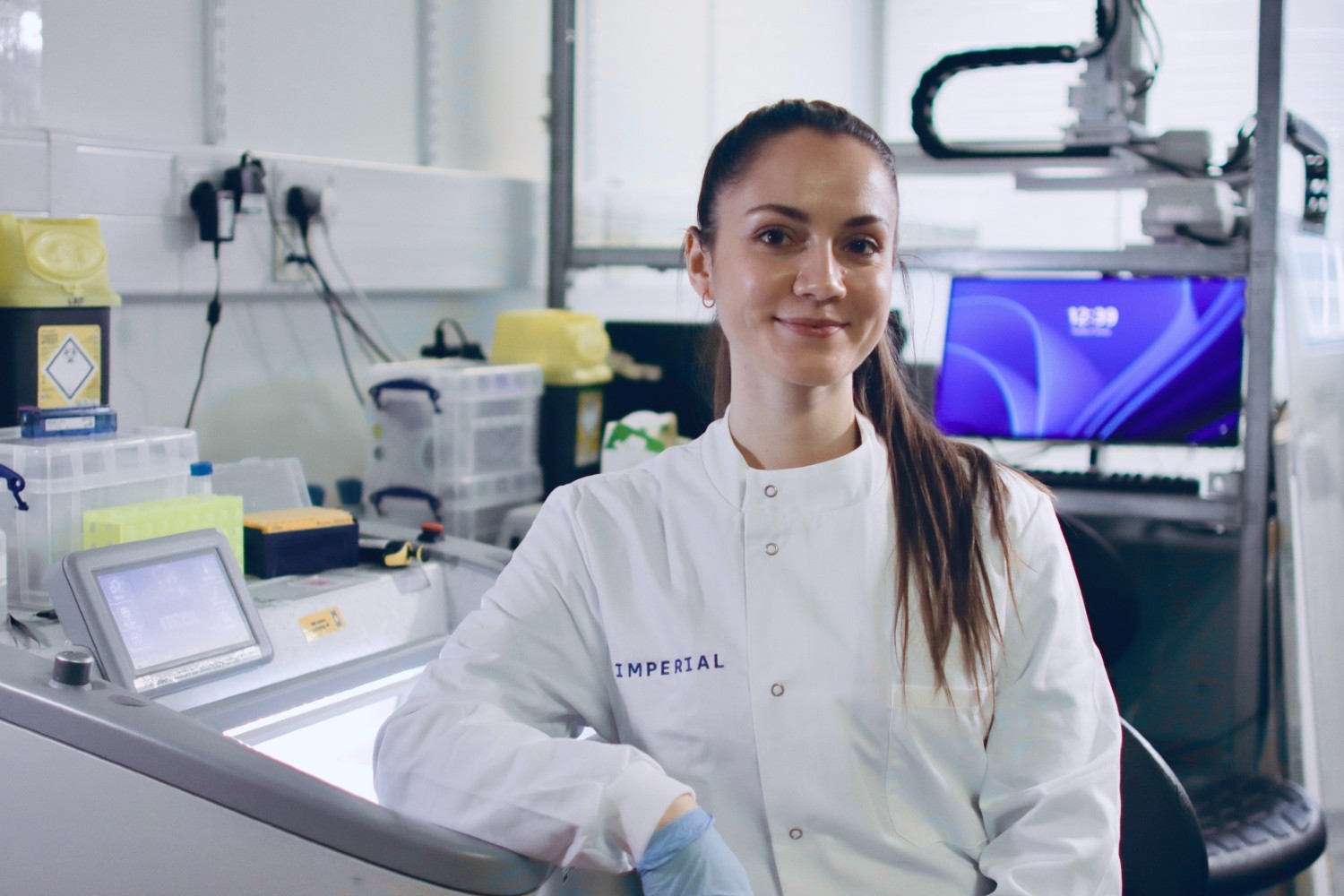
Vanessa in the lab. Credit: Matthew Chang
Patient voices shaping research
Hearing directly from patients changed how Vanessa thinks about her work. Their questions pushed her to think about how to move faster, safely and responsibly towards the clinic, to help her work reach patients and their families living with dementia.
It led to new conversations with her supervisor, Dr Sophie Morse, and collaborators about speeding up their plans. They even began discussing a pilot clinical study much earlier than she had ever imagined during her PhD.
At the same time, her team also started exploring ways to involve patients more directly in meetings to understand their perspectives, worries and priorities from the start.
The art of making science relatable
As an early career researcher, and someone who speaks English as a second language, she used to use technical terms and scientific jargon to communicate. But thanks to the MRC Max Perutz Award and the opportunities that came after, she has changed the way she communicates.
Vanessa said:
I’ve realised that simple language goes much further, whether I’m speaking to patients or to scientists. The goal is not to sound clever. It is to be understood. I now appreciate that speaking more clearly doesn’t mean dumbing the science down, it is learning how to make science more relatable.
Motivation to push research forward
Despite the advances in focused ultrasound therapies, Vanessa’s work is still in the pre-clinical stage and does not yet involve participants. She had to learn fast how to explain this honestly, without taking away hope.
Vanessa said:
At first, I struggled with those conversations. However, as I had more interactions with patients, I realised that they are very hopeful, and they appreciate our honesty and ongoing effort. What surprised me the most was how supportive and grateful they were for our work. This gave me an enormous amount of motivation to continue pushing our research forward.
Find out more
See Vanessa’s profile at Imperial College London and UK Dementia Research Institute.
Learn more about focused ultrasound research, clinical trials and current treatments at Focused Ultrasound Foundation and UK Focused Ultrasound Foundation.