

Environmental science is delivering a strategic advantage. It strengthens UK defence capability, protects critical infrastructure, and reduces vulnerabilities in supply chains.
Research is being transformed into tools and partnerships that help keep the UK prepared for future risk. The following examples show how.
Tech-enabled advantage at sea
The sea is an important arena for UK defence. Cutting-edge technology developed in the UK makes it possible to explore underwater environments in new ways. By using unmanned vehicles, maritime operators, including the Royal Navy, can stay competitive in strategic waters.
The National Oceanography Centre (NOC) is home to one of the world’s largest, most advanced fleets of Maritime Autonomous Robotic Systems (MARS). The advanced platforms, sensors, and networks were originally developed for research, with support from UK Research and Innovation (UKRI). They are a national strength that help to understand extreme marine environments. As such, they can also be leveraged for other strategic uses.
Find out more about NOC’s marine technology
Royal Navy partnership
NOC’s partnership with Royal Navy involves collaboration with the Defence Science and Technology Laboratory, the Ministry of Defence’s science and technology organisation. Activities include large-scale trials in real operational settings and access to key datasets.
NOC’s contributions have strengthened the navy’s capability, decision-making, situational awareness, and operational readiness while enabling environmental sustainability.
Impact profile: Dr Alex Phillips
Advancing UK marine autonomy
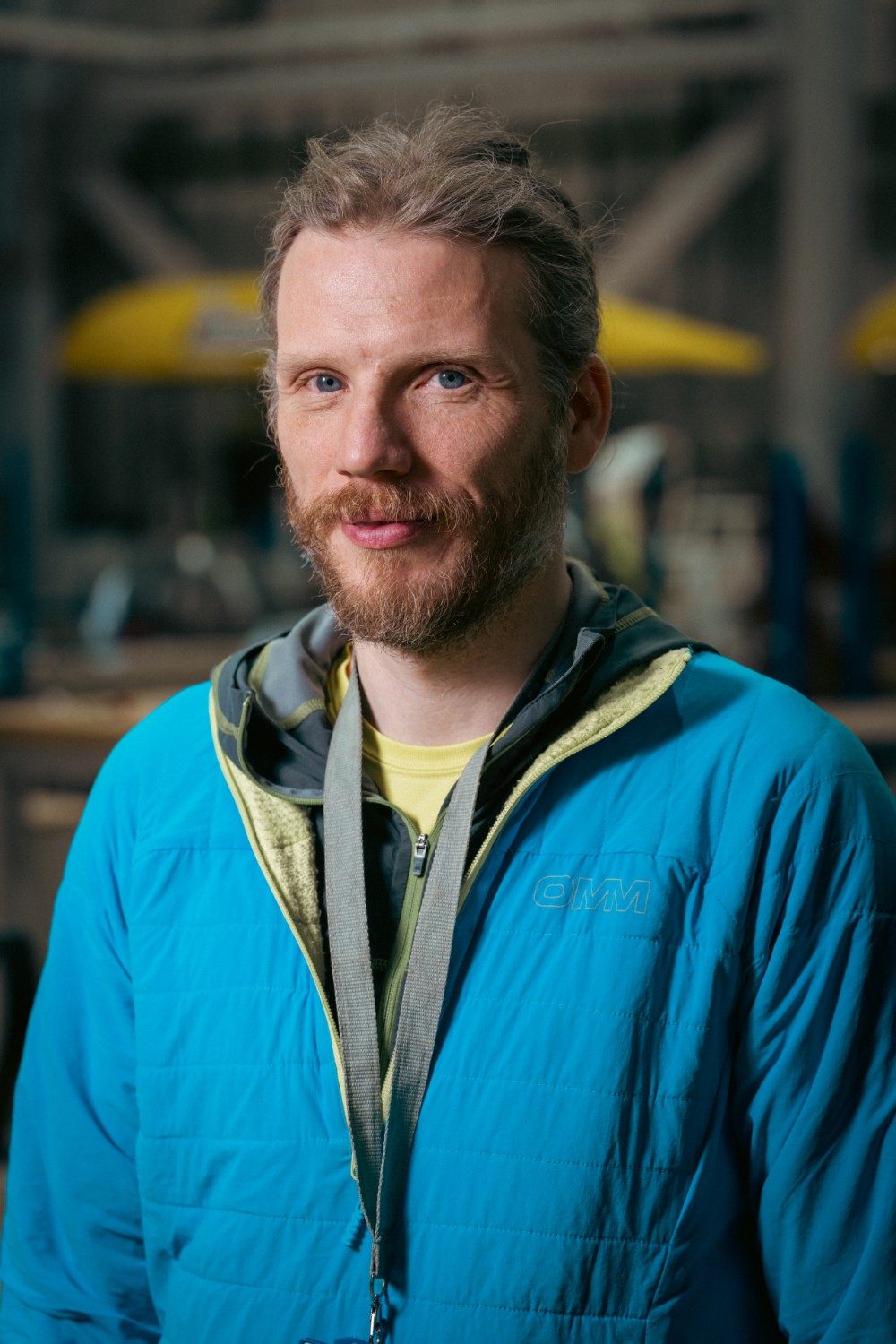
Dr Alex Phillips. Credit: Alex Phillips
As Head of MARS, Dr Alex Phillips is responsible for NOC’s fleet of undersea platforms and sensors. He specialises in the design, development, and operation of autonomous underwater vehicles and robotic platforms.
In particular, the technologies his team develops optimise the periods the vehicles can remain in the water, opening new data collection opportunities. For instance, underwater gliders help the Royal Navy understand the environment in strategically important waters like the UK-Iceland gap.
From his NOC‑supported PhD in underwater vehicle design, to his role invigorating NOC’s marine autonomy programme, Alex’s career has been shaped by support from NERC, EPSRC and Innovate UK. This applied knowledge has equipped him to turn cutting‑edge marine robotics into practical solutions that advance our capability in marine environments.
Securing infrastructure by satellite
Threats to critical infrastructure can be difficult or expensive to detect from the ground. It’s important that governments and businesses can detect hazardous changes in the environment quickly and accurately. Doing so reduces risks, costs, and maintains vital services.
To meet this need across large areas and difficult-to-reach places, researchers have developed tools that turn satellite data into near‑real‑time intelligence about our environment. These solutions have been made possible by the UK’s thriving space sector, long-term research, and cutting-edge infrastructure.
Safeguarding utility infrastructure by satellite
In 2023 a methane leak was detected from space for the first time in the UK. The leak was found during a collaboration led by the National Centre for Earth Observation (NCEO). While measuring greenhouse gases dispersed in the atmosphere, the team discovered unusual levels of methane. The issue was traced to a faulty gas pipe owned by a utility company who were alerted and able to stop the leak.
Find out more about NCEO’s methane leak detection
Impact profile: Dr Vicki Smith
Protecting lives using geospatial data
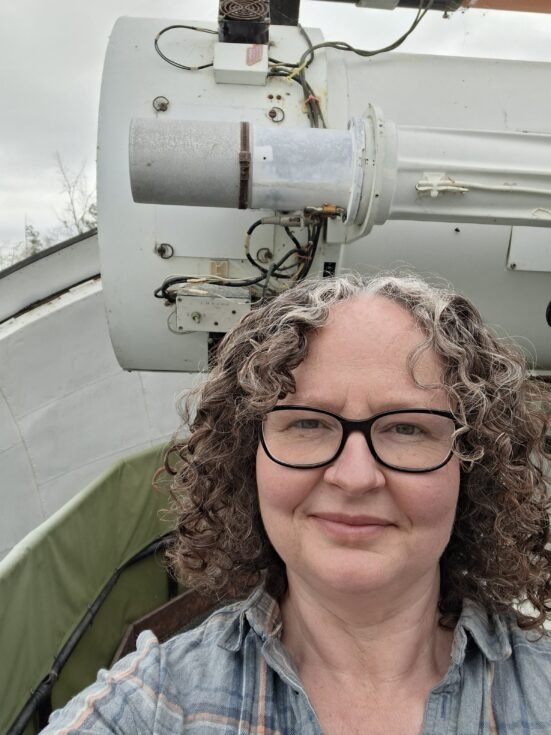
Dr Vicki Smith. Credit Vicki Smith
As an Absolute Gravimetry Scientist, Vicki is part of a six‑person team at the UK Space Geodesy Facility (SGF), the nation’s only geodetic observatory. By maintaining the accuracy of the UK’s navigation, communication and timing services, the UKRI facility supports services critical to our daily lives, from satellite navigation to flood forecasting. SGF consistently ranks as one of the highest-performing geodetic facilities worldwide.
Vicki specialises in measuring subtle changes in the Earth’s gravity. These changes draw important insights such as how the ground is rising or sinking as ice sheets melt and mass shifts around the planet. These measurements can tell us, for instance, how added ocean volume from melting ice sheets interacts with slow crustal rebound to influence UK sea‑level rise, supporting evidence‑based coastal planning.
Vicki joined SGF in 2002 with a physics and engineering background. Her NERC‑funded PhD evolved her expertise from instrumentation to advanced geodetic analysis, key skills contributing to SGF’s capability as a unique national asset.
Strengthening economic supply chains
The UK relies on a secure supply of materials for a strong and resilient economy. Among these materials are critical minerals, which contribute to many sectors including advanced manufacturing and the net zero transition. Both of these are key pillars that bolster the UK government’s vision for secure economic growth.
Insights and solutions driven by environmental science are boosting the security of supply chains critical for our economy and our lives.
Understanding supply chain vulnerabilities
The first step to addressing supply chain vulnerabilities is understanding them. Currently, access to critical minerals relies on complex global supply chains. This creates geopolitical and economic vulnerability. This is especially true in the face of increasing global demand for critical minerals.
The UK’s modern industrial strategy, which outlines the government’s approach to strengthen national economy, aims to deliver stronger critical mineral supply chains. Critical Minerals Intelligence Centre (CMIC) directly advises government on policy. Their analysis is key to supporting delivery of the industrial strategy. CMIC gathers and interprets key intelligence on supply and demand of critical minerals, and is led by the British Geological Survey. Identifying these supply chain risks is a foundation for policymakers and innovators to find solutions, create opportunities, and deliver economic prosperity.
Find out more about CMIC’s reports and risk assessments
Impact profile: Dr Rob Harris
Developing circular economy technology for critical mineral supply

Dr Rob Harris. Credit Rob Harris
Dr Rob Harris is Chief Technology Officer at DEScycle, which uses deep eutectic solvents (DES) to build new metal recovery technologies, starting with electronic waste. Since conventional recycling is highly polluting and most rare earth metals are produced by China, DEScycle’s approach offers a strategic alternative for faster, lower‑cost domestic recovery.
DEScycle has secured £26 million in private equity and investment. The company is constructing a demonstration facility, scheduled for completion in mid‑2026, which will grow the current team from 15 to more than 25. Following successful operation of this demonstration plant, DEScycle’s staffing is expected to double again, culminating in the development of a first‑of‑a‑kind commercial scale facility in the North East of the UK.
Rob developed the formulations underpinning DEScycle during his time at University of Leicester. NERC and Innovate UK funding helped him to further advance his academic knowledge into real-world solutions. His UKRI Future Leaders Fellowship enabled him to develop commercial-ready processes and attract major private investment.