
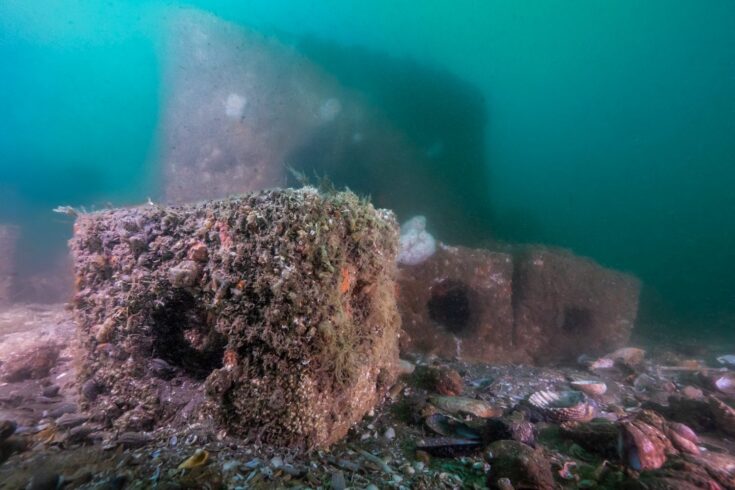
Arc marine was established in 2015 with the aim to innovatively improve marine life. Through recreationally diving and witnessing reef degradation, the founders saw an opportunity to revolutionise the design of offshore infrastructure by considering the environment from the outset.
The interdisciplinary practice of ‘nature-inclusive design’ has been key to the growth of Arc marine’s success as an eco-engineering company. By designing offshore infrastructure that also aims to increase marine biodiversity, sites using their products can become a net positive for the environment.
The Reef Enhancement for Scour Protection (RESP) project, funded through the Horizon Europe Guarantee, provided the opportunity for Arc marine to test one of their interventions, ‘Reef cubes’, at scale. This enabled them to prove their effectiveness, increased their technology readiness level, and provided the opportunity for growth as a company.
What is the problem with conventional scour protection?
Scour protection is used to prevent the erosion of the sea floor due to water currents around offshore structures, as this erosion may reduce the stability of the structure.
Conventional scour protection often comprises large quantities of quarried rock. This approach is designed purely from an engineering perspective to reduce the erosion around the structure.
The shape and size of the rock, and lack of variety in the surface limits the variety of life that can be supported, resulting in low biodiversity.
A nature-inclusive design solution
Arc marine’s scour protection solution, Reef cubes, maintains the engineering needs of the conventional scour protection, while combining it with a nature inclusive design solution. In turn, this creates a variety of habitats that supports a greater variety of living organisms, building a reef system within the scour protection site.
Reef cubes deployed at scale around offshore structures are therefore effective at scour protection, while also promoting biodiversity.
Made in the UK using 98% recycled, low-carbon, plastic-free materials, Reef cubes can be used as a like for like replacement for existing products without the need for new equipment to install them.
James Murphy, project manager working on the RESP project said:
These types of solutions really drive the leading edge of what can be done and this should become standard practice in the marine industry and further afield as well.
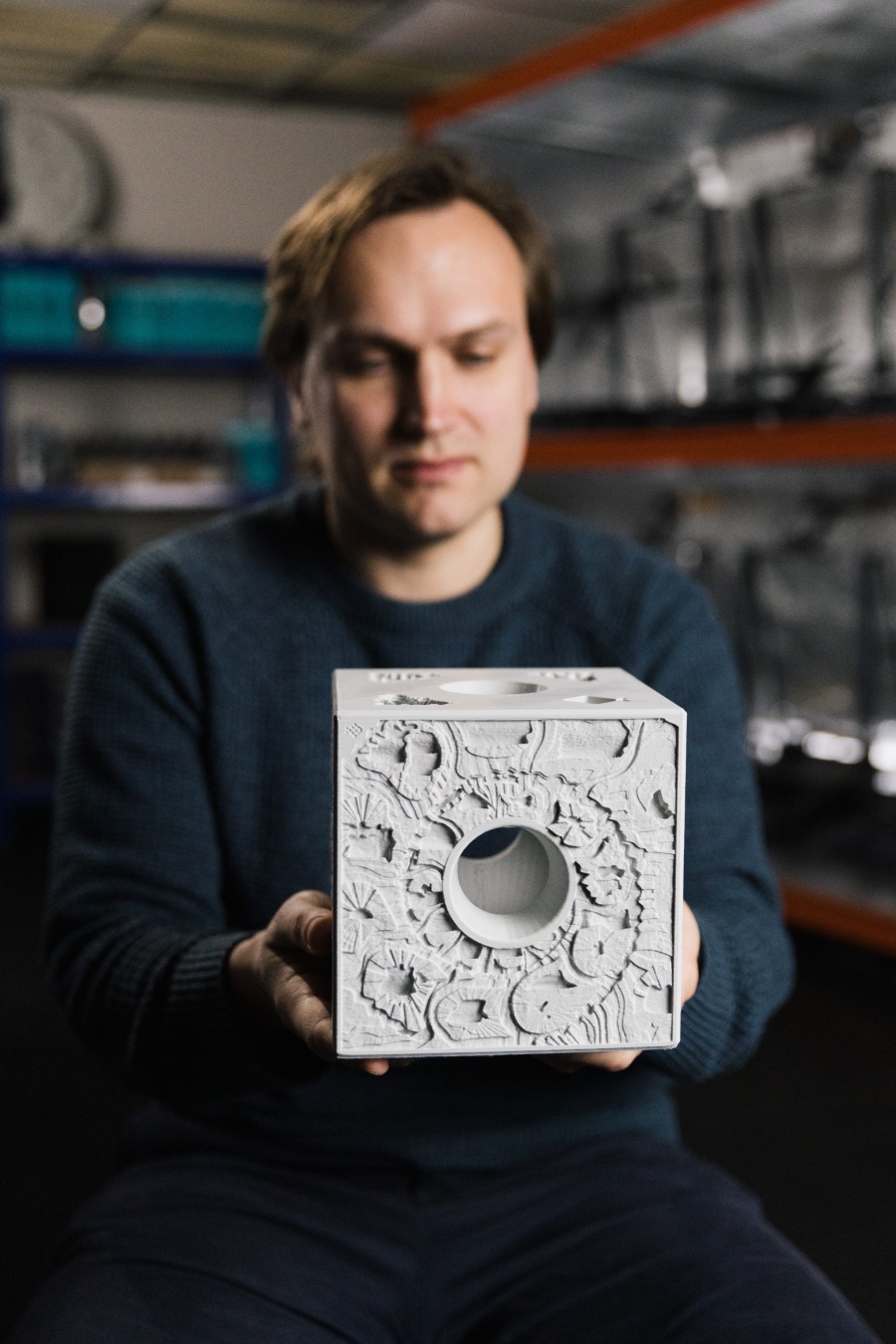
Arc marine colleague with a miniature 3D printed Reef Cube prototype. Credit: OT House
Scaling up
The RESP project gave the opportunity for Arc marine to test Reef cubes around Rampion offshore wind farm, owned by RWE, proving their use around an operational asset, demonstrating their effectiveness as a scour protection while having the added benefit of habitat creation.
Tom Birkbeck, the CEO of Arc marine said:
Because of the Horizon Europe guarantee, we were able to attract further finance in in forms of investment and commercial buy in from RWE. That then allowed us to grow the team and that really was the kick-starter…for the company to grow into its next level.
Following RESP, Arc marine has experienced growth, having been successful in attracting investment and buy-in from RWE, and winning work with other energy companies
Find out more
Watch our video on how Arc marine’s innovative nature-inclusive design improves biodiversity around offshore wind turbines.
Video credit: UKRI
Video transcript and on-screen captions are available by watching on YouTube.