You’ve probably heard that tiny plastic particles are harming sea creatures, but did you know they’re making their faeces float, too? And this, in turn, is worsening the climate crisis.
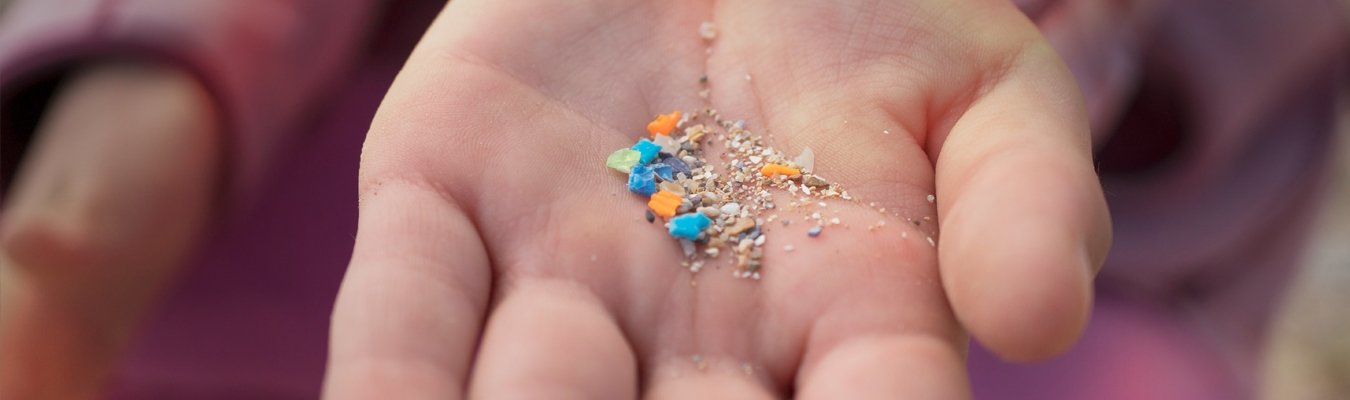
Microplastics might be minuscule, hundreds or even thousands of times smaller than a grain of sand, but their effects are anything but small.
Microplastics:
- come from larger plastic items breaking down in the environment
- are released into waterways when they shed from clothes in the washing machine
- come from products like paint and toiletries
And they’re getting everywhere.
Across the UK, scientists are at the forefront of investigating the effects of microplastics. They are revealing the far-reaching, and sometimes surprising, consequences of microplastic pollution.
Their research is uncovering hidden hotspots, from the English Channel to everyday items like your old frying pan. It also exposes how these pollutants are finding their way into food, our wildlife, and even our seaside holidays.
Microplastics are turning krill faeces into a climate problem
Krill, tiny shrimp-like creatures in the ocean, have a surprisingly important job: they help remove greenhouse gases from our atmosphere. These little animals munch on phytoplankton, tiny ocean plants that soak up carbon dioxide (CO2), and when they poo, that carbon gets locked away deep in the sea.
Antarctic krill faeces alone are estimated to store at least 20 million tonnes of carbon every year.
However, scientists at British Antarctic Survey studying these microscopic creatures found that nanoplastics can change the density of their waste, making it float rather than sink. This reduces its ability to remove and trap carbon by 27%, leaving more CO2 in the air and contributing to climate change.
Vegetables are absorbing microplastics
Plastic isn’t exactly a recommended part of your five-a-day, but researchers have found you might be eating it anyway. Scientists at University of Plymouth discovered that nanoplastics could enter the roots of radishes and end up in the bits we eat.
While it’s been known for a while that plastic can end up in fish and shellfish, it’s the first time it’s been shown to build up in vegetables, too.
Normally, plant roots have a protective layer to filter out harmful particles, but these tests showed that tiny plastic particles could slip through this barrier, meaning they could easily end up on your plate.
Hedgehogs are at risk from microplastics, too
Microplastic pollution isn’t just a problem for the sea; it’s affecting wildlife in your own back garden.
Ecologists at the University of Sussex used an infrared machine to detect plastic in hedgehog poo. They then traced microplastics through the food chain by analysing soil and the bugs hedgehogs love to eat.
The results revealed that hedgehogs might be picking up microplastics both straight from the soil and through eating contaminated worms and beetles. This is bad news for hedgehogs and for the ecosystem.
Earthworms and other invertebrates help aerate soil and cycle nutrients, so when they consume plastic, it affects the animals that eat them, the soil itself, and even the food we grow.
Old frying pans are microplastic offenders
Your trusty old frying pan might be adding a little more than flavour to your meals. According to scientists at Plymouth Marine Laboratory, plastic and non-stick cookware can shed microplastics into your food, especially when they’re worn out or damaged.
In experiments using the unlikely sounding combination of jelly and a highly sophisticated infrared imaging microscope, the team discovered that older plastic kitchenware released the highest levels of microplastics during cooking.
Not only does this mean you might be eating microplastics, but these particles can also wash down the drain with your washing-up water, adding to pollution.