
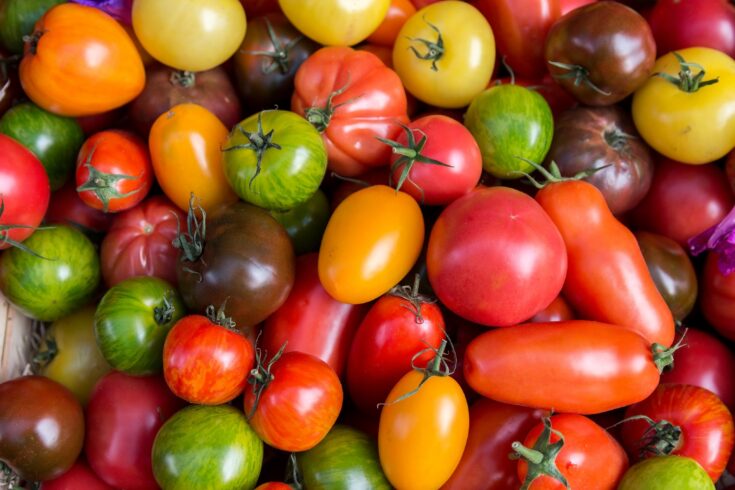
Blended into pasta or pizza sauces, or eaten raw in salads, tomatoes are said to be the world’s most popular fruit.
They bring nutritional benefits too, including high levels of essential vitamins and minerals (especially vitamin C, vitamin K and potassium). Natural plant pigments like lycopene give tomatoes their wonderful red colour. These pigments act as powerful antioxidants with anti-cancer effects. They help reduce inflammation too, supporting the health of our heart, gut and brain. But what if we could boost these nutritional benefits even more?
Professor Cathie Martin is a researcher at the John Innes Centre (JIC), a Biotechnology and Biological Sciences Research Council (BBSRC) strategically supported institute. Her goal is to make affordable produce that can prevent health issues from arising. Tomato is a great food to start with as it is so widely consumed worldwide.
Professor Martin’s team has produced two new tomato varieties:
- a variety high in vitamin D, an important nutrient many of us are deficient in, especially during the winter months
- a purple tomato rich in the natural pigment anthocyanin, bringing nutritional and health benefits to the table
Gene editing: vitamin D tomatoes
Vitamin D is an essential nutrient that helps to keep our bones and muscles strong.
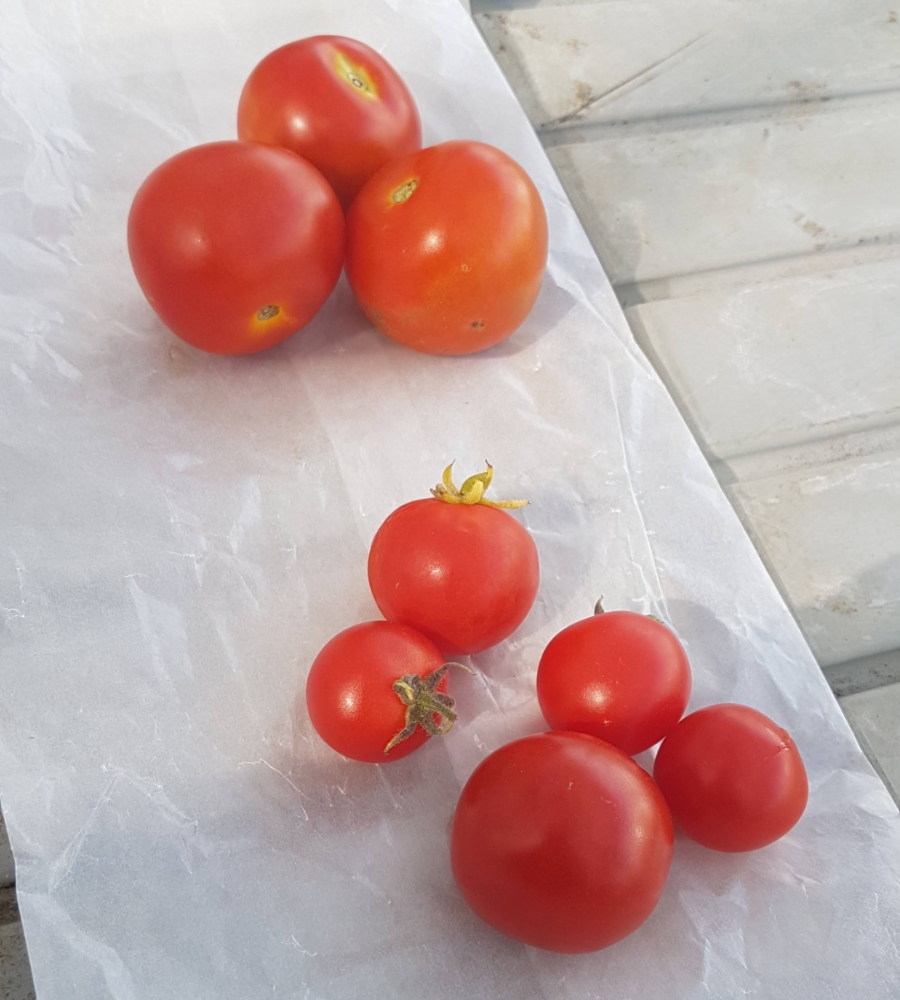
Standard tomatoes (left) and gene edited vitamin D-enriched tomatoes (right).
Though we produce vitamin D in our skin when exposed to the sun, most of our vitamin D comes from what we eat. Significantly, one in five people in the UK are deficient in vitamin D during winter and spring. Worldwide, almost one billion people lack enough vitamin D.
Plants don’t usually contain this essential vitamin. However, Professor Martin’s team used the gene-editing technique CRISPR to unlock tomatoes’ ability to produce it. Gene editing makes small and precise changes to an organism’s own DNA. This can be achieved by traditional breeding too in a longer timeframe. You can learn more about CRISPR by watching JIC’s video on the technology.
We highlighted this innovation and its significance as a means of combatting vitamin D deficiency in our 2023 impact showcase. Since then, Professor Martin’s team has been busy working to bring the tomato to our plates.
Putting the vitamin D tomato to the test
At the end of 2025, Professor Martin’s team and researchers at the Quadram Institute (another BBSRC strategically supported institute), launched a BBSRC-funded human trial of the vitamin D-enhanced tomato. In the ViTaL-D Study, participants with low vitamin D levels ate soup made with the tomatoes every day for three weeks to see how this could help.
Professor Cathie Martin said:
People often take vitamin supplements, but new breeding techniques mean that in the future this already healthy, fresh food that lots of people eat could be fortified with micronutrients from day one, with the potential to help boost the health of all of us.
The JIC hope to commercialise the vitamin D tomatoes, otherwise known as Sunshine Tomatoes, as supplements, fresh tomatoes and sun-dried tomatoes. The tomatoes have now secured their first marketing notice as a precision bred organism, an important step towards commercialisation in the UK.
Genetic modification: anthocyanin-enriched tomatoes
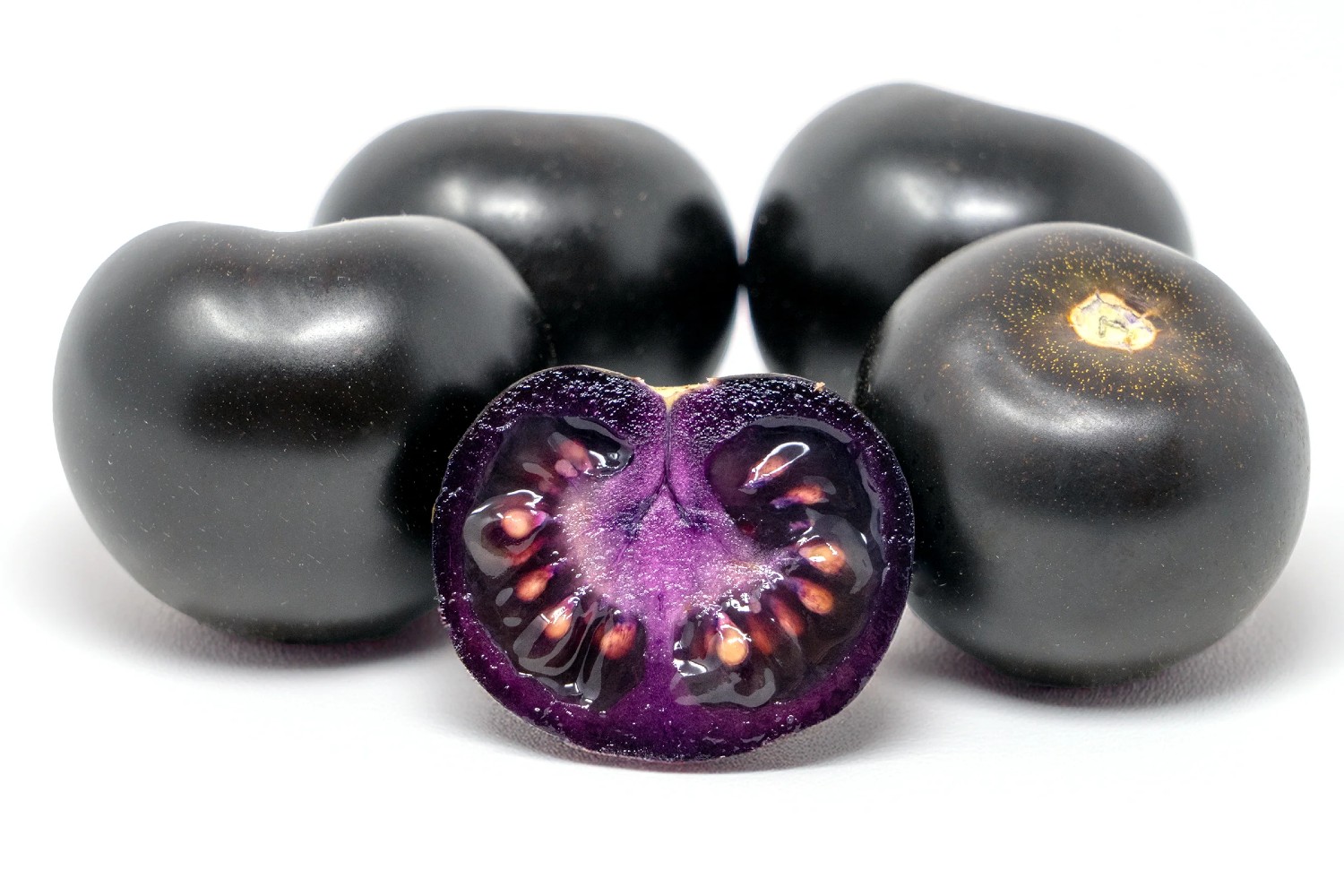
Norfolk Plant Science’s The Purple Tomato™ Althea.
We are encouraged to ‘eat the rainbow’, and the popularity of colourful tomatoes is rising. Red, orange, yellow and green varieties are all popular now on our supermarket shelves.
Professor Martin and her team have been developing purple tomatoes. These are rich in anthocyanins, the pigment that gives blueberries their purple colour.
Professor Martin’s team originally explored anthocyanin production in snapdragon flowers and used their knowledge to develop the anthocyanin-rich tomato. Though the two plants are not closely related, the instructions for anthocyanin production are conserved across plants.
Her team identified the genetic switch responsible for turning on anthocyanin production in snapdragons. They then took the switch from the snapdragon flower and used genetic modification to add it to tomatoes. This unlocked the ability for tomatoes to produce the pigment in both their skin and flesh.
Traditional breeding for purple tomatoes, such as crossing commercial varieties with wild purple relatives, has yielded some success. However, in these varieties, anthocyanin production is limited to tomato skins. Anthocyanin levels and their health benefits can be boosted further if tomatoes produce anthocyanins in their flesh as well as the skin.
The benefit of a purple tomato
Research is increasingly showing that anthocyanin-rich foods are good for our health, protecting us against illnesses like cardiovascular disease and cancer and improving our gut health.
The use of genetic modification, in this instance, led to a beneficial health trait that wouldn’t be achievable by traditional breeding.
As well as benefitting our health, high anthocyanins in tomatoes can also:
- protect plants and fruit from pathogens that kill plant cells, like Botrytis, reducing losses particularly post-harvest
- double a tomato’s shelf life compared to a standard red tomato, maintaining nutritional quality for longer and reducing post-harvest food waste
- add colour and contrast to salads and appetisers
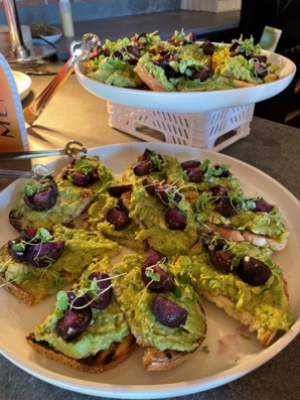
Purple tomato and avocado crostini example at Gingko Ferment Event in 2023.
Taking the purple tomato to market
Public interest in the purple tomato was clear and demand was high, leading Professor Martin to commercialise the new variety.
She worked with Professor Jonathan Jones at The Sainsbury Laboratory to form the spin-out company Norfolk Plant Sciences in 2007, which has enabled the wider commercialisation of the purple tomato. Professors Martin and Jones are both located at the Norwich Research Park, a BBSRC-supported Research and Innovation Campus, which facilitated their collaboration.
Since then, the purple tomato has achieved regulatory and commercial success. This includes:
- gaining regulatory approval in the US in 2023, in Canada in late 2025, and in Australia in January 2026
- launching seed sales to US home gardeners in February 2024, selling 13,000 packs in just six weeks
- consistent sell-out of the seeds in the US, highlighting that demand for this product is real and strong
- first-week sell-out of its purple tomato range when launched in Australia this year
Professors Martin and Jones are keen to see their purple tomato on offer in the UK eventually too. They plan to apply to the UK Food Standards Agency for approval to sell the purple tomato in the UK, where it was first developed.
The crops of the future
BBSRC supports a breadth of agricultural and food research, from traditional plant breeding approaches to the exploration of new plant biotechnologies.
The goal is often to increase the resilience and yields of our crops to improve food and nutritional security. Modifying our favourite crops to deliver nutritional and health boosts is a further benefit, as seen in Professor Martin’s work.
Find out more
BBSRC strategically supported institutes
Gene-edited tomatoes could help tackle vitamin D deficiency
‘Sunshine’ tomato one step closer to market (John Innes Centre)